





































Every investor has a few go-to sites they check daily, and for good reason. As a real estate agent, I’ve worked with and advised investors on how to analyze deals, run comps, and spot opportunities, and the right websites can make all the difference in how quickly and confidently they move. The best real estate investor websites give you faster insights, stronger comps, and a clearer view of where opportunities are hiding. In this round-up, you’ll find 11 platforms that real estate investors rely on to sharpen their strategies and get a hold of the competition.
| Website | Best for |
|---|---|
| Zillow | Quick comps and market snapshots |
| Realtor.com | Accurate MLS-backed data |
| Redfin | Market trends and data analysis |
| Homes.com | Alternative listing insights |
| LoopNet | Commercial real estate deals |
| BiggerPockets | Investor education and community |
| Auction.com | Distressed property deals |
| Roofstock | Turnkey rental investing |
| AirDNA | Short-term rental analysis |
| Apartments.com | Rental comps and tenant demand |
| PropStream | Off-market deals and lead generation |
Why you can trust The Close
As a real estate agent, I’ve worked with and advised investors at different stages, from those buying their first rental to more experienced clients scaling their portfolios. These experiences shaped how I evaluated the platforms, focusing on the features that actually help investors analyze deals, spot opportunities, and move quickly.
For this guide, I combined that real-world experience with research on each website’s features, usability, and value to investors. At The Close, we prioritize practical, unbiased guidance, so every recommendation is built to help you make smarter, more informed investment decisions.
Sophia Doyle
Staff Writer – The Close
1. Zillow
- Best for quick comps and market snapshots
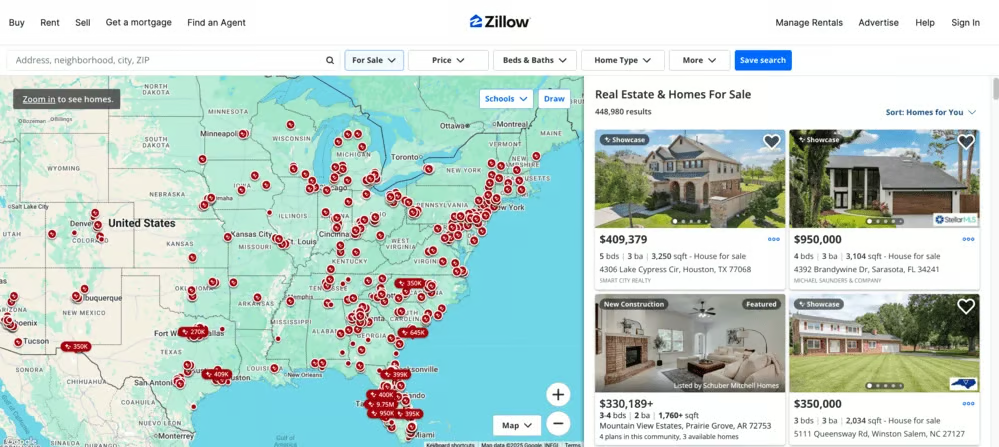
Zillow is the most visited real estate investing website in the country, making it the go-to destination for investors seeking quick comps, pricing history, and neighborhood snapshots. While the accuracy of Zillow Zestimate — its valuation tool — isn’t 100%, it’s often close enough to establish a benchmark; plus, it’s a fast way to gauge buyer demand and property trends. Many investors use Zillow for a high-level scan, then layer the data with Redfin or Realtor.com for more accuracy.
2. Realtor.com
- Best for accurate MLS-backed data
With its direct ties to the MLS, Realtor.com is one of the most accurate listing portals available. Investors turn here to track days on market, price cuts, and local inventory trends that can make or break a deal. It’s especially helpful when you want a reliable, no-fluff view of market activity before reaching out to sellers or agents.

3. Redfin
- Best for market trends and data analysis
Redfin stands out for its research-driven approach. Investors love the weekly housing market data, downloadable reports, and neighborhood-level insights. The platform’s charts and maps make it easy to spot price shifts and market trends.
In case you don’t know it yet, many investors pair Redfin’s analytics with Zillow comps to move quickly when a property appears to be underpriced. Learn more about the differences between the two in our Redfin vs Zillow comparison.

4. Homes.com
- Best for alternative listing insights
Homes.com has exploded in popularity, thanks to CoStar’s backing. It’s now becoming a serious alternative to Zillow and Redfin! Read our in-depth dive into the differences in our Zillow vs Homes.com guide.
For investors, this means another source of comps and buyer-demand signals in markets where traction is shifting. Savvy users compare listings across portals; sometimes, a property that lingers on one site is hot on another, which can give you leverage in negotiations.

5. LoopNet
- Best for commercial real estate deals
LoopNet is the premier marketplace for commercial real estate, encompassing a wide range of properties, from multifamily buildings to retail centers and office spaces. Investors use it to scan for opportunities, compare cap rates, and connect with brokers who control deal flow. It’s also a brilliant idea to cross-check LoopNet listings with Apartments.com rent data to make sure your underwriting holds up.

6. BiggerPockets
- Best for investor education and community
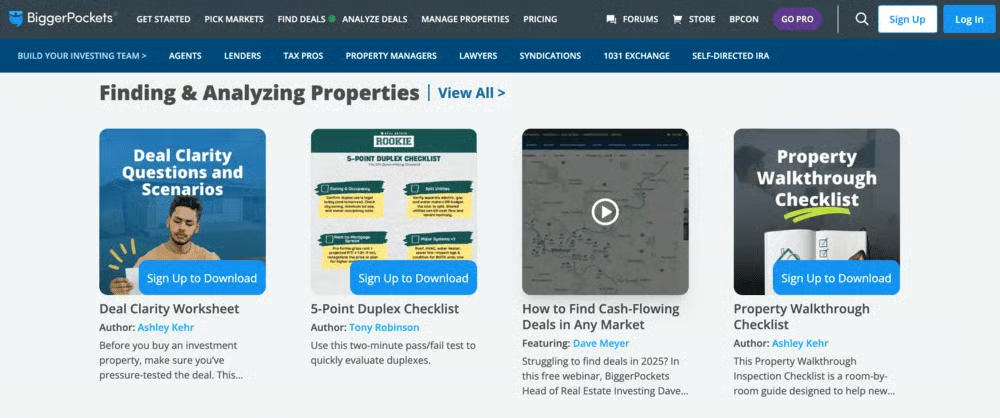
If you’ve spent any time in the real estate investing world, you’ve probably heard of BiggerPockets. It’s where new and experienced investors swap stories, ask questions, and share hard-won lessons in the forums.
Beyond the community, you’ll find calculators, podcasts, and guides that make complex strategies, like BRRRR or house hacking, feel approachable. What really sets it apart is the sheer amount of practical, lived experience you can tap into from people who are out there closing deals every day.
7. Auction.com
- Best for distressed property deals
If your investing strategy includes distressed property deals, Auction.com should be on your shortlist. The site offers listings of bank-owned, foreclosed, and auction properties, providing details on title status and occupancy. Experienced investors often scout here for flips, then use PropStream to contact owners before the auction or Roofstock to sell a rehabbed property into a rental pipeline.

8. Roofstock
- Best for turnkey rental investing
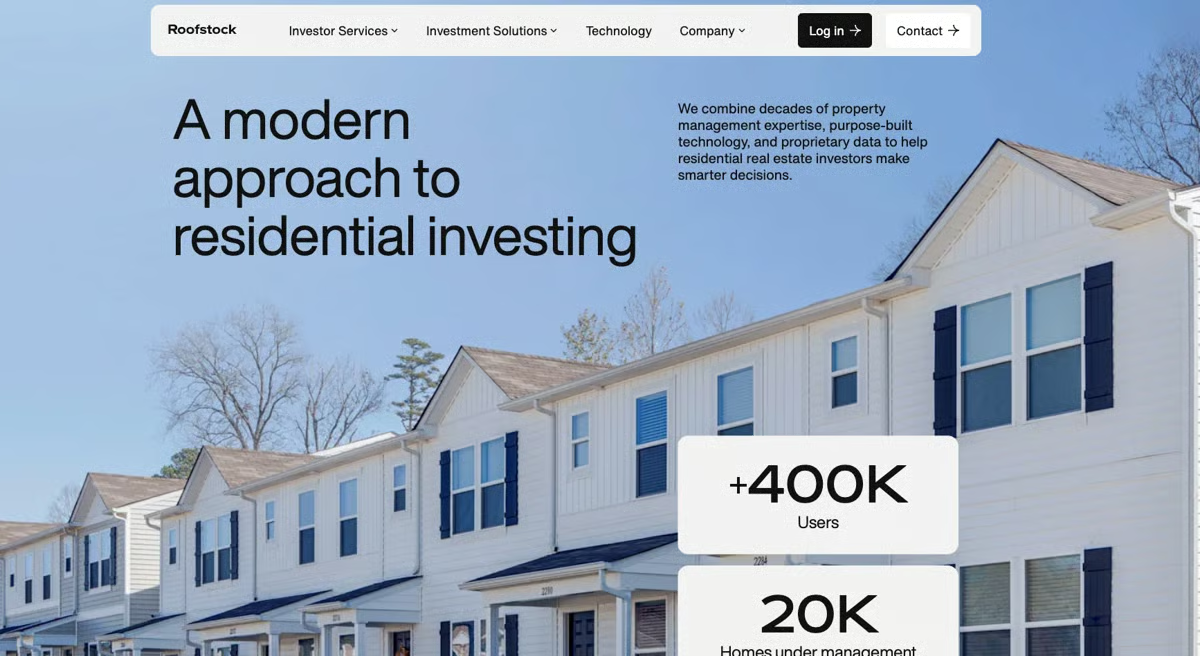
Roofstock simplifies the buying and managing of single-family rentals, particularly for out-of-state investors. The platform offers vetted inspections, pro forma cash flow, and even property management connections, making it easy to build a rental portfolio. If you want to see if a property might perform even better as a short-term rental, some investors also run the numbers on AirDNA.
9. AirDNA
- Best for short-term rental analysis
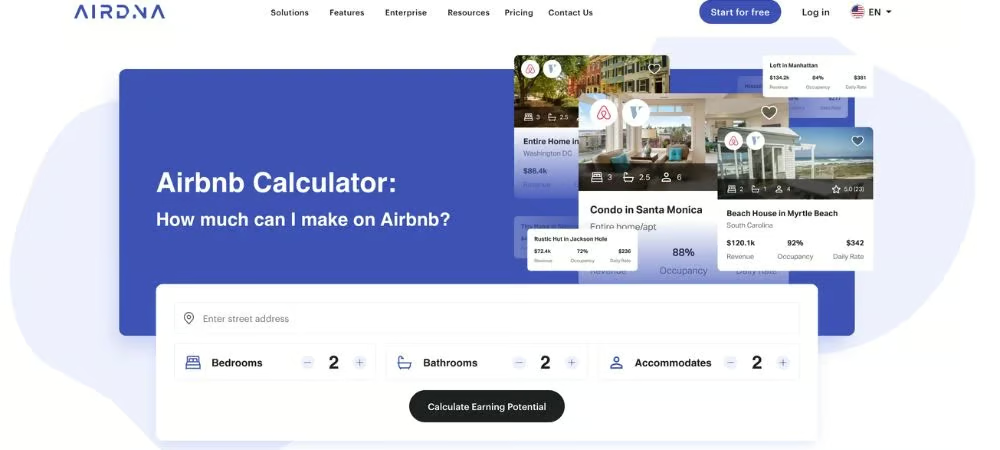
Short-term rental investors rely on AirDNA because it eliminates the guesswork in market research. Instead of relying on broad averages, you can dig into neighborhood-level data on occupancy, nightly rates, and annual revenue to see if a property really pencils out. It’s also a handy way to spot which amenities or unit types are generating the highest returns in your target market.
10. Apartments.com
- Best for rental comps and tenant demand
Apartments.com is the largest rental listing network in the U.S. and a go-to for landlords and multifamily investors. It’s great for checking local rent comps, testing market demand, and writing listings that stand out — just some reasons why it’s on the list of our top recommended rental listing sites for investors.
On top of that, listing on Apartments.com syndicates across CoStar’s entire rental network. With tools for advertising, lead tracking, and tenant inquiries built in, Apartments.com serves as both a listing site and a rental property management platform.

11. PropStream
- Best for off-market deals and lead generation
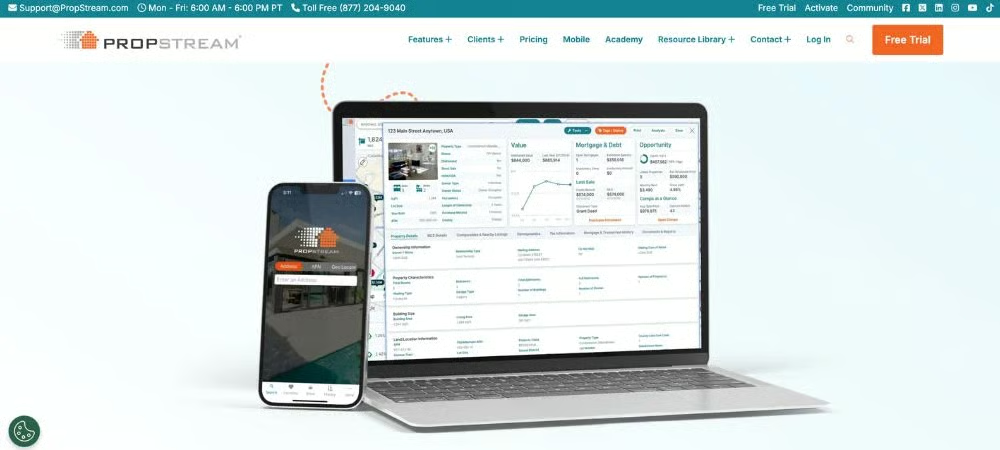
PropStream is one of the most widely used websites for real estate investors, as it consolidates property records, comps, ownership details, and marketing tools in a single location. Investors value it for its ability to build targeted lead lists, such as pre-foreclosures, absentee owners, or vacant properties, and then launch direct outreach campaigns.
It’s especially popular with wholesalers and flippers because it saves time on research while surfacing motivated seller opportunities that don’t show up on public listing portals.
Methodology
I researched and evaluated dozens of real estate investing website options to identify the platforms that truly make investors’ lives easier. I focused on websites that provide real value, whether through deal discovery, market updates, or property management tools.
The goal was to create a curated list that’s both comprehensive and practical, so you don’t waste time wading through resources that aren’t built with real estate investing in mind. When deciding which sites made the cut, I used the following criteria:
- Popularity and reach: I prioritized platforms with high traffic or large user bases, ensuring the sites on this list are widely used by investors and trusted within the industry.
- Relevance to real estate investors: Every site had to serve a clear purpose in an investor’s workflow, whether that’s sourcing deals, networking, analyzing markets, or managing rental properties.
- Unique value: I sought out real estate websites for investors that offered something distinct, rather than merely duplicating existing listing data. From MLS-synced accuracy to community-driven insights, each site brings its own edge.
- Ease of use: Because time is money in real estate, I chose websites that make it simple to search, analyze, or connect.
- Investor versatility: Finally, I selected platforms that cater to a range of investor types, including those focused on commercial or multifamily properties, landlords, and short-term rental hosts.
Read more about our methodology here.
Frequently asked questions (FAQs)
Are investor sites legit and secure?
Most well-known real estate websites for investors are legit, but security varies by platform. Always look for established names with strong reputations, and double-check that the site uses secure payment processing before sharing financial information.
Which website is best for beginner investors?
BiggerPockets is the ideal starting point for those new to real estate investing. It offers education, community support, and real-world advice without requiring an upfront investment. Once you’re comfortable, you can explore sites like Zillow or Roofstock to start putting that knowledge into practice.
Are these real estate websites for investors free to use?
Platforms like Zillow, Realtor.com, and Redfin offer free basic browsing, while sites like PropStream or AirDNA require a paid subscription for advanced data and tools. The right mix depends on whether you simply want market research or require in-depth, investor-focused features.
Your take
As a real estate investor, you can’t just rely on one website and expect to make the right call. The smartest investors make it a habit to gather insights from multiple sources. At the end of the day, it’s about building a toolkit you’ll actually use every day, not chasing every new platform that comes along.
Related Articles