





































Homes.com and Zillow are two of the most recognizable real estate search platforms, but they serve agents, buyers, sellers, landlords, and renters differently. As a real estate agent, I’ve used both platforms to market listings and generate leads, and I’ve seen how much the right platform can affect visibility, lead quality, and client experience. Homes.com stands out for its agent-first approach and exclusive lead model, while Zillow offers massive consumer reach, robust search tools, home value estimates, and rental features.
Before I dive into the nitty-gritty, here’s a quick breakdown of what each one does best:
| Homes.com | Zillow |
|---|---|
| Best for agents who want exclusive leads and transparent pricing, plus a clean interface for buyers and sellers. | Best for users who want robust search tools, property value estimates (Zestimates), and full-featured tools for buyers, sellers, landlords, and renters. |
Homes.com vs Zillow: A head-to-head comparison
| Homes.com | Zillow | |
|---|---|---|
| Starting price | Free | Free |
| Home value estimates | ✅ | ✅ |
| Financing tools & calculators | ✅ | ✅ |
| Rental management tools | ❌ | ✅ |
| Buyer & seller resources | ✅ | ✅ |
| Agent advertising & lead generation | ✅ | ✅ |
Why you can trust The Close
As a real estate agent, I have personally used both Zillow and Homes.com to market listings and generate leads, so I understand how each platform actually performs in day-to-day business. From lead quality to visibility and conversion potential, I’ve seen where each one delivers and where it falls short.
For this article, I combined hands-on experience with detailed research to evaluate pricing, features, user experience, and overall value for agents. At The Close, our editorial approach is centered on delivering clear, accurate, and unbiased guidance for real estate professionals. Every recommendation is made to help our readers make smart business decisions and get real results from the tools you use.
Sophia Doyle
Staff Writer–The Close
Homes.com vs Zillow: Overview & when to use
 | |
|---|---|
| Pros | Cons |
|
|
Overview of Homes.com
Homes.com is a real estate search platform owned by CoStar Group that connects buyers, sellers, and renters with listings across the United States. It focuses on providing agent-friendly tools and aims to compete directly with Zillow by emphasizing accurate listing data and exclusive leads. In 2024, Homes.com reported over 100 million monthly visitors, making it one of the fastest-growing real estate sites in the US.
What sets Homes.com apart is its “Your Listing, Your Lead” model, which ensures that listing agents, not advertisers, receive inquiries on their properties. This creates a more direct line between buyers and agents, a feature that contrasts sharply with Zillow’s model, where leads may be routed to multiple agents. If you’re looking for more control and less competition on listings, Homes.com is a more “agent-first” platform.
When to use Homes.com
- You’re an agent who wants exclusive leads from your listings.
- You prefer a clean, less ad-heavy experience when searching for homes.
- You’re a buyer looking for accurate agent contact info on a listing.
- You’re a buyer looking for properties with recent price drops.
 | |
|---|---|
| Pros | Cons |
|
|
Overview of Zillow
Zillow is one of the most popular real estate platforms in the US, with 365.8 million monthly visits in 2024. It offers property search, home value estimates (Zestimates), financing tools, and rental management services. Zillow also provides lead generation opportunities for agents through its Premier Agent program.
Unlike Homes.com, Zillow emphasizes scale and consumer tools, offering a broad ecosystem for buying, renting, financing, and managing homes. However, because leads are often shared among multiple agents through its paid advertising model, some professionals may feel they’re competing for visibility on their listings.
When to use Zillow
- You’re a seller or agent looking to get maximum exposure for a property.
- You like using tools like Zestimates and affordability calculators.
- You’re a landlord who needs features like tenant screening or rent payment tools.
- You’re a potential buyer who wants access to a massive selection of homes, including FSBO and rentals.
Homes.com vs Zillow: Who wins in each category?
Before choosing between Homes.com and Zillow, it’s helpful to break down what each platform does best. Below, I compare their features side by side to see which one comes out on top in key real estate categories:
Pricing and fees for agents (Winner: Homes.com)
| Plans / Pricing | Homes.com | Zillow Premier Agent |
|---|---|---|
| Pricing structure | One-time boost & a membership option of a 6- or 12-month subscription | Pay-per-lead |
| Cost per lead | Around $20-$30 | Varies by ZIP (est: $20-$100+); Recommended monthly spend is $1,000+ |
| Commitment | 6-12 month commitment for membership; Boost is one-off | No fixed contract, but Zillow advises a 6-month minimum; Costs scale with coverage and competition |
With Homes.com, pay-per-lead plans start around $20-$30 per lead (no long-term contracts), and you only pay when someone contacts you.
With Zillow, while it’s free to use when looking through property listings, its Premier Agent tiers vary wildly by ZIP — anywhere from $20 up to $100+ per lead — and you’re locked into monthly minimums that can add up quickly.
🏆Winner: Homes.com — More predictable and transparent costs.
User interface & search experience (Winner: Zillow)
Homes.com keeps things clean and uncluttered with a straightforward filter and a big map view, but you’ll find fewer advanced search layers (like commute time or flood zones).
Zillow, on the other hand, offers rich map overlays, neighborhood heatmaps, commute-time filters, school-district layers, saved-search alerts, and more.
🏆Winner: Zillow — Its depth of search tools and customizable map options give serious homebuyers more to work with.
Lead generation for agents (Winner: Homes.com)
Homes.com’s “Your Listing, Your Lead” means inquiries go straight to you, not funneled through a pool of competing agents, so conversion rates tend to be higher.
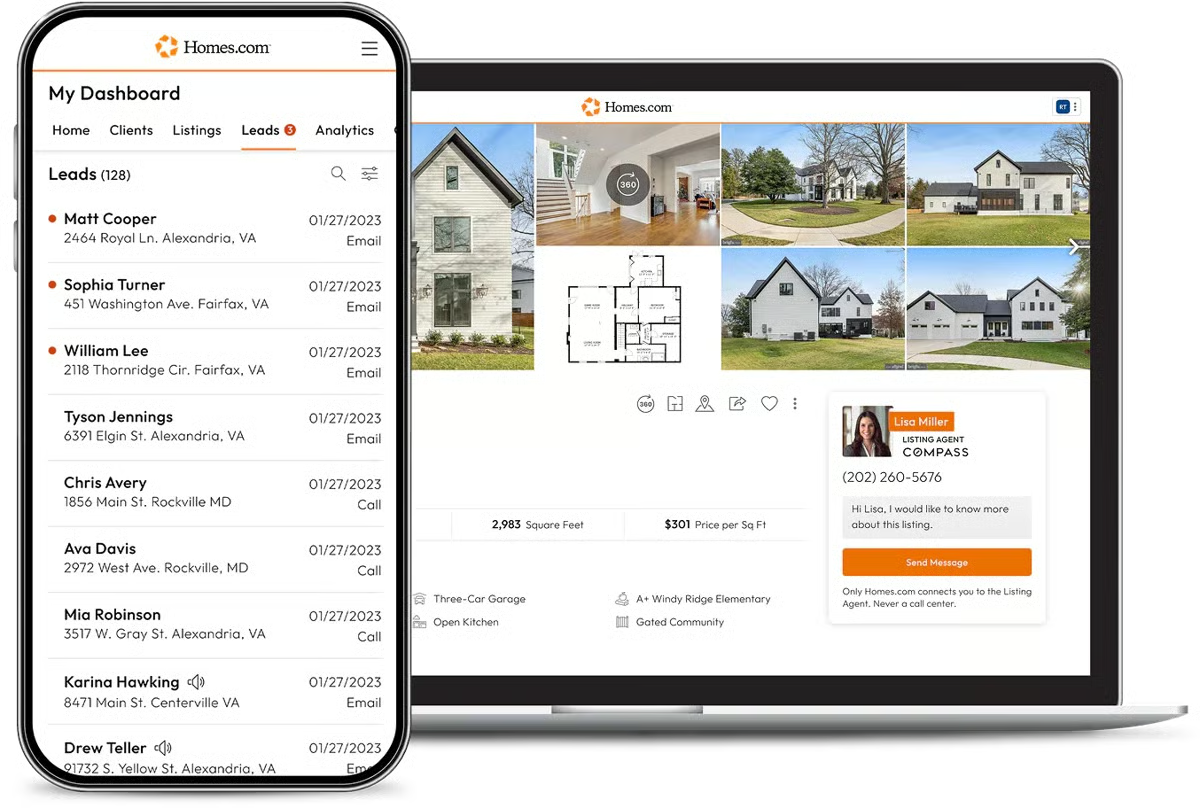
With Zillow, leads are powerful but often shared among multiple Premier Agents in the same ZIP code — which can dilute response times and increase agent competition.
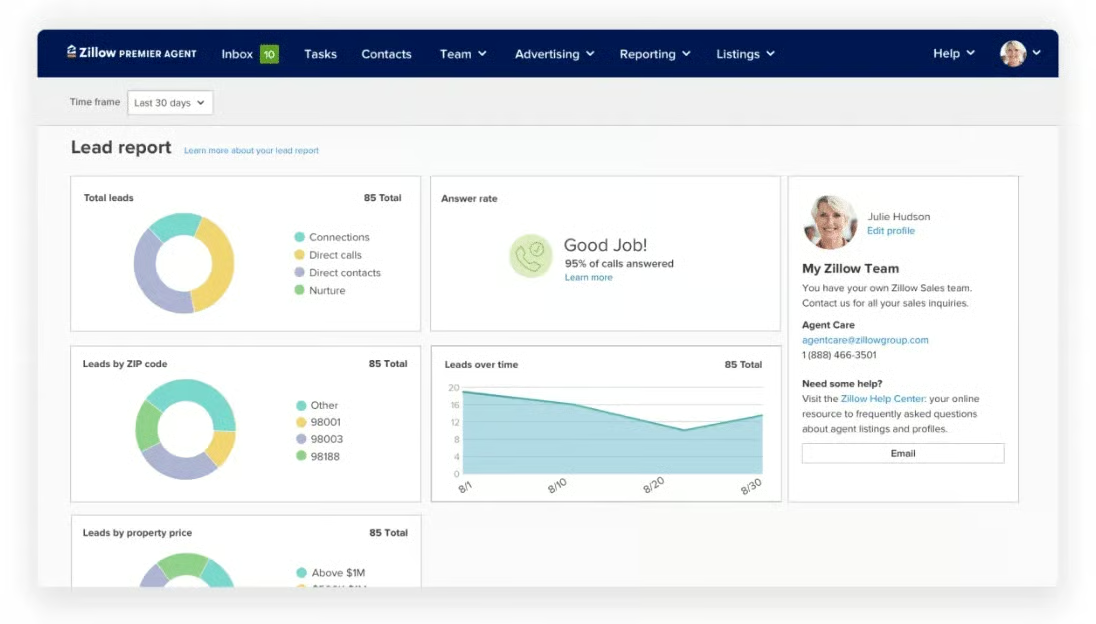
🏆Winner: Homes.com — Direct, exclusive inquiries let you own your leads rather than battling for them.
Property value estimates (Winner: Zillow)
Homes.com offers a home value estimate tool that pulls data from recent sales, tax records, and local trends. Just type in your address, and it’ll show an estimated value range, nearby comps, and neighborhood insights like price-per-square-foot and days on market. It’s clean, easy to use, and updates regularly.
Meanwhile, Zillow’s Zestimate is still the most recognized name in home value estimates. It uses MLS data, tax records, user-submitted info, and machine learning to generate a home’s estimated value — plus a confidence range. Zillow also provides neighborhood value trends and allows owners to update details to improve accuracy.
🏆Winner: Zillow — Homes.com does a solid job, but Zillow wins here. Its estimates are more detailed, widely trusted, and backed by years of market data and user feedback. If you want the most refined tool with the broadest recognition, Zillow is the better pick.
Zillow Estimates Ultimate Guide: What Is It & How Accurate Is It?
Seller tools (Winner: Zillow)
Homes.com doesn’t offer many seller-specific tools beyond its home value estimate. There’s a “sold” filter that lets you view recently sold properties by typing in an address or area, which can help with basic market research — but that’s about it. Sellers seeking more hands-on tools will likely need to rely on their agent or explore alternative platforms.
As for Zillow, it provides a complete toolkit for sellers: home valuation, a net proceeds calculator, listing prep guides, and even the ability to test out a “Make Me Move” price. It’s all designed to give sellers more control and visibility before they list their property.
🏆Winner: Zillow — Zillow simply offers more for DIY sellers and those researching their options. From preparation to pricing, it’s built to support sellers without requiring them to leave the platform.
Rental tools (Winner: Zillow)
Homes.com doesn’t have a rental management system. Instead, it redirects rental traffic to Apartments.com (also under CoStar). While Apartments.com is a strong platform for renters, it lacks the direct integration or tools for landlords to manage listings or tenants from Homes.com itself.
On the other hand, Zillow Rental Manager is built-in and robust. Landlords can list properties, screen tenants, collect rent online, and even send digital lease agreements — all from one dashboard. Renters also enjoy a seamless experience with filters, alerts, and the convenience of applying online.
🏆Winner: Zillow — Zillow offers a complete end-to-end rental toolset without sending users off-platform, making it the stronger choice for both renters and property managers.
Methodology
To give you a fair, side-by-side look at Homes.com and Zillow, I evaluated each platform across the key factors that matter most to agents and consumers alike. I combined hands-on testing, feature audits, and insights from real user reviews to score them on everything from lead quality to user experience.
Our criteria included the following:
- Pricing and fees for agents: I assessed the transparency, structure, and predictability of agent costs, including pay-per-lead rates, subscription options, and any minimum commitments.
- User interface and search experience: I tested how intuitive the desktop and mobile interfaces feel, how robust the search filters and map tools are, and how quickly you can find relevant listings.
- Lead generation: I examined lead quality, exclusivity, and delivery flow. I examined whether inquiries are directed to a single agent or are shared among multiple advertisers.
- Features and tools for agents, buyers, sellers, renters, and landlords: I reviewed the full suite of capabilities, ranging from property value estimates (utilizing automated valuation models) and seller calculators to rental management, tenant screening, and various advertising formats.
- Market reach and traffic: I compared monthly unique visitor figures, geographic coverage, and overall brand recognition to gauge where each platform attracts the most attention.
Read more about our methodology here.
Frequently asked questions (FAQs)
Do Homes.com and Zillow show the same listings?
Homes.com and Zillow may show many of the same listings, but inventory can vary by market, MLS feed, listing agreement, and update timing. Buyers and agents should not assume every home appears the same way on both platforms, especially when checking new listings, price changes, or off-market information.
Which platform is better for homebuyers?
Zillow is generally stronger for homebuyers who want deeper search tools, saved searches, property value estimates, affordability calculators, and a large inventory of listings. Homes.com is still useful for buyers who want a cleaner search experience and a more direct connection to the listing agent.
Is Zillow still worth it for real estate agents?
Zillow can still be worth it for agents who want access to a large consumer audience and are willing to compete for leads through Zillow Premier Agent. It is strongest for agents who have a clear follow-up system, a realistic ad budget, and the ability to respond quickly to buyer inquiries.
Your take
Both Homes.com and Zillow offer powerful tools for agents, buyers, sellers, and renters, but they shine in different ways. If you want more transparent pricing and exclusive leads, Homes.com might be your go-to. If you’re after more visibility and a suite of tools for everything from seller features to rental management, then Zillow’s the bigger player.
You may like…