





































As a real estate agent, I’ve worked closely with investors and helped them purchase properties, so I’ve seen how quickly a promising deal can become complicated.
Investors need to research properties, estimate returns, manage renovations, track expenses, screen tenants, and monitor performance, often across several platforms.
The best real estate software for investors simplifies one or more parts of that process. Some platforms help uncover off-market properties, while others analyze deals, manage rehabs, operate rentals, or research specialized markets such as short-term rentals and commercial real estate.
I evaluated the leading options and selected 10 tools that address the most important stages of the investment lifecycle.
- Best real estate software for investors at a glance
- The Close’s top picks for real estate investor software
- PropStream
- DealMachine
- REsimpli
- DealCheck
- RentCast
- FlipperForce
- Stessa
- Avail
- AirDNA
- Crexi
- Methodology
- Key features to look for in real estate investor software
- Common mistakes when choosing investor software
- Frequently asked questions (FAQs)
- Bringing it all together
Best real estate software for investors at a glance
| Software | Best for | Starting price |
|---|---|---|
| PropStream | Nationwide property data, comps, and off-market leads | $99 per month |
| DealMachine | Driving for dollars and field prospecting | $99 per seat, per month |
| REsimpli | Investor CRM and acquisition management | $149 per month, billed annually |
| DealCheck | Rental, flip, and deal analysis | Free; paid plans start at $10 per month |
| RentCast | Long-term rental estimates and market research | Free; Pro starts at $12 per month, billed annually |
| FlipperForce | Rehab estimating and flip management | Free analysis plan; project management starts at $59 per month, billed annually |
| Stessa | Rental accounting and portfolio performance | Free; paid plans start at $12 per month, billed annually |
| Avail | DIY leasing and tenant management | Free; Unlimited Plus costs $9 per unit, per month |
| AirDNA | Short-term rental market research | Free; Market Research starts at $34 per month, billed annually |
| Crexi | Commercial real estate research and opportunities | Free marketplace access; Intelligence Select costs $299 per month |
Why you can trust The Close
Through my experience as a real estate agent, I have worked directly with investors as they searched for properties, evaluated opportunities, and moved through the purchase process. That experience helps me distinguish between impressive-looking features and tools that address problems investors actually encounter.
The Close maintains editorial independence when evaluating real estate products. Recommendations are based on research, practical usefulness, pricing, and suitability for the intended user. Investors should still verify calculations, confirm property information, and consult qualified financial, legal, tax, and real estate professionals before making investment decisions.
Sophia Doyle
Staff Writer-The Close
The Close’s top picks for real estate investor software
| Software | Key features | Learn more |
|---|---|---|
| PropStream |
| |
| DealMachine |
| |
| REsimpli |
| |
| DealCheck |
| |
| RentCast |
| |
| FlipperForce |
| |
| Stessa |
| |
| Avail |
| |
| AirDNA |
| |
| Crexi |
|
PropStream

 Best for: Nationwide property data and off-market leads
 Starting price: $99 per month
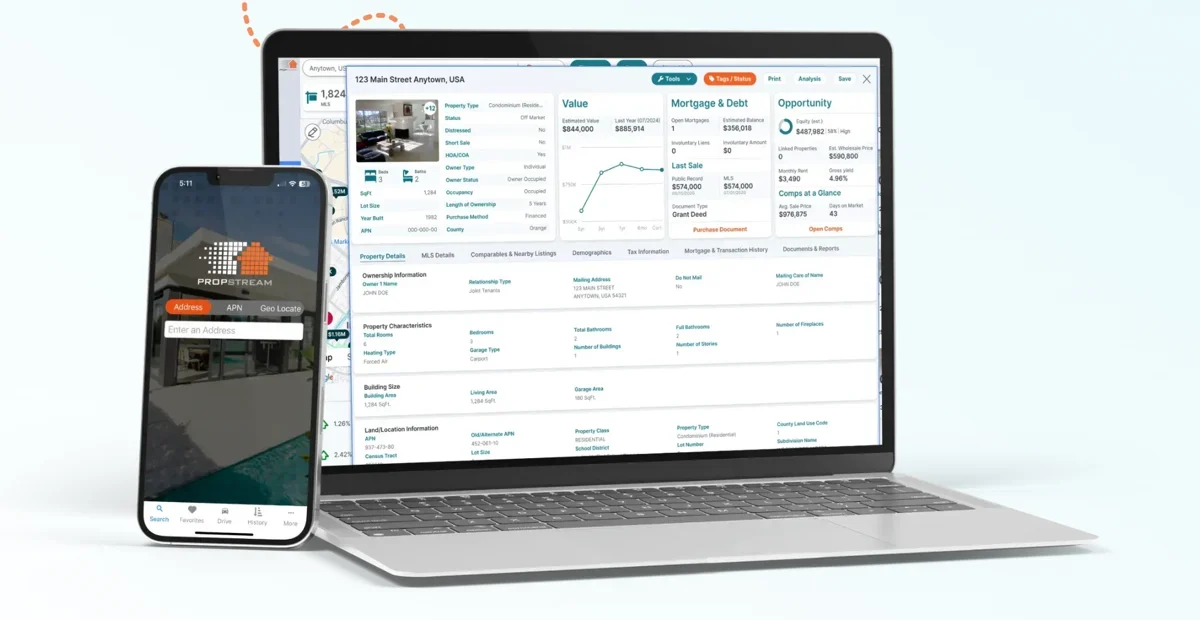
PropStream helps investors research on-market and off-market properties using public records, MLS information, ownership details, mortgage data, tax records, liens, foreclosure information, and other property data. Investors can apply detailed filters to build prospecting lists and evaluate properties using rental, rehab, fix-and-flip, and accessory dwelling unit calculators.
The platform also connects research with outreach through skip tracing, email, direct mail, dialing, and lead automation, although some services require additional fees or an upgraded plan.
PropStream is best for investors who regularly prospect for deals and need substantial property data in one place, rather than those analyzing only an occasional listing.
DealMachine

 Accreditation:
- Best for: Driving for dollars and field prospecting
- Starting price: $99 per seat, per month
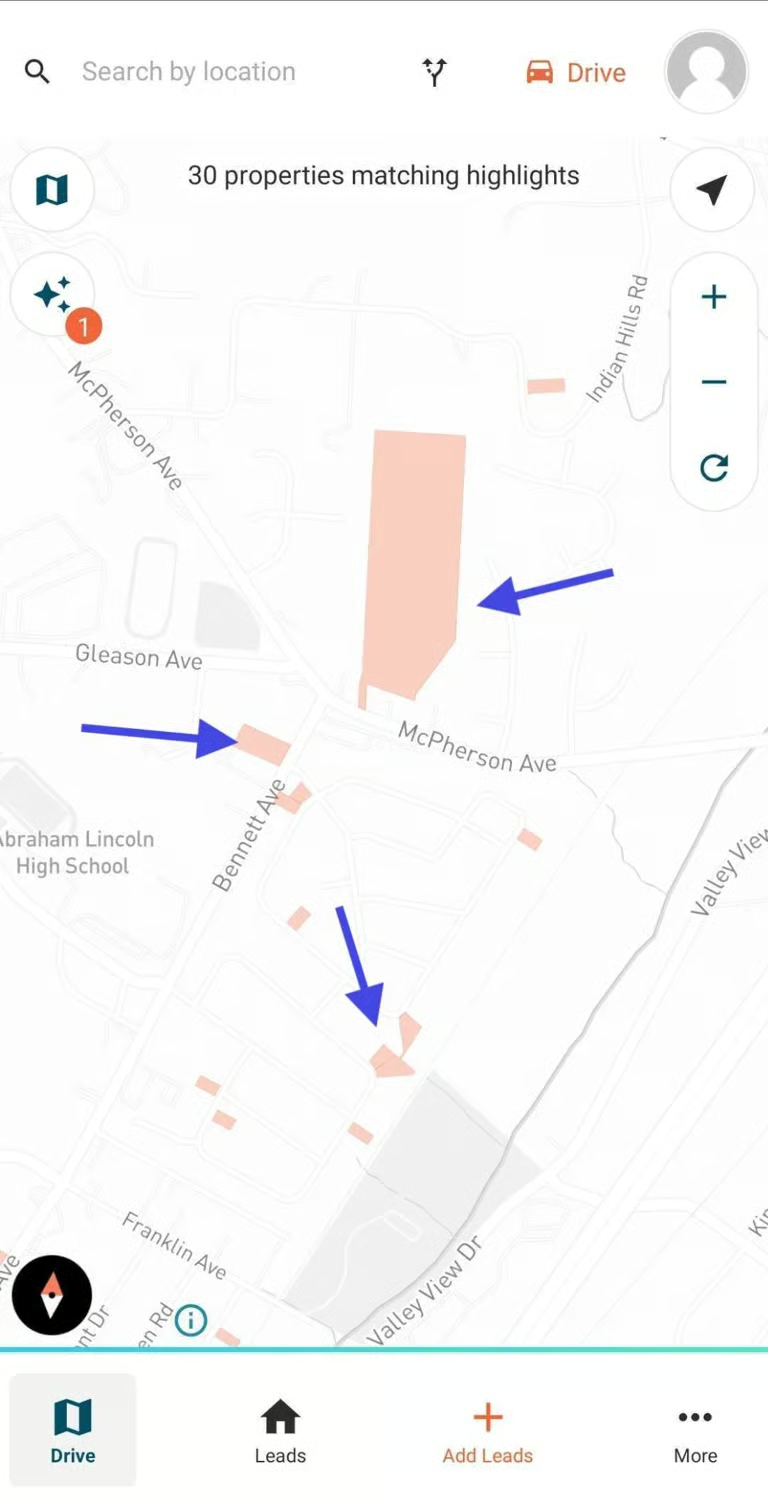
DealMachine modernizes driving for dollars by letting investors identify a property in the field, research its owner, save it to a list, and begin outreach. Its Basic plan includes nationwide property and owner data, saved searches, property filters, the driving-for-dollars app, and pay-as-you-go direct mail.
Investors can also use DealMachine for skip tracing, list building, data enrichment, comps, rehab estimates, and BRRRR calculations.
There is some overlap with PropStream and REsimpli, but DealMachine remains particularly useful for investors whose acquisition strategy begins with physically scouting neighborhoods and documenting distressed or overlooked properties.
REsimpli

- Best for: Investor CRM and acquisition management
- Starting price: $149 per month, billed annually
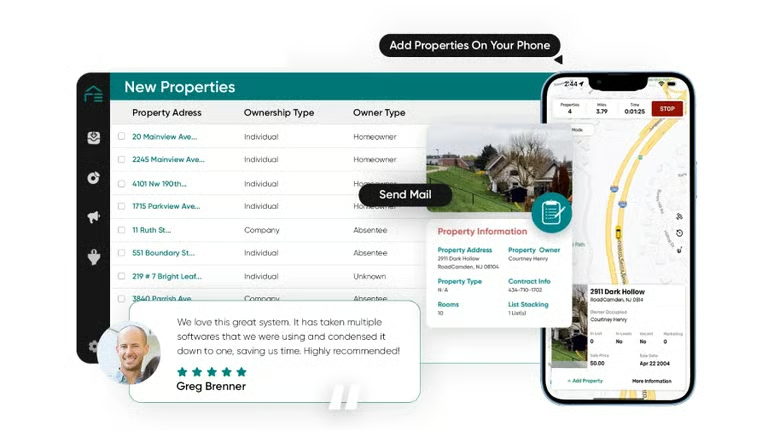
REsimpli is an investor-focused customer relationship management platform that organizes motivated-seller leads and acquisition activities.
Its tools include list stacking, lead management, skip tracing, cash-buyer searches, driving for dollars, drip campaigns, direct mail, calling, texting, email, electronic signatures, websites, and performance reporting.
The platform costs significantly more than a basic CRM, but it consolidates tools that active acquisition businesses might otherwise buy separately. REsimpli makes the most sense for wholesalers, flippers, and investor teams that consistently generate and follow up with seller leads rather than rental owners who primarily need accounting or tenant-management software.
DealCheck

- Best for: Rental, flip, and deal analysis
- Starting price: Free; paid plans start at $10 per month
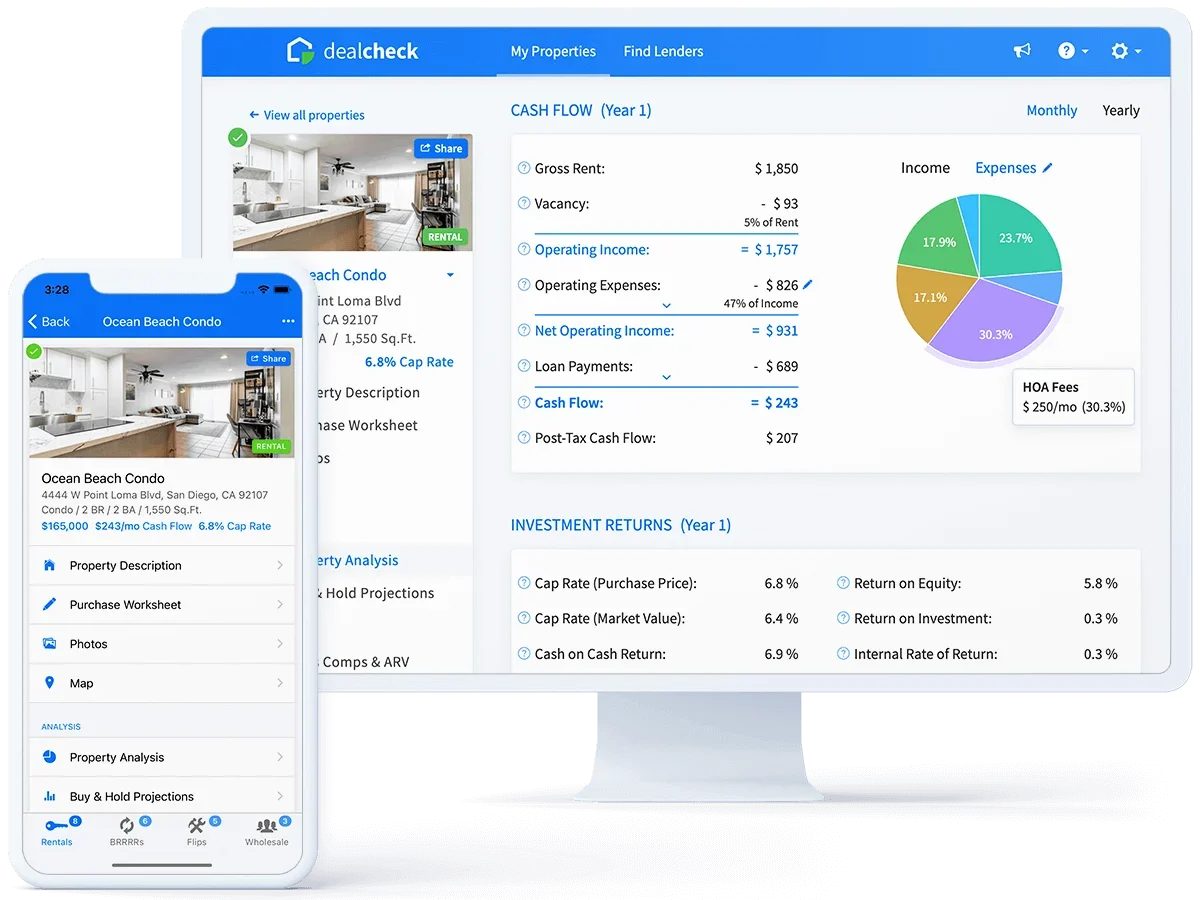
DealCheck helps investors evaluate rental properties, flips, BRRRR projects, wholesale deals, and multifamily or commercial properties. Users can enter financing, income, expenses, renovation costs, and selling assumptions to estimate cash flow, cap rate, cash-on-cash return, profit, and other performance measures.
The free plan supports up to 15 saved properties, while paid plans raise or remove those limits and provide greater access to photos, comps, templates, owner lookups, and branded reports. DealCheck is a strong choice for newer investors learning how to run numbers, but its reports are still projections. Investors need to confirm rents, expenses, financing terms, repair estimates, and comparable sales before acting.
RentCast

- Best for: Long-term rental estimates and market research
- Starting price: Free; Pro starts at $12 per month, billed annually
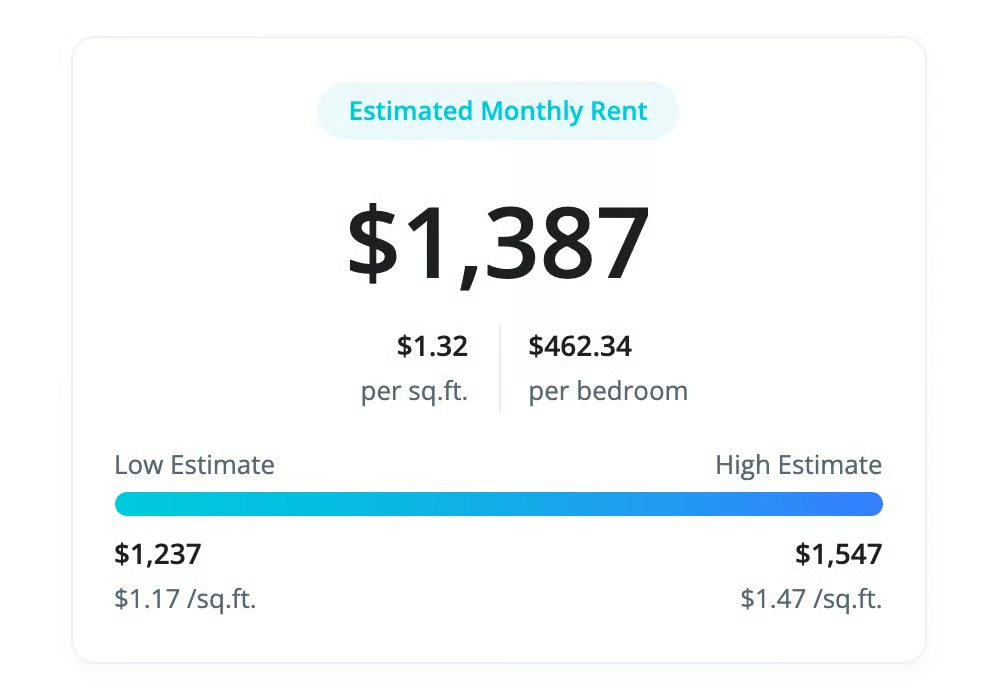
RentCast provides long-term rent estimates, nearby rental comps, historical rent trends, and market insights for properties across the United States. Investors can research individual properties, compare similar rentals, monitor asking rents, and generate reports that make it easier to evaluate prospective purchases or review existing units.
The Pro plan includes up to 20 nearby rental comps, customizable comp criteria, market-update emails, rent alerts, and portfolio tracking for more than 50 properties. RentCast is more focused on rent research than full financial underwriting, so it works particularly well alongside a deal calculator such as DealCheck or an accounting platform such as Stessa.
FlipperForce

- Best for: Rehab estimating and flip project management
- Starting price: Free analysis plan; all-in-one plans start at $59 per month, billed annually
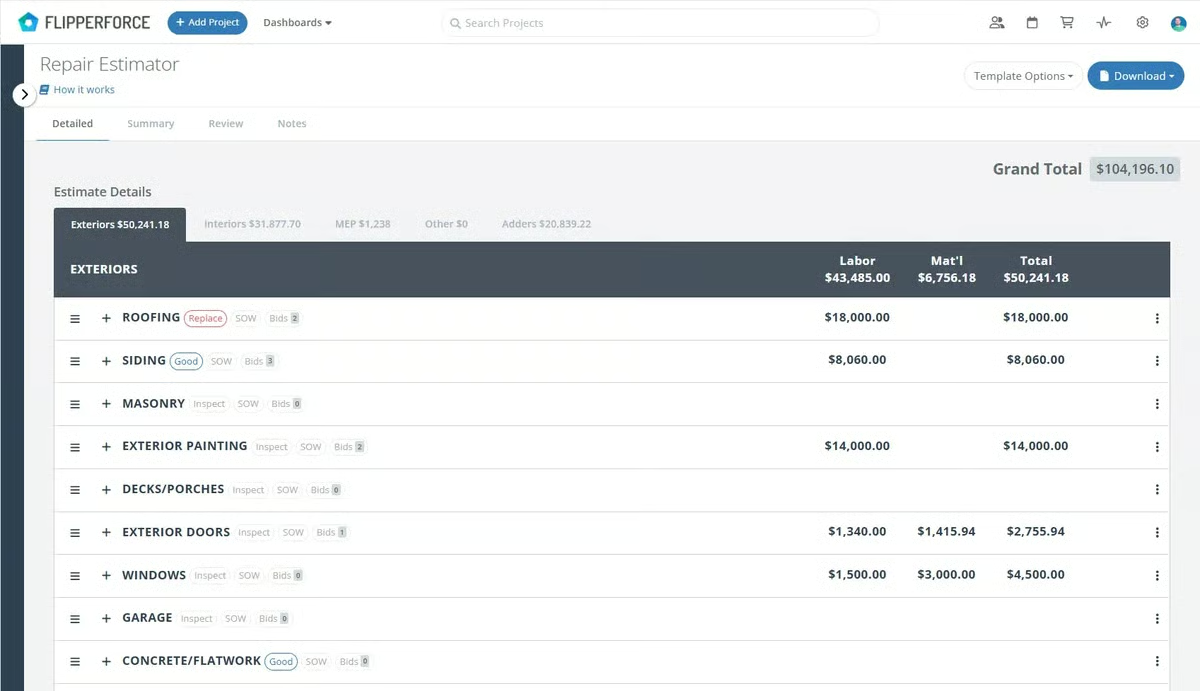
FlipperForce helps investors move from analyzing a property to managing its renovation. Its tools cover property and owner data, deal analysis, rehab estimates, scopes of work, material lists, project schedules, tasks, documents, photo logs, budgets, expense tracking, and final profit reporting.
The free Rookie Analysis plan is useful for basic analysis and rehab estimating, but project management and project accounting require an all-in-one subscription. FlipperForce is most valuable for active flippers and BRRRR investors who need to compare their original renovation budget with actual costs throughout the project.
Stessa

- Best for: Rental accounting and portfolio performance
- Starting price: Free; paid plans start at $12 per month, billed annually
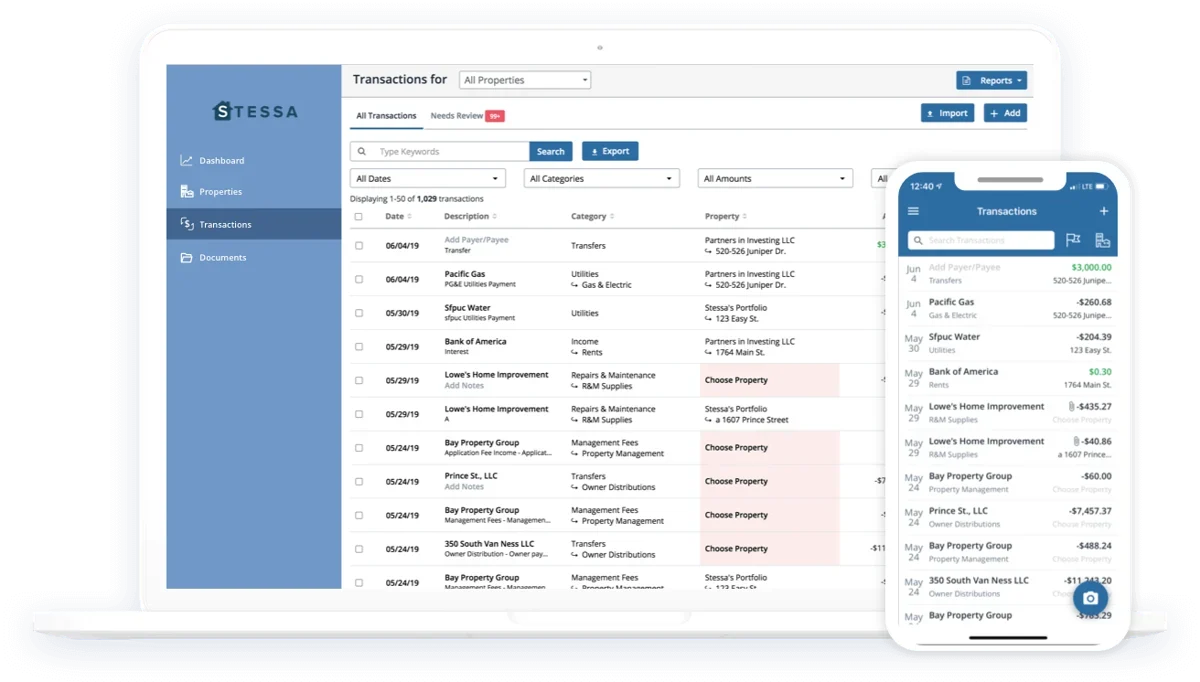
Stessa gives rental investors a centralized place to track income, expenses, documents, bank activity, and property-level performance. Its dashboards and financial reports help owners monitor cash flow across unlimited properties without maintaining a separate spreadsheet for every unit.
Stessa has also expanded beyond accounting with vacancy advertising, Zillow syndication, applications, tenant screening, rent collection, maintenance tracking, leases, and electronic signatures. However, access to some leasing, payment, legal-form, and reporting features depends on the plan you choose. Stessa remains best for investors who prioritize financial visibility and portfolio organization.
Avail

- Best for: DIY leasing and tenant management
- Starting price: Free; Unlimited Plus costs $9 per unit, per month
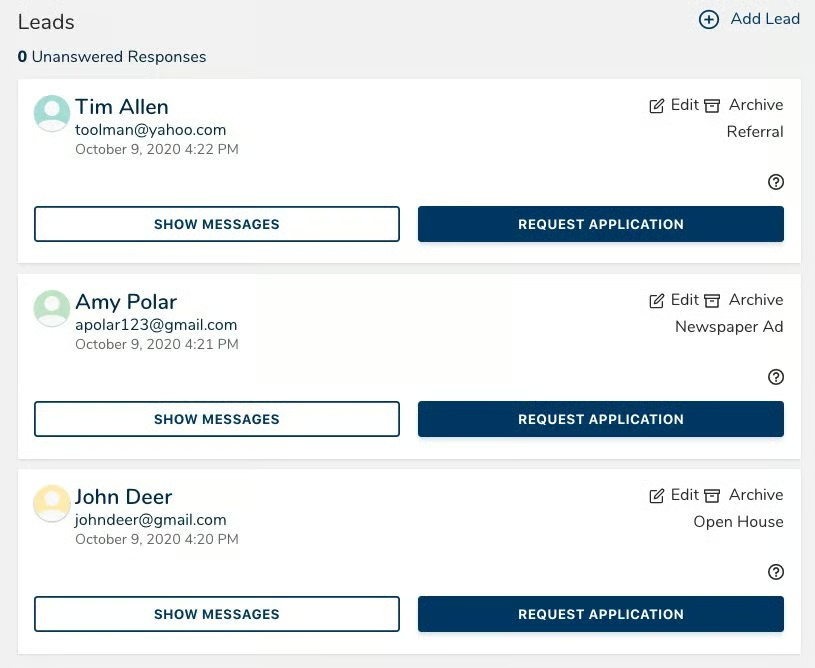
Avail helps independent landlords advertise rentals, communicate with prospective tenants, request applications and screening reports, prepare leases, collect rent, document expenses, and manage maintenance requests. Its free Unlimited plan supports an unlimited number of units, making it accessible to landlords who are managing a small portfolio themselves.
Tenants on the free plan pay $2.50 per ACH bank transfer, while the $9-per-unit Unlimited Plus plan waives that fee and adds FastPay, custom application questions, customizable leases, reusable lease templates, a branded property website, and priority support. Avail syndicates listings to several rental websites, but Zillow is not currently included among the partners listed on Avail’s website.
AirDNA

- Best for: Short-term rental market research
- Starting price: Free; Market Research starts at $34 per month, billed annually
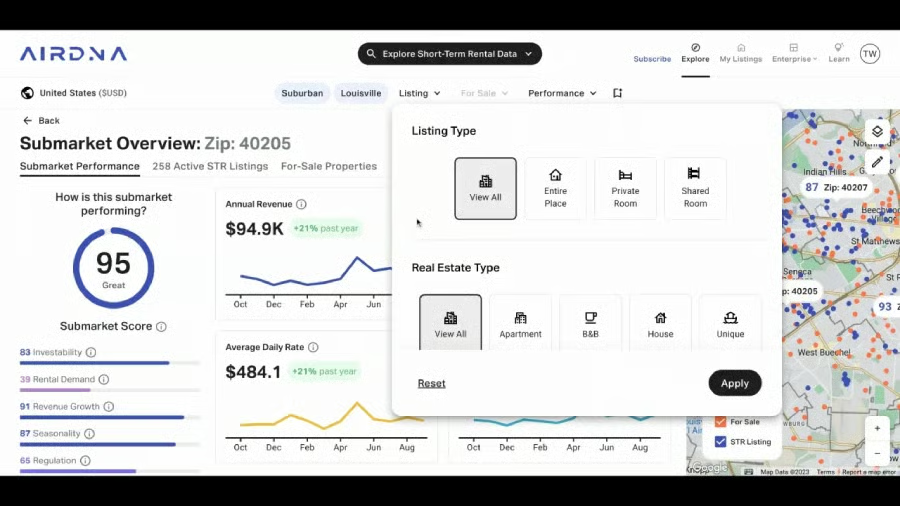
AirDNA helps investors research short-term rental markets using revenue, occupancy, nightly rate, demand, and property-performance data. Its Rentalizer estimates a property’s revenue potential, while paid research tools allow investors to customize comparable properties, analyze historical performance, review future demand, and compare potential markets.
The free plan is useful for preliminary research, but detailed underwriting requires the Market Research plan, which costs $125 monthly or $400 annually. AirDNA also offers Adapt, a separate dynamic-pricing product starting at $20 per listing, per month. Investors should treat revenue estimates as a starting point and separately verify local short-term rental laws, taxes, insurance requirements, operating costs, and permitting rules.
Crexi

- Best for: Commercial real estate research and opportunities
- Starting price: Free marketplace access; Intelligence Select costs $299 per month
Crexi gives commercial real estate investors and agents a marketplace for properties available for sale, lease, or auction. Its paid Intelligence tools add nationwide commercial property records, sales comps, leasing history, financing information, ownership details, demographics, map overlays, saved searches, and market insights.
Intelligence Select costs $299 month-to-month or $269 per month with an annual commitment, making it one of the most expensive products on this list. It is best suited to commercial investors and real estate professionals who need specialized commercial comps and ownership research. Residential investors evaluating single-family rentals will probably find PropStream, RentCast, or DealCheck more practical.

Methodology
For this guide, I focused on the following criteria:
- Pricing: I compared subscription tiers, one-time costs, and whether pricing information was transparent and easy to find. Value for the money mattered just as much as affordability.
- General features: I examined each platform’s core functionality, including property data, deal analysis, CRM tools, and marketing capabilities, and whether those features came standard or required add-ons.
- Ease of use: I evaluated the platform’s user-friendliness and accessibility. It is essential to consider whether the platforms require technical skills to start and operate, and whether they offer a mobile app.
- Help & support: I checked available customer support options and the assistance each company provides.
- Customer rating: I factored real user reviews and community reputation heavily into my choices, ensuring each tool has traction and trust among active investors.
- Expert score: Finally, I layered in my own expertise as an agent and working with investors. Firsthand testing helped me assess whether a platform delivers on its promises, stands out from competitors, and is worth the investment.
Read more about our methodology here.
Key features to look for in real estate investor software
The right features depend on your strategy, but these are some of the most important capabilities to consider:
 Property and ownership data: Records that help investors research properties, ownership, debt, taxes, liens, sales history, and potential distress.
- Deal analysis: Calculators for cash flow, cap rate, cash-on-cash return, financing, resale profit, and renovation costs.
- Rental comps: Comparable listings and market data that support realistic rent estimates.
- Lead-management tools: Pipelines, tasks, follow-up reminders, communication records, and marketing campaigns.
- Rehab management: Scopes of work, estimates, schedules, tasks, contractor information, documents, and expense tracking.
- Rental accounting: Automated income and expense categorization, financial reports, document storage, and portfolio-level reporting.
- Leasing tools: Rental advertising, applications, screening, leases, electronic signatures, payments, and maintenance requests.
- Mobile access: Apps or mobile-friendly interfaces for researching properties and managing projects in the field.
- Integrations: Connections with accounting software, CRMs, bank accounts, listing websites, calendars, and automation platforms.
- Reporting: Clear reports that can be shared with lenders, partners, clients, accountants, or other members of the investment team.
Common mistakes when choosing investor software
One common mistake is paying for an all-in-one platform when you only need one feature. A free calculator may better serve an investor evaluating a few properties a year than a $149-per-month acquisition system. Start with your current workflow, not the business you hope to run several years from now.
Investors should also watch for overlapping subscriptions. Property data, skip tracing, direct mail, deal calculators, rent estimates, and CRM tools appear in several products. Compare the features you already have before adding another platform, and calculate the complete cost of add-ons, transaction fees, additional users, data exports, and annual commitments.
Finally, do not mistake software output for verified due diligence. Automated valuations, rent estimates, repair projections, occupancy rates, and return calculations can all be wrong. Confirm important numbers through appropriate records, inspections, contractors, local professionals, and firsthand market research.
Frequently asked questions (FAQs)
What is real estate investor software?
Real estate investor software is a broad category of platforms that help investors find, analyze, purchase, renovate, operate, or monitor investment properties. Some products focus on a single task, such as calculating cash flow, while others combine property data, marketing, accounting, or property-management tools.
What software should a new real estate investor start with?
A new investor should generally start with deal-analysis software such as DealCheck and a property-research tool appropriate for the chosen strategy. Rental investors may also benefit from RentCast for rent estimates. Start with free plans when possible, then upgrade after identifying a recurring need that justifies the cost.
What is the difference between investor software and property-management software?
Investor software generally focuses on finding, acquiring, and analyzing properties. Property-management software focuses on operating properties after purchase through leasing, rent collection, accounting, maintenance, and tenant communication. Some platforms, including Stessa and Avail, now combine elements of both categories.
Bringing it all together
The best real estate software for investors is not necessarily the platform with the longest feature list. It is the one that solves a recurring problem, improves your decision-making, and saves enough time or money to justify its cost. The right choice will depend on your investment strategy, portfolio size, experience, and current workflow.
Before subscribing, identify where information or tasks are falling through the cracks. Test free plans or trials when available, watch for overlapping features, and calculate the complete cost after add-ons. Software can make your investment strategy easier to execute, but your research, judgment, and local knowledge still determine whether a deal makes sense.
You may also like…