





































If you’re still using pen-and-paper sign-in sheets at your open houses, it may be time to step out of the Stone Age. As a real estate agent, I eventually replaced paper forms with digital sign-ins and quickly realized how much easier it was to collect readable contact information, organize visitors, and begin following up before a promising lead went cold.
The best open house apps do more than replace a clipboard. They can verify contact information, qualify visitors, send automated follow-ups, sync leads with your customer relationship manager (CRM), collect property feedback, and create seller reports.
I compared today’s leading options to identify five open house apps that can help agents run smoother events and turn more visitors into future clients.
| App | Best for |
|---|---|
| Curb Hero | Digital sign-in sheets |
| Spacio by Lone Wolf | Teams and brokerages |
| Showable | Paper-form digitization |
| Open Home Pro | Simple offline lead capture |
| Happy Open House | Seller reporting |
Why you can trust The Close
As a real estate agent myself, open houses were a major part of how I built my business, generated buyer and seller leads, and developed long-term client relationships. In fact, some of my biggest deals and strongest client connections came directly from the open house. Because of that firsthand experience, I understand how important the right tools are for capturing leads, staying organized, following up effectively, and creating a professional experience for visitors.
For this guide, I combined my real-world experience hosting open houses with detailed research to evaluate the best open house apps for agents. My goal is to provide honest, practical recommendations that help agents choose tools that not only make open houses run more smoothly, but also help turn visitors into future clients and closings.
Sophia Doyle
Staff Writer–The Close
- The Close’s picks for the best open house apps
- Curb Hero: Best for digital sign-in sheets
- Spacio by Lone Wolf: Best for teams and brokerages
- Open Home Pro: Best for simple offline lead capture
- Happy Open House: Best for seller reporting
- How to choose an open house app
- Open house registration and privacy considerations
- Methodology
- Bringing it all together
The Close’s picks for the best open house apps
| App | Standout features | Monthly starting price | Free trial or plan | Learn more |
| Curb Hero |
| Free | Free | Visit Curb Hero |
| Spacio by Lone Wolf |
| $25 | 14-day trial | Visit Spacio by Lone Wolf |
| Showable |
| Free | Free plan | Visit Showable |
| Open Home Pro |
| Free | Free plan | Visit Open Home Pro |
| Happy Open House |
| $29 | 14-day trial | Visit Happy Open House |
Curb Hero: Best for digital sign-in sheets

 Pricing: Free for individual agents
 Available on:


What is Curb Hero?
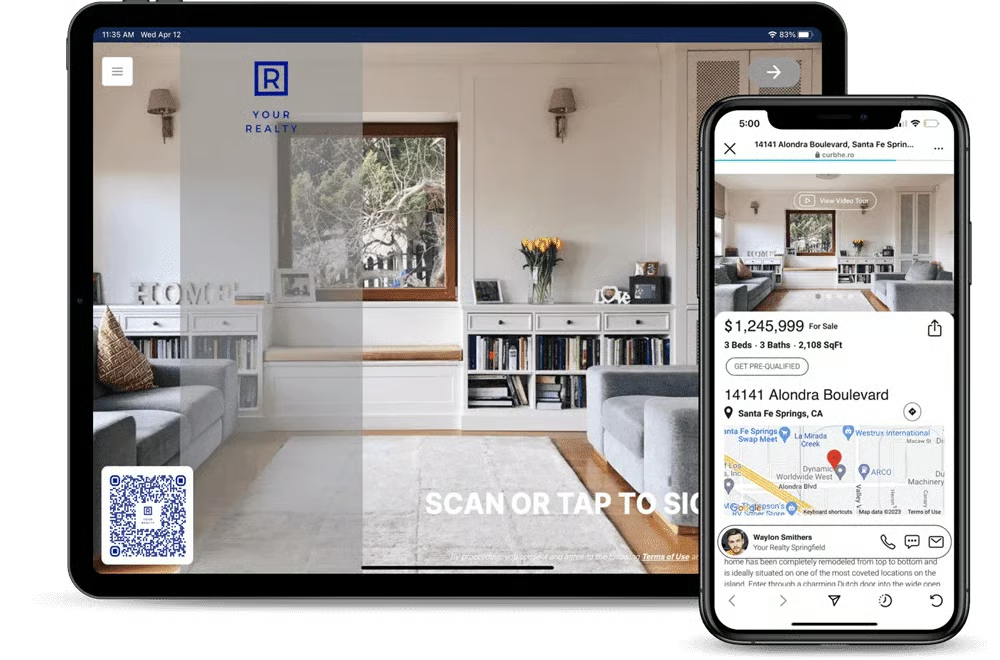
Curb Hero is a free open house app that replaces a traditional sign-in sheet with a customizable digital registration experience. Visitors can enter their information directly on an agent’s device or scan a QR code and complete the form using their own phone. The app can also function without an active internet connection and sync the information once service is restored.
What makes Curb Hero especially useful is how much it builds around the basic sign-in process. Agents can customize registration questions, add branding, display property information, create marketing pages, verify leads, and connect collected contacts to other business tools. Its App Store listing states that Curb Hero connects with more than 6,000 CRM and marketing tools through direct integrations.
Notable features
- Digital and QR-code sign-ins: Visitors can register on an agent’s tablet or scan a QR code to use their own device.
- Contact verification: Curb Hero verifies lead information and may append publicly available background details to help agents personalize follow-up.
- Automated follow-up: Agents can send immediate text messages containing listing and agent information.
Spacio by Lone Wolf: Best for teams and brokerages

- Pricing: $25 per month for an individual agent
- Available on:
What is Spacio?
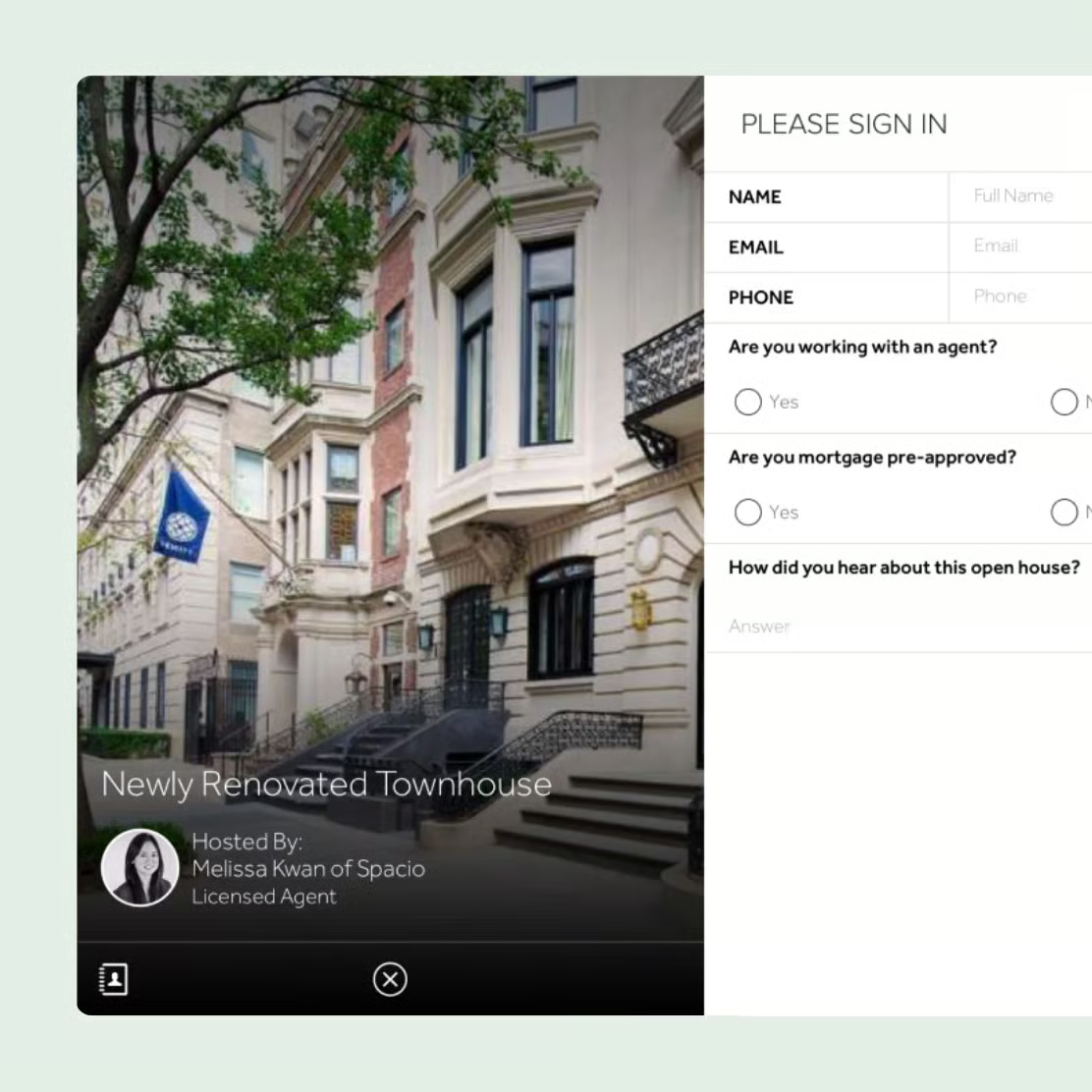
Spacio is a lead-capture and open house management platform owned by Lone Wolf Technologies. It supports customizable registration, automated email follow-up, contact verification, CRM integrations, and post-event seller reports. Agents can use Spacio for open houses, private showings, virtual events, and other occasions that require visitor registration.
While individual agents can use Spacio, its team and brokerage tools are its strongest differentiators. Administrators can manage agents, share properties, control lead access, set default registration questions, apply consistent branding, and review activity across multiple agents and events.
Notable features
- Verified contact information: Spacio checks visitor information and can provide social-profile insights for verified contacts.
- CRM integrations: Lead information can flow directly into compatible CRMs and marketing systems.
- Team administration: Team leaders can manage users, share properties, oversee leads, and review team-wide performance.
Showable: Best for paper-form digitization

- Pricing: Free; paid plans start at $19 per month
- Available on: Web browsers
What is Showable?
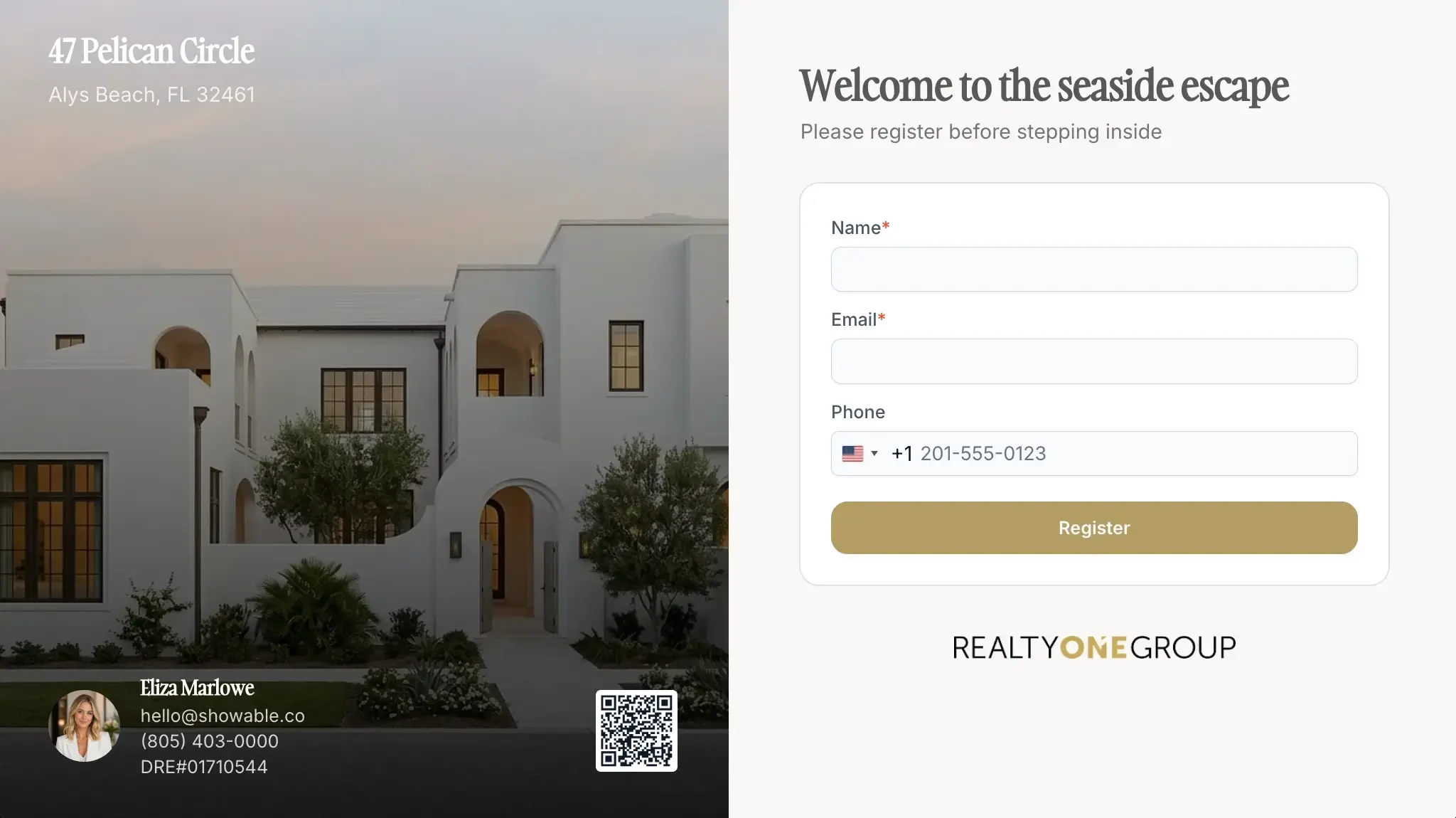
Showable offers a modern digital sign-in process without forcing every agent to abandon paper completely. Visitors can register through a mobile-friendly form or QR code, but agents can also upload a photograph of a completed paper sign-in sheet and convert the handwritten entries into digital contacts.
The hybrid approach is useful during crowded events or when some visitors are uncomfortable using a shared device. Showable also handles open house scheduling, advance RSVPs, follow-up emails, feedback requests, CRM syncing, seller reporting, custom branding, and team collaboration.
Notable features
- Digital and paper lead capture: Collect visitors through a digital form or convert handwritten forms into organized contacts.
- QR-code registration: Visitors can scan a property-specific code and register using their own phones.
- Social media graphics: Paid plans provide marketing assets agents can use to promote events.
Open Home Pro: Best for simple offline lead capture

- Pricing: Free; Premium costs $25 per month
- Available on:
What is Open Home Pro?
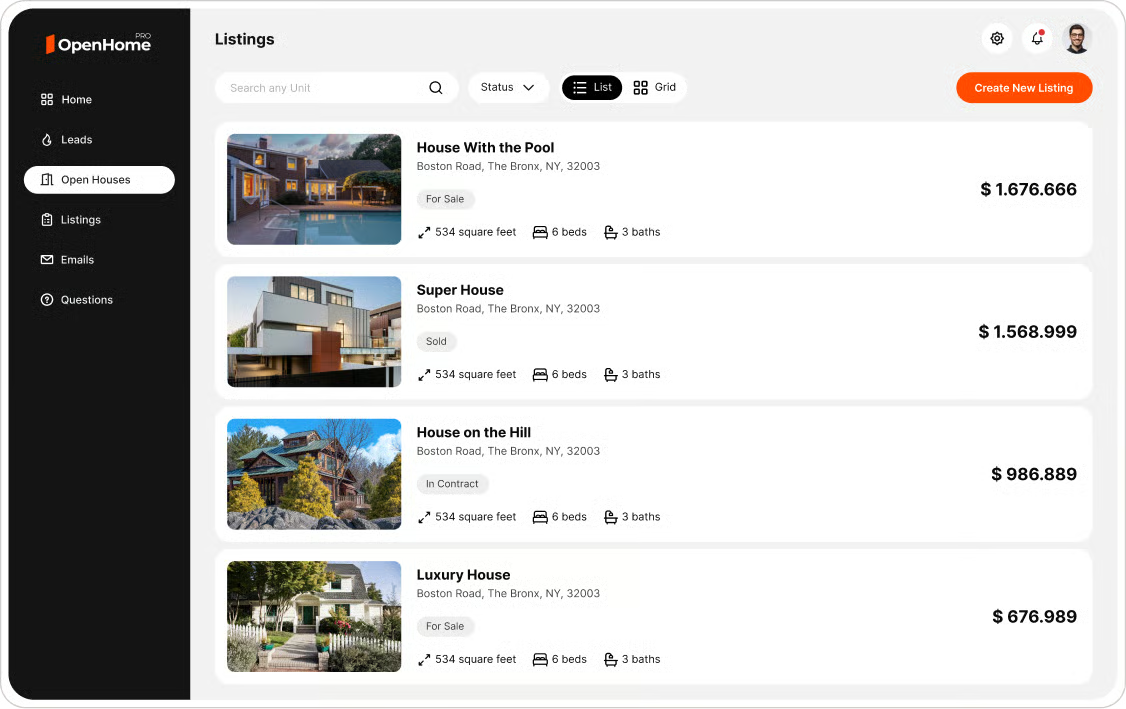
Open Home Pro is a straightforward digital registration platform for agents who do not need an overly complicated open house system. Agents can add property information and photos, launch an event on a tablet, collect visitor details, add notes, and organize leads for later follow-up.
Its mobile apps work offline, which is particularly useful when hosting a property with weak Wi-Fi or cellular service. Once the device reconnects, Open Home Pro can sync the event’s leads, listings, and settings.
Notable features
- Offline registration: Capture visitor information without an active internet connection.
- Lead organization: Sort contacts and identify visitors who may need immediate attention.
- Custom registration questions: Paid users can ask questions specific to their market or lead-qualification process.
Happy Open House: Best for seller reporting

- Pricing: $29 per month or $199 annually
- Available on:
What is Happy Open House?
Happy Open House helps agents manage registration, follow-up, visitor communication, and seller reporting from one platform. Agents can create an event, add property photos and details, customize registration questions, collect leads, and send post-event communications to attendees.
One-click owner reports are especially useful for listing agents. Instead of manually summarizing attendance and feedback, agents can share a polished report that helps sellers understand traffic, buyer reactions, and interest in the property.
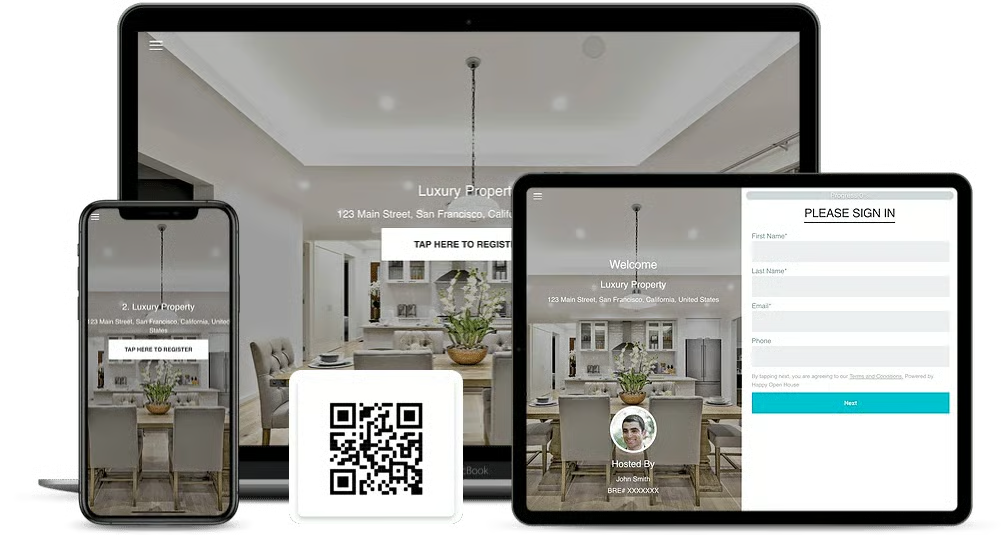
Notable features
- Custom registration questions: Collect information about representation, financing, homeownership, and moving timelines.
- Hot-lead indicators: Identify visitors who return to a property or demonstrate stronger interest.
- Mass messaging: Contact all or selected attendees with property updates.
How to choose an open house app
The right open house app depends on how frequently you host events, how you collect visitor information, and what happens to a lead after registration. Before committing to a product, consider the following factors.
Registration options
Look for an app that supports the way you host. Tablet registration works well when you greet every visitor at the entrance, while QR codes prevent a line from forming when several groups arrive simultaneously. If you still offer a paper option, consider a platform that can digitize those contacts afterward.
Offline access
Do not assume every listing will have reliable Wi-Fi or cellular reception. If you regularly work in rural areas, basements, high-rise buildings, or vacant properties without internet service, prioritize an app with a tested offline mode.
Lead qualification
A name and email address are not enough to understand a visitor’s potential. Custom questions can help you learn whether someone is already represented, needs to sell a home, has been preapproved, or plans to purchase soon. Keep the registration form reasonably short. Asking too many questions at the door can create friction and leave less time for an actual conversation.
CRM integrations
Determine exactly how contacts will move from the open house apps into your CRM. A direct integration is generally simpler, but Zapier and webhooks can connect platforms that do not offer a native integration. Test the connection before your event and confirm that relevant information, including answers to custom questions and property details, reaches the correct contact record.
Follow-up capabilities
Some apps send one automatic message, while others support customized emails, text messages, feedback requests, and longer-term campaigns. Decide whether you want the app to handle follow-up or simply deliver leads to your CRM.
Seller reporting
Listing agents may benefit from attendance summaries, feedback reports, and engagement analytics. These reports help sellers understand what happened during the event and give agents a structured way to discuss recurring buyer objections.
Team management
Teams should look beyond individual pricing. Administrative permissions, lead routing, shared listings, agent assignment, standardized branding, and company-wide reporting can be more important than saving a few dollars per user.
Open house registration and privacy considerations
Tell visitors how you plan to use the information they provide. If your registration process includes consent language for marketing emails or text messages, make sure it is clear and not hidden behind vague wording.
Agents should also avoid collecting sensitive information they do not need. Use secure devices, password-protect your accounts, review an app’s privacy practices, and confirm who owns or can access the leads. Brokerage policies, state requirements, and federal communication rules may also apply, so agents should consult their broker or appropriate legal guidance when configuring consent language and automated outreach.
Methodology
I evaluated open house apps using the following criteria:
Affordability: I compared free plans, monthly subscriptions, annual discounts, trials, team pricing, lead limits, and features that require an upgrade.
Lead capture and qualification: I evaluated digital sign-in forms, QR codes, custom questions, contact verification, offline registration, and tools that help agents identify promising visitors.
Follow-up and integrations: I considered automated emails and texts, CRM connections, lead exporting, feedback requests, and how easily contacts move into an agent’s existing workflow.
Open house management: I reviewed scheduling, RSVP pages, property marketing, seller reports, team collaboration, branding, and event analytics.
Ease of use: An open house tool needs to be simple for both the agent and the visitor. I considered setup, device compatibility, interface design, and how quickly agents can access captured leads.
Customer feedback: I reviewed current customer ratings and user feedback to understand how each platform performs outside of a product demonstration.
Frequently asked questions (FAQs)
Do open house apps work without Wi-Fi?
Some do. Curb Hero and the mobile version of Open Home Pro can capture visitor information without an active internet connection and sync the data later. Browser-based products may require connectivity, so agents should test their chosen platform at the property before the open house begins.
What questions should I include on an open house sign-in form?
In addition to a visitor’s name, email, and phone number, consider asking whether they are working with an agent, have been preapproved, own a home they need to sell, and when they plan to move. Keep the form short enough that it does not discourage registration.
Are digital open house sign-in sheets better than paper?
Digital forms provide clearer contact information and can send leads directly into a CRM or follow-up process. Paper can still work as a backup, especially when internet service or visitor flow creates problems. A platform that supports both methods gives agents more flexibility.
Bringing it all together
The best open house apps eliminate illegible handwriting and make it easier to turn visitor information into meaningful follow-up. Curb Hero is a strong free choice for digital sign-ins, while the other providers offer useful options for teams, hybrid paper workflows, offline registration, and seller reporting.
Whichever app you choose, set it up before arriving at the property, test its CRM connection, customize your questions, and prepare your follow-up messages in advance. The app can organize the information, but converting an open house visitor still depends on starting a real conversation and providing a useful next step.
Related Articles
- 26 Open House Ideas That Will Actually Get You Leads in 2026
- 16 Open House Scripts & Tools That Actually Get Phone Numbers
- 10 Free Open House Sign-in Sheets To Try This 2026
- 16 Open House Flyer Templates that Get Leads (Free & Paid Examples)