





































Redfin and Zillow are two of the most widely used real estate platforms for browsing homes, researching neighborhoods, comparing property details, and tracking local market activity. Both let users search active listings, explore rentals, save homes, use filters, and review listing information, but they are not built for the exact same purpose.
The biggest difference is how each platform operates. Redfin is a real estate brokerage with its own agents and listing services, while Zillow is primarily a real estate marketplace that aggregates listing data and connects buyers, sellers, renters, landlords, agents, and FSBO sellers. That distinction matters because it affects how listings appear, how users connect with agents, and which tools are available for consumers and real estate professionals.
In short, here’s where each platform stands out:
| Redfin | Zillow |
|---|---|
| Best for real estate agents looking to work with a brokerage. | Best for non-Redfin agents looking to list a client’s house or provide options for buyer clients. |
Why You Can Trust The Close
At The Close, our recommendations are built for real estate professionals who need practical, unbiased guidance on the tools they use every day. As a real estate agent, I’ve personally used both Redfin and Zillow to research properties, compare listing data, evaluate home estimates, and support clients during the buying and selling process.
For this comparison, I looked at each platform through both an agent and a consumer lens, evaluating estimate accuracy, listing visibility, pricing, lead-generation options, agent tools, search experience, and overall value. The Close maintains editorial independence, which means our recommendations are not influenced by vendors or advertisers.
Sophia Doyle
Staff Writer–The Close
- Redfin vs Zillow: Overview Comparison
- Expert’s take: When to use Zillow vs Redfin vs an Alternative
- Estimate accuracy: Redfin wins
- Pricing and fees: Draw
- Tools & features for agents: Zillow wins
- Coverage area: Zillow wins
- User experience: Redfin wins
- Home buying: Draw
- Home selling: Zillow wins
- Methodology
- Frequently asked questions (FAQs)
Redfin vs Zillow: Overview Comparison
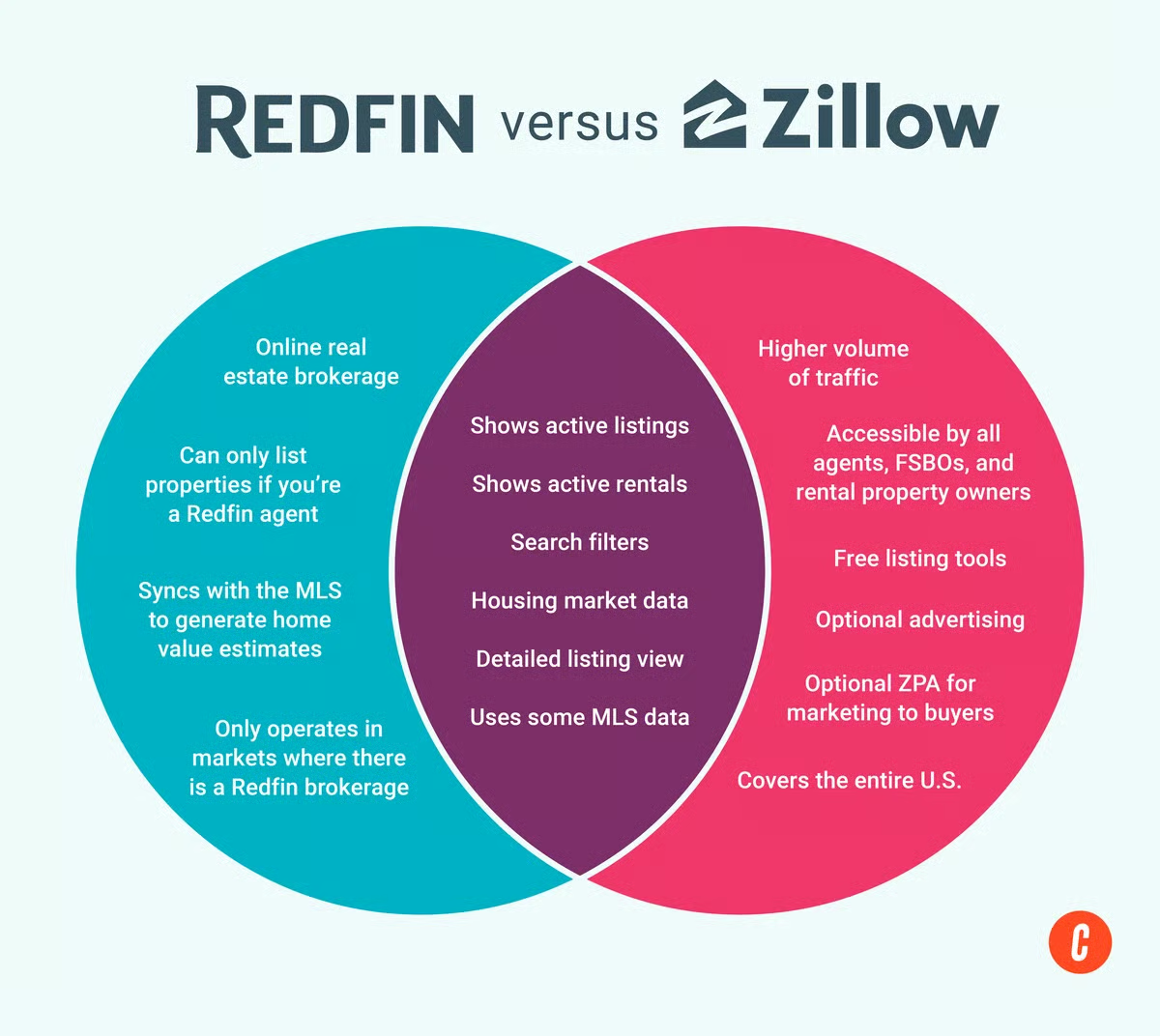
Here’s a visual on the similarities and differences of Redfin & Zillow, followed by a quick look at each one’s pros, cons, and use cases.
 | |
|---|---|
Use cases:
| |
Pros:
| Cons:
|
| Visit Redfin | |
 | |
|---|---|
Use cases:
| |
Pros:
| Cons
|
| Visit Zillow | |
Expert’s take: When to use Zillow vs Redfin vs an Alternative
Both Redfin and Zillow are great platforms for buyers, renters, or just everyday adults who like to browse listings (I know I’m not the only one who looks up all my friends’ houses!). But when it’s time to go beyond browsing, you need to understand the differences between Zillow and Redfin to choose which one is right for your needs.
Here’s our breakdown of Zillow vs. Redfin, depending on what you’re looking for. If you are:
- A real estate agent: Redfin is a great brokerage option, with lower listing fees, a salary, and benefits
- Helping a client buy a home: Zillow has built-in communication tools and client insights to make your transaction as efficient as possible
- Listing a client’s house for sale: Zillow has more free listing tools for agents. You can only list a house for sale on Redfin directly if you are a Redfin agent.
- A rental property owner: Both Redfin and Zillow allow you to list rentals for free.
- Looking for buyer leads: Zillow has a variety of tools to help agents generate buyer leads.
- Listing your home for sale as a FSBO: Zillow is the only place to list a house for sale as a homeowner.
- Looking for an agent: There are great agents on both Zillow and Redfin. On Zillow, you can browse through local agents, looking at their bio, experience, and reviews to choose the right one. On Redfin, you’ll be automatically connected with one of its agents.
- Buying a house for yourself: Redfin is best, because of its accurate home estimates, property details, and in-depth neighborhood information.
When to use an alternative
If you’re looking for seller leads, neither Redfin nor Zillow are ideal choices. Instead, check out Smartzip, one of our top recommended real estate lead generation companies. This platform uses predictive analytics to help you identify likely sellers before they’re ready to sell.
For even more options, read about the top 5 Zillow alternatives.
Estimate accuracy: Redfin wins
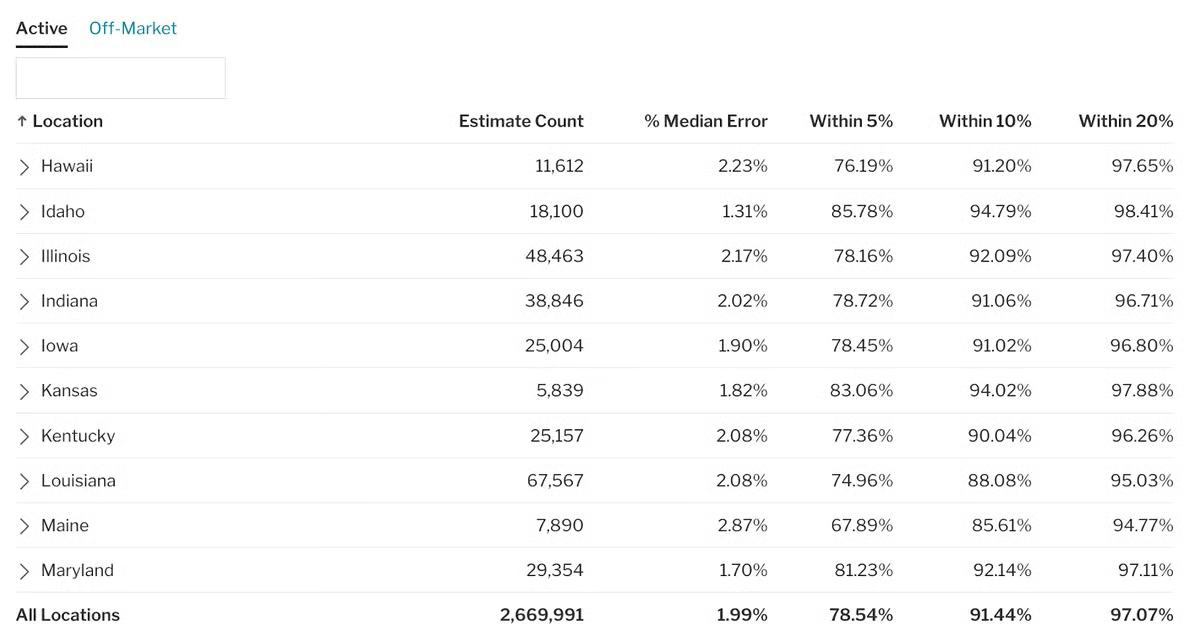
Since Redfin has access to the MLS, its home estimates have a small median error rate of just 1.99% on active listings and 7.87% on off-market homes. On the other hand, Zillow estimates (or Zestimates) are generated by using data from similar properties that have been listed on Zillow.
This means that the accuracy of Zillow estimates depends on how much detail local real estate agents and FSBOs have included in their listings. Since this is a less reliable source, the Zillow error rate is slightly higher at 2.4% on active properties and 7.49% on off-market homes.
Even though the Zillow home estimates are relatively accurate, when you compare Redfin vs Zillow estimates, Redfin is the top choice.
Pricing and fees: Draw
Comparing the pricing and fees of Zillow and Redfin is a challenge because the two platforms have fundamentally different functions. Since Redfin is a real estate brokerage, its only expenses and fees are for its agents. On the other hand, Zillow can be used by anyone who wants to sell or rent a house.
Comparing the fees of Redfin vs Zillow would be like comparing apples to apartment complexes. Instead, here’s a breakdown of the free and paid services offered by Redfin and Zillow:
| Redfin pricing | Zillow pricing |
|---|---|
|
|
Learn more about the costs of being a Premier Agent in our guide: Is Zillow Premier Agent Worth the Cost?
Tools & features for agents: Zillow wins
| Redfin tools for agents | Zillow tools for agents |
|---|---|
|
|
If you’re a real estate agent looking for ways to grow your business, it’s important to have a real estate platform that makes your job easier. When you compare Redfin vs Zillow’s free and paid tools for agents, Zillow clearly emerges as the frontrunner, particularly if you’re not a Redfin agent.
Even if you aren’t a Zillow Premier Agent, you can create a profile that will help you generate leads, market properties, work more efficiently with your team, and communicate with clients. Meanwhile, for Redfin agents, Redfin provides plenty of support, marketing materials, and a great salary structure. However, there is very little support and functionality for agents from other brokerages.
Coverage area: Zillow wins
Zillow covers the entire United States and incorporates data from the MLS, users, and other sources.
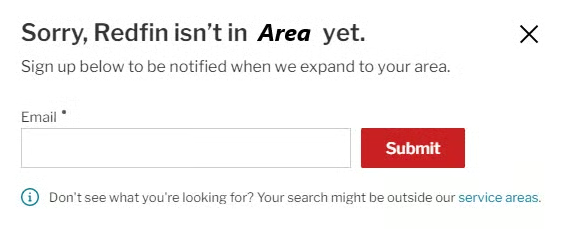
Although Redfin is generally more accurate and sometimes has more in-depth data, it’s limited to the areas where it has a brokerage. Redfin brokerages are in over 100 markets across the U.S., but this limitation is something to consider.
User experience: Redfin wins
If you compare one listing in both Redfin and Zillow, you’ll see a lot of similarities. At the top, both platforms show listing photos, listing status, number of bedrooms and bathrooms, square footage, price, value estimate, description, price per square foot, listing agent details, and contact information. It’s easy to scroll through both platforms on desktop and through each platform’s app.
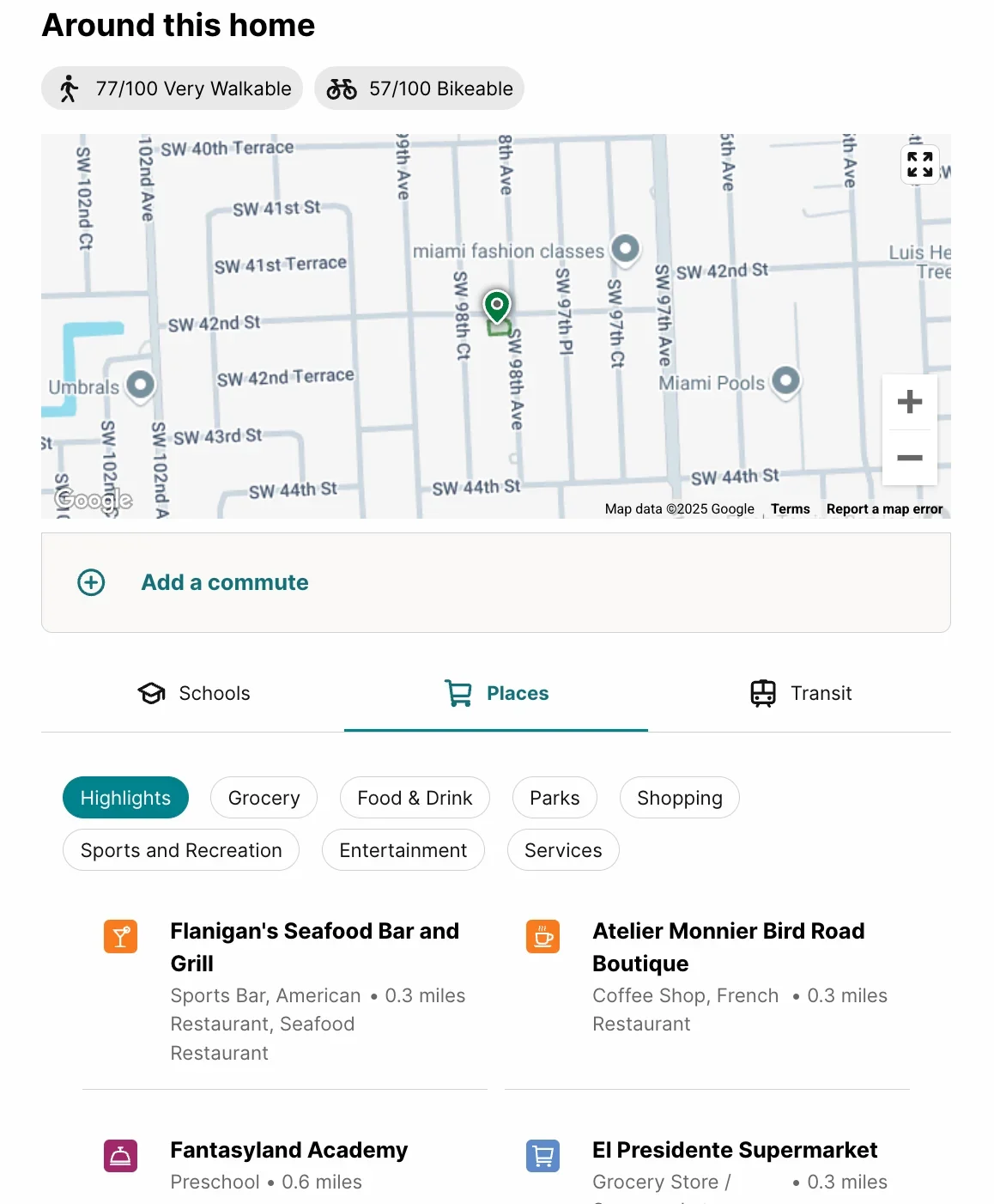
As you scroll through the listing, both platforms also have additional details about the home’s neighborhood, sale and tax history, payment information, and similar listings. However, Redfin has more details about each neighborhood, with a map showing local restaurants, transportation, attractions, and shopping. Redfin’s listing also has detailed reports about the climate of each listing.
Home buying: Draw
If you’re trying to decide between using Redfin or Zillow to buy a house, I could make great arguments for both. Both platforms provide these valuable features:
- Advanced search filters
- Home value estimates
- Detailed property listings
- Saved searches and alerts
- School and neighborhood information
- Local market trends and reports
- Mortgage calculators
- Home loan financing
- Home buying guides and articles
In fact, we suggest using both platforms while you search for your dream home! For homebuyers, the most important difference will come if you are looking for an agent on one of these platforms. Since Redfin is a full-service brokerage, it will automatically connect you with one of its local agents.
If you look for an agent on Zillow, your contact information may be sent to multiple local Zillow Premier Agents. You can also use the Agent Finder tool to search for someone who aligns with your specific needs and reach out to them directly.
Home selling: Zillow wins
| Redfin home selling options | Zillow home selling options |
|---|---|
|
|
For homeowners, choosing to sell a house with Zillow or Redfin can look drastically different. Zillow is unique because it offers four different methods of selling your house. This allows you more freedom to choose exactly what you want the process to look like.
Zillow also allows real estate agents more freedom when selling a house. There is no option to list a house for sale with Redfin unless you’re a Redfin agent. But with Zillow, you can list a client’s house for free and even choose to advertise with ZPA to get more visibility. Although Redfin is a great option, we chose Zillow as the winner for this category because of its flexibility.
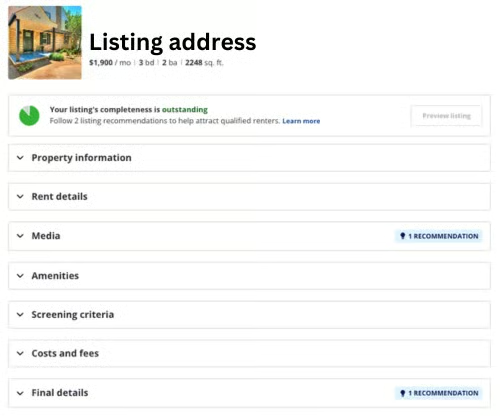
If you choose to sell with Redfin, you’ll be paired with a Redfin agent who will help you through the process. One of the biggest advantages of this choice is that the listing fee is just 1%, which is lower than most other brokerages. You can also choose to have a Concierge Listing, which adds more advanced marketing and support for an additional cost.
Methodology
To accurately compare Zillow and Redfin, our team did thorough research on both platforms, consulted experts, and incorporated important data from reliable sources. Since our priority is to support real estate professionals, we focused on categories and uses of Zillow and Redfin that applied to real estate agents, like marketing listings, working with clients, and generating leads.
I considered the following features:
- Pricing: We considered and compared the costs of listing a home on each platform and the pricing structures.
- Home value estimators: We looked at proven data to determine how Zillow and Redfin generate their estimations and which is more accurate.
- Coverage areas: It’s important to use a real estate platform with up-to-date local information and support, so we evaluated both platform’s coverage.
- Traffic and user base: Visibility is essential for every real estate transaction, so we included the engagement of Redfin and Zillow users.
- Features and tools for agents: The right real estate platform can be a crucial part of growing a real estate business, so we gathered all the resources offered by each platform.
- Home buying and selling features: Both Redfin and Zillow offer support to buyers, sellers, and agents, so we did extensive research to determine the difference in their services and who they are best for.
- User experience: It’s important for any online tool to offer a seamless user experience, so we considered the pros and cons of each platform’s design and included features.
For more details about how we evaluate tools and resources, read more about The Close methodology.
Frequently asked questions (FAQs)
Should sellers rely on online estimates before setting a list price?
Online estimates can help sellers get a general sense of market value, but they should not be the final basis for pricing a home. Sellers should also consider recent comparable sales, active competition, property condition, timing, and local demand before choosing a list price.
How often should buyers check Redfin or Zillow during a home search?
Buyers in competitive markets may want to check listing alerts daily, especially when inventory is low or homes are moving quickly. However, buyers should also work with an agent who can verify MLS updates, identify new opportunities, and help interpret whether a listing is actually a good fit.
Are Redfin and Zillow useful for researching neighborhoods?
Yes, both platforms can help users explore neighborhood trends, school information, commute considerations, nearby amenities, and recent sales activity. However, buyers should verify key details with local sources, municipal websites, school districts, and their agent before making decisions based solely on platform data.
Related Articles