





































During my real estate career, I have worked with landlords as they evaluate and purchase rental properties. I have seen that the work does not end at closing. Once a tenant moves in, owners still need to collect rent, categorize expenses, monitor cash flow, retain receipts, and prepare reliable records for tax season.
General accounting software can handle debits and credits, but landlords' accounting software organizes financial activity around properties, units, leases, and tenants. The best platform depends on whether you want focused bookkeeping, integrated banking, mobile management, or a broader system that can support a growing portfolio.
| Software | Best for |
|---|---|
| Stessa | Financial tracking |
| Baselane | Integrated landlord banking and bookkeeping |
| REI Hub | Tax-ready rental bookkeeping |
| Landlord Studio | Mobile accounting and management |
| Rentec Direct | Growing portfolios |
Why you can trust The Close
As a real estate agent, I have worked directly with landlords and investors during the property search and purchase process. That experience helps me evaluate these tools from a practical perspective. Owners need to understand what each rental earns, keep records organized, and avoid piecing together critical information at year-end.
The Close’s editorial standards focus on practical, transparent recommendations for real estate professionals. This guide distinguishes verified product features from my assessment of which platform best suits each professional.
No accounting program replaces the judgment of a qualified accountant or tax professional, so landlords should confirm how reports and categories apply to their specific ownership structure and tax situation.

The Close’s top picks for landlord accounting software
| Software | Starting price | Mobile app available | Learn more |
|---|---|---|---|
| Stessa | Free | ✓ | Visit Stessa |
| Baselane | Free | ✓ | Visit Baselane |
| REI Hub | Free | ✓ | Visit REI Hub |
| Landlord Studio | Free for up to three units | ✓ | Visit Landlord Studio |
| Rentec Direct | $25 per month | ✓ | Visit Rentec Direct |

Stessa: Best for financial tracking
Pros
- Free plan supports unlimited properties
- Online rent collection, tenant screening, and maintenance tracking
- Full data exports and an accountant tax package
Cons
- Schedule E reporting requires a paid plan
- Several advanced accounting tools are limited to the highest plan
- Not designed for trust accounting or detailed third-party owner reporting
Pricing:
- Essentials: Free
- Manage: $12 per month, billed annually
- Pro: $28 per month, billed annually
Why I like Stessa
I like Stessa because it brings the financial and operational sides of a self-managed rental portfolio into one approachable dashboard.
Landlords can connect financial accounts, review activity by property, track income and expenses, collect rent, and preserve documents without building a complicated accounting system. Its unlimited-property structure also suits owners who want to establish consistent records early and keep the same core workflow as the portfolio expands.
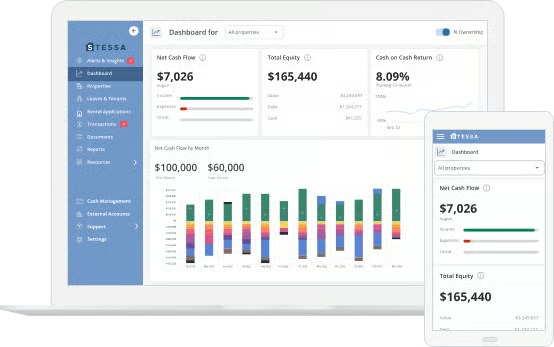
Stessa landlord dashboard.
Standout features
- Automatic bank feeds: Connect eligible bank and credit accounts so transactions flow into the platform for review and categorization.
- Property and portfolio: Review income statements, net cash flow, capital expenses, rent rolls, and other reports at the property or portfolio level, depending on the plan.

Baselane: Best for integrated landlord banking and bookkeeping
Pros
- Combines landlord banking, bookkeeping, and rent collection
- Tracks income and expenses by property and legal entity
- Supports external account connections plus QuickBooks and Xero synchronization
Cons
- Most advanced automation requires the Smart plan
- Baselane does not offer the depth of leasing and maintenance tools found in a full property management suite
- ACH and card rent payments can carry transaction fees depending on the payment and deposit method
Pricing:
- Core: Free
- Smart: $20 per month on an annual plan
Why I like Baselane
I like Baselane because it connects rental payments with the records landlords need to understand them.
Owners can separate finances by property or entity, collect rent, manage payees, review a consolidated ledger, and produce an accountant-ready package from one system. This structure can reduce the disconnect that occurs when banking lives in one place, rent collection in another, and year-end bookkeeping in a spreadsheet.
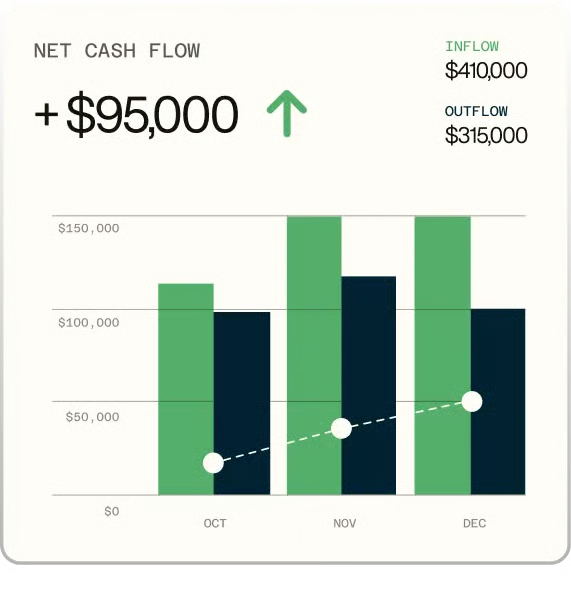
Baselane cash flow dashboard for landlords.
Standout features
- Rental-focused reporting: View net cash flow, income statements, rent rolls, tenant ledgers, and inflows and outflows by property or entity.
- Smart bookkeeping automation: The paid plan adds automatic transaction tagging, advanced categorization rules, receipt matching, custom categories, and balance sheets.

REI Hub: Best for tax-ready rental bookkeeping
Pros
- Designed specifically for real estate investors
- Tracks mortgages, loans, fixed assets, and mileage
- Supports long-term rentals, short-term rentals, and mixed portfolios
Cons
- Does not include rent collection
- Automatic transaction imports and booking rules require a paid plan
- Landlords remain responsible for reviewing depreciation and tax treatment with a professional
Pricing:
- Manual bookkeeping with minimal transactions: Free
- Up to three units: $9 per month billed annually
- Up to 10 units: $15 per month billed annually
- Up to 20 units: $27 per month billed annually
- Unlimited units: $48 per month billed annually
Why I like REI Hub
I like REI Hub because its bookkeeping structure reflects the way rental property owners and their tax professionals think about real estate.
Transactions are organized with rental-specific categories, while loans, closing costs, fixed assets, mileage, and property-level performance have dedicated places in the workflow. The result is a focused accounting system for landlords who want better books and reports without adding tenant-facing management features they may not use.
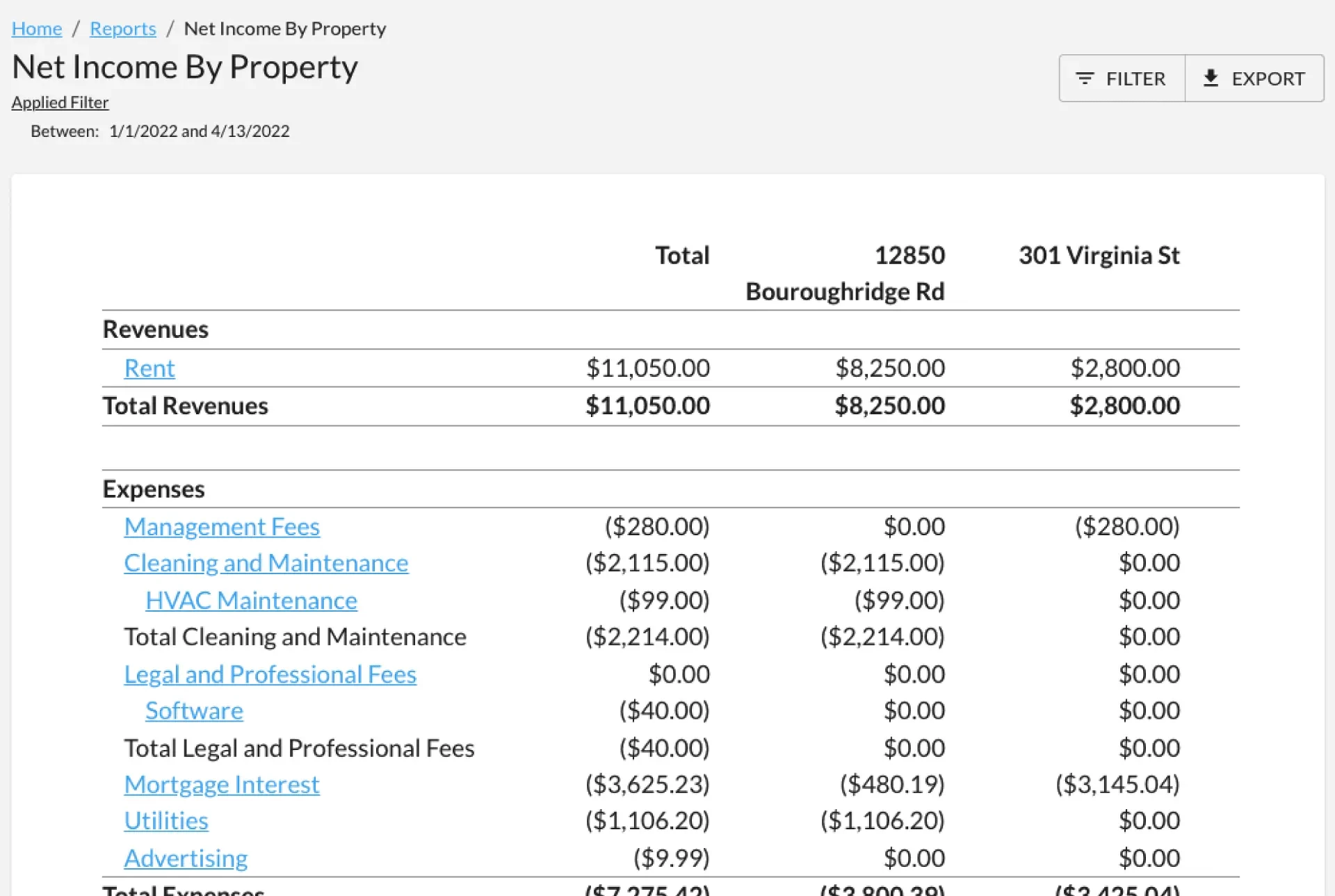
Net income statement.
Standout features
- Rental-specific chart of accounts: Categorize income and expenses using a framework designed for rental real estate rather than adapting a generic business setup.
- Property-level statements: Produce profit and loss, cash flow, balance sheet, and Schedule E reports for individual properties or the portfolio.

Landlord Studio: Best for mobile accounting and management
Pros
- Combines accounting with rent collection and maintenance tools
- Free plan supports up to three units
- Includes listing syndication, applications, and tenant screening
Cons
- Free plan requires manual income and expense tracking
- Schedule E reports and automated bank feeds require a paid plan
- More advanced organizations may need deeper accounting controls
Pricing:
- Go: Free
- Pro: $12 per month, billed annually
- Pro Plus: $24 per month, billed annually
Why I like Landlord Studio
I like Landlord Studio because it lets hands-on landlords manage financial records where much of the work actually happens.
An owner can log mileage, scan a receipt, check rent status, review a maintenance request, or record an expense from a phone instead of saving every task for later. Bringing those everyday actions into one workflow makes it easier to maintain complete records throughout the year.
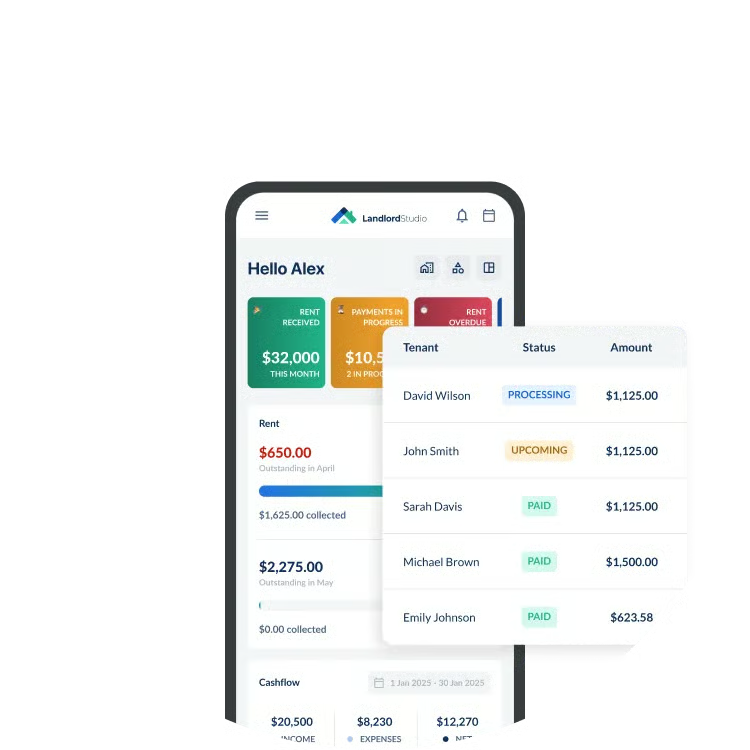
Landlord Studio mobile accounting app.
Standout features
- Mobile expense capture: Record income and expenses, scan receipts, and track mileage from a mobile device.
- Automated bookkeeping: Paid plans add connected bank feeds, assisted categorizations, recurring expenses, and bank rules.

Rentec Direct: Best for growing portfolios
Pros
- Full ledger accounting for properties, tenants, and owners
- Includes rent collection, tenant portals, leasing, and maintenance tracking
- Higher plans add bank synchronization, QuickBooks synchronization, and 1099 e-file access
Cons
- No free plan
- Subscription cost increases with portfolio size on higher plans
- Screening, some payment methods, and 1099 filing involve additional fees
Pricing:
- Rentec Starter: $25 per month for up to 10 properties and tenants
- Rentec Pro: Starts at $50 per month; pricing scales with unit count
- Rentec PM: Starts at $50 per month
Why I like Rentec Direct
I like Rentec Direct because it can support a landlord as bookkeeping grows into a more involved rental operation.
Its ledgers connect property, tenant, rent, expense, and maintenance activity, giving owners a more complete record of what is happening across the portfolio. Owner accounting, operational workflows, bank synchronization, and reporting also make it a practical system for teams that need stronger controls as they add units.
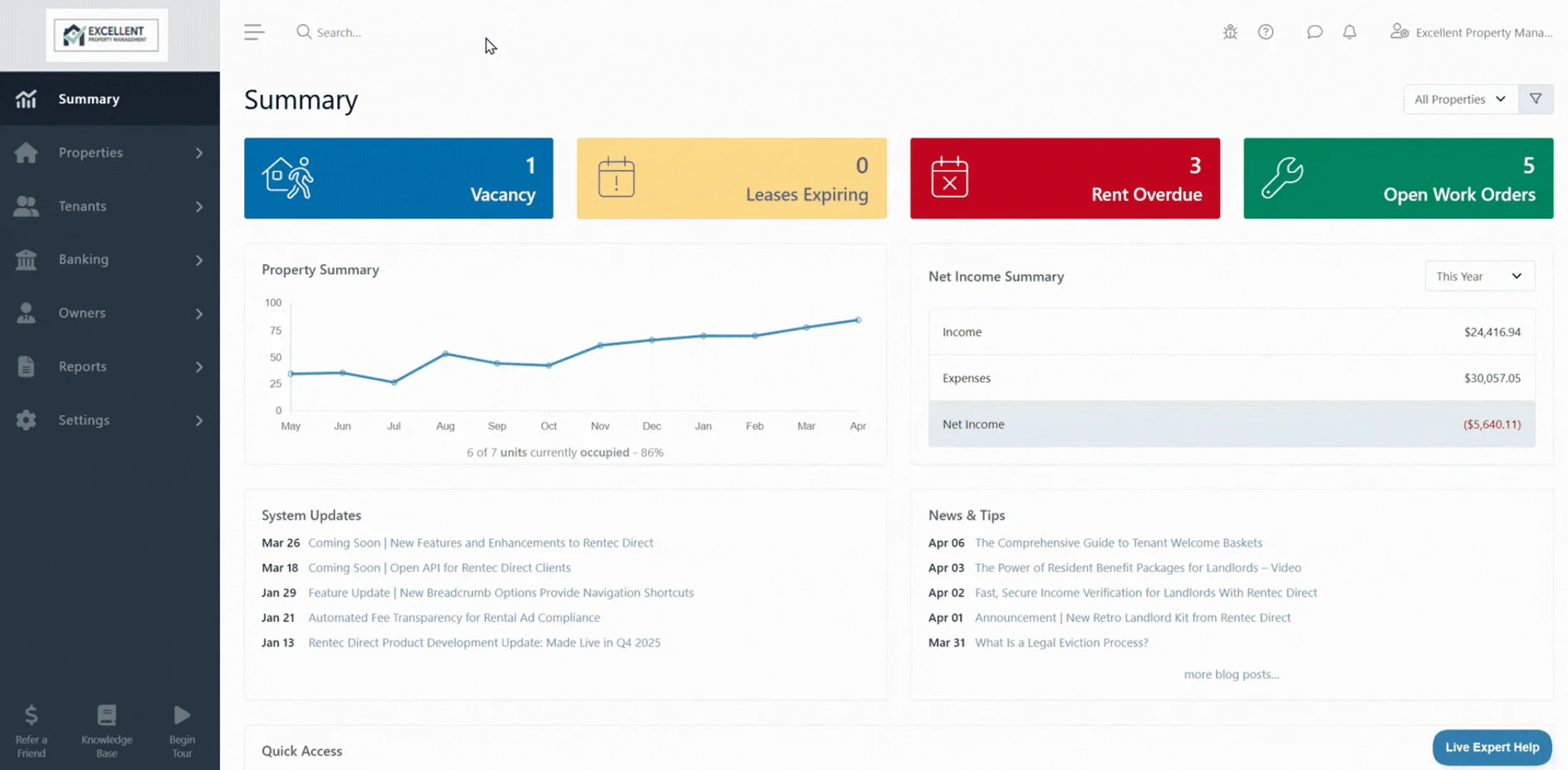
Rentec Direct owners portal.
Standout features
- General ledger accounting: Maintain connected ledgers for properties, tenants, and owners with customizable income and expense reporting.
- Rental operations: Publish vacancies, accept applications, screen tenants, collect rent, manage work orders, and give tenants access to an online portal.
How to choose accounting software for your rental properties
Start with the financial problem you need the software to solve. A landlord who wants to replace a spreadsheet may need transaction import, rental-specific categories, and a clean Schedule E report.
An owner who self-manages tenants may get more value from a platform that also handles rent collection, leasing, and maintenance. A larger operation may need general ledger controls, multiple users, entity-level reporting, owner statements, or trust accounting.
Before committing, consider these questions:
- How many properties and units do you manage today, and how quickly could that number change?
- Do you want accounting only, or do you also need leasing and property management tools?
- Can the software separate income, expenses, assets, and liabilities by property or legal entity?
- Does it connect to your existing bank and credit accounts?
- Can your accountant access the system or receive reports in a useful format?
- Does it produce the reports you need, such as a property profit and loss statement, balance sheet, cash flow statement, rent roll, tenant ledger, Schedule E summary, or fixed asset schedule?
- Which essential features require a higher plan, a per-unit charge, or a transaction fee?
- Can you export your complete data if you decide to leave?
Whenever possible, test the software with one property and one month of real transactions. Connect the accounts you intend to use, categorize several common expenses, correct a split transaction, attach a receipt, and generate the year-end reports your accountant expects. This short test reveals more than a feature list.
Accounting software vs property management software
Landlord accounting software focuses on recording money, categorizing transactions, measuring property performance, and preparing financial information. Property management software focuses on operating rentals through advertising, applications, screening, leases, rent collection, tenant communication, and maintenance.
Many products now combine both categories, but the depth varies. A platform may offer excellent rent collection with only basic expense reports, or strong rental bookkeeping with no tenant-facing tools. Decide which side of the business matters most, then confirm that the other side is sufficient for your workflow.
Essential reports and features to look for
| Feature or report | Why it matters |
| Property-level profit and loss | Shows whether each rental produced income or a loss during a selected period |
| Cash flow report | Helps owners understand the money moving in and out of the property |
| Balance sheet | Tracks assets, liabilities, and equity at a point in time |
| Schedule E report | Organizes common rental income and expense categories for tax preparation |
| Fixed asset schedule | Tracks the basis and depreciation information for buildings, improvements, appliances, and other assets |
| Rent roll and tenant ledger | Shows charges, payments, balances, and occupancy-related information |
| Bank feeds and reconciliation | Reduces manual entry and helps identify missing, duplicate, or incorrect transactions |
| Receipt and document storage | Keeps source records connected to expenses and available for review |
| Data export and accountant access | Makes it easier to collaborate with a bookkeeper or tax professional and retain control of your records |
| 1099 support | Helps eligible landlords organize a file of required contractor and vendor forms when the feature is available |
Bringing it all together
The best accounting software for landlords matches the portfolio's complexity and produces records the owner can understand and maintain. A simple rental may only need organized income and expenses, bank feeds, receipts, and a tax summary. A growing operation may also require detailed ledgers, fixed asset tracking, multiple users, tenant workflows, or trust accounting controls.
Before subscribing, map every dollar's path from rent collection through bank deposit, expense categorization, reconciliation, and year-end reporting.
Test that workflow with real transactions, review the outputs with your accountant, and calculate the full cost after unit charges and payment fees. The software can provide structure and automation, but accurate books still depend on consistent recordkeeping and professional review when the financial or tax treatment is unclear.
Frequently asked questions (FAQs)
Do landlords need accounting software?
Accounting software is not mandatory for every landlord, but it becomes increasingly valuable as transactions and properties multiply. A dedicated system can help separate rental activity, preserve supporting documents, measure property performance, and produce consistent records for an accountant. A landlord with very few transactions may begin with a spreadsheet, but the process still needs to be accurate, organized, and maintained throughout the year.
Can landlord accounting software prepare Schedule E?
Some platforms generate a Schedule E report or tax package that groups rental income and expenses into categories commonly used for tax preparation. This output is not the same as preparing or filing a tax return. Landlords should verify every category and give the report, along with supporting records, to a qualified tax professional.
Should every rental property have a separate bank account?
Separate accounts can make property-level bookkeeping and reconciliation much easier, especially when different legal entities own different rentals. However, the appropriate setup depends on the ownership structure, lender terms, local rules, and whether a landlord holds money that must be handled in a trust or escrow account. Ask an attorney or accountant how to structure accounts for your situation.
You may also like…