





































Although the adage goes, “Don’t judge a book by its cover,” buyers absolutely judge a listing by its photos. If a property looks empty, dated, or difficult to understand online, buyers may scroll past it without a second thought.
Virtual staging transforms vacant or outdated rooms into polished spaces without the expense and physical work of traditional staging. I’ve used these tools in real estate marketing, and the best virtual staging software does more than drop a trendy soft into the living room. It creates realistic images that help buyers understand a room’s size, purpose, and potential.
I compared the leading platforms based on image quality, pricing, turnaround time, features, usability, and support. Here are my six top picks, followed by a complete guide to using virtual staging effectively.
| Software | Best for | Starting price |
|---|---|---|
| BoxBrownie | Creating a complete listing media package | $24 per staged image |
| Styldod | Varied interior design styles | $23 per image |
| PadStyler | A combination of AI and designer-created staging | $16 per month* |
| Stuccco | Agents wanting human quality control | $35 per image |
| Hands-on customization | $10 per credit | |
| Virtual Staging AI | Speed and simplicity | $16 per month* |
*billed annually
Why you can trust The Close
As a real estate agent, I understand how much listing photos shape a buyer’s first impression. For this guide, I combined my personal experience with current product research to evaluate how each platform performs in real-world listing situations. The goal is not to find the software with the longest feature list. It is to find tools that help agents market homes accurately, efficiently, and professionally.
Sophia Doyle
Staff Writer-The Close
- What is virtual staging?
- The Close’s top picks for virtual staging software
- BoxBrownie: Best for creating a complete listing media package
- Styldod: Best for varied interior design styles
- PadStyler: Best for a combination of AI and designer-created staging
- Stuccco: Best for agents wanting human quality control
- Apply Design: Best for hands-on customization
- Virtual Staging AI: Best for speed and simplicity
- Ultimate virtual staging guide
- Traditional vs virtual staging
- How to virtually stage a room
- Virtual staging dos and don’ts
- How to choose the right virtual staging software
- Frequently asked questions (FAQs)
- Your take
What is virtual staging?
Virtual staging uses photo-editing software, artificial intelligence, or professional designers to add additional furniture and decor to listing photos. It can transform a vacant bedroom, an outdated living room, or an unfinished space into an attractive space without bringing any furniture into the property.
Some platforms complete the work for you, while others let you select furniture, adjust layouts, or generate different designs yourself. Depending on the service, you may also be able to remove existing furniture, replace flooring, change wall colors, improve landscaping, or illustrate a potential renovation.
The Close’s top picks for virtual staging software
| Software | Standout features | Turnaround time | The Close score | Learn more |
|---|---|---|---|---|
| BoxBrownie |
| Approximately 48 hours | 4.3 | |
| Styldod |
| 24 to 48 hours | ||
| PadStyler |
| Seconds for AI or under 24 hours for bespoke staging | 3.6 | |
| Stuccco |
| Approximately 24 hours | 3.4 | |
| Apply Design |
| Approximately 10 minutes | 3.3 | |
| Virtual Staging AI |
| Approximately 10 to 15 seconds | 3.2 |
BoxBrownie: Best for creating a complete listing media package
Why I chose BoxBrownie
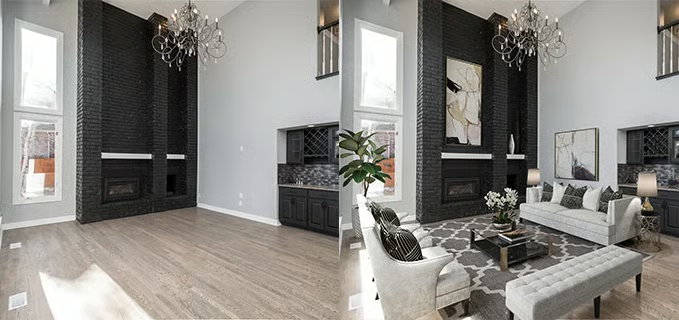
BoxBrownie earned the top spot because it can handle much more than an empty living room. Agents can use the same service for virtual staging, image enhancement, item removal, floor plan redraws, day-to-dusk editing, 360° staging, and virtual renovations.
That makes it especially useful when you want to send out your listing photos and receive a complete marketing package in return. BoxBrownie’s virtual staging is completed by editors rather than generated instantly, so it is a better match for agents who value professional oversight over immediate delivery.
BoxBrownie pricing
- Virtual staging: $24 per image
- Image enhancement: $1.60 per image
- Day to dusk: $4 per image
- Item removal & virtual cleaning: $4 to $8 per image
- Floor plan redraws: $24 to $32 per plan
- Development site plans: $24 per plan
- 3D floor plans: $32.00 per plan
- 2D elevations: $96.00
- Renders: $280-$400 per render
- Virtual renovation: $24 to $176
- Virtual tours: $8 – $16 depending on shoot time
- Aerial editing: $2.40-$3.20
Additional features
- Virtual renovations: Show potential updates to kitchens, bathrooms, walls, flooring, exteriors, or landscaping.
- Day-to-dusk editing: Transform a daytime exterior photo into a more dramatic twilight image.
Styldod: Best for varied interior design styles
Why I chose Styldod
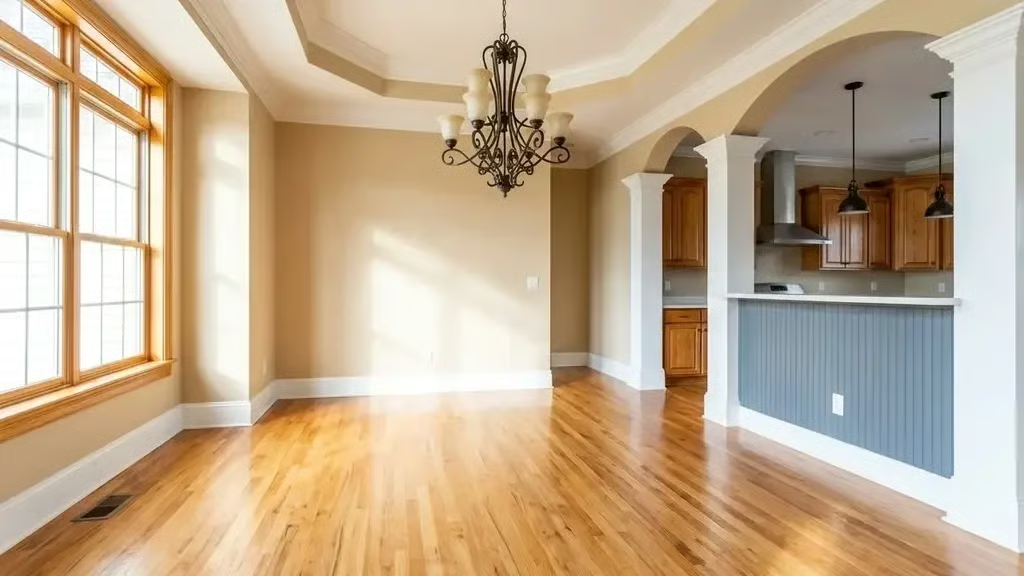
Styldod offers a practical balance of affordability, design variety, and professional assistance. You can choose from several interior styles, request unlimited revisions, and receive staged images in 24 to 48 hours. Its occupied-to-vacant editing, object removal, virtual renovations, floor plans, and 360-degree tours also give agents several ways to improve a listing beyond adding furniture.
I especially like Styldod for vacant properties that need several rooms staged. The discounted price for orders of eight or more images makes it easier to create a consistent look throughout the home without letting the marketing budget get out of hand. If a listing deadline suddenly moves up, the optional 12-hour and 24-hour delivery upgrades can also help get the photos ready before the listing goes live.
Styldod pricing
- Fewer than eight staged images: $23 per image
- Eight or more staged images: $16 per image
- Delivery within 24 hours: Additional $6 per image
- Delivery within 12 hours: Additional $12 per image
- Object removal: $8 per image
- Occupied-to-vacant editing: $15 per image
- Wall, floor, or ceiling changes: Starting at $5
- Fixtures and selected exterior changes: Starting at $8
- Kitchen, bathroom, deck, or pool renovations: Starting at $15
Additional features
- Virtual renovation: Update permanent finishes or illustrate possible improvements.
- Real estate video maker: Create listing videos using photographs and premade templates.
PadStyler: Best for a combination of AI and designer-created staging
Why I chose PadStyler
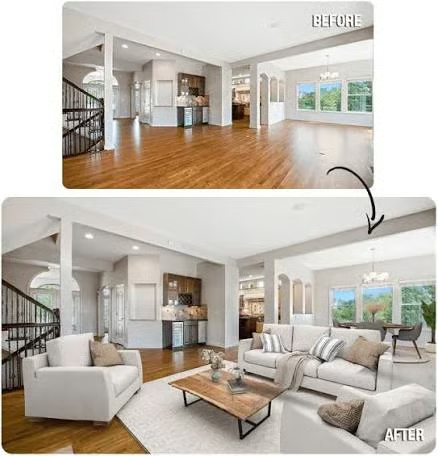
PadStyler gives agents the flexibility to choose between fast AI staging and more customized work from a designer. The AI option can produce images in seconds, while the bespoke service includes more individual attention and unlimited revisions. PadStyler also supports furniture removal, virtual remodeling, exterior staging, 3D floor plans, and Matterport staging, making it one of the most versatile platforms in the lineup.
As an agent, I like having different service levels available for different listings. I could use AI to furnish a straightforward vacant bedroom, then send a luxury living room or unusually shaped space to a designer for more precise staging. Its Matterport and renovation capabilities are also valuable when marketing new construction, vacant homes, or properties where buyers need extra help understanding the finished potential.
PadStyler pricing
- Starter: $16 per month for six photos
- Essentials: $19 per month for 20 photos
- Premium: $39 per month for 60 photos
- Enterprise: Custom pricing
All billed annually
Additional features
- AI remodeling: Preview new layouts, finishes, and materials without commissioning a complete custom renovation render.
- Backyard design: Generate ideas for patios, landscaping, and outdoor spaces through the same subscription.
Stuccco: Best for agents wanting human quality control
Why I chose Stuccco
Stuccco focuses on virtual staging completed by professional designers, which helps produce a more cohesive look across multiple rooms. Images are generally delivered in about 24 hours, and unlimited revisions are included. The service can also remove existing furniture, add landscaping, and change wall, flooring, ceiling, or exterior colors when a listing needs more than basic staging.
I would consider Stuccco for a vacant home where visual consistency matters from the first listing photo to the last. Instead of asking an AI generator to remember what it placed in the previous room, I can rely on a designer to carry a similar style throughout the property. Stuccco’s shareable listing pages, lead capture forms, and traffic statistics are also useful for agents who want to turn those polished images into buyer inquiries.

Stuccco pricing
- Pay as you go: $35 per image
- Essential package: $399 annually
- Plush bundle: $799 annually
- Team Essential: $3,000 annually
- Team Plus: $6,000 annually
- Team Premier: $12,000 annually
Additional features
- Listing pages: Create shareable property pages with traffic tracking and lead-capture tools.
- Furniture removal: Existing furniture can be removed before new pieces are added.
Apply Design: Best for hands-on customization
Why I chose Apply Design
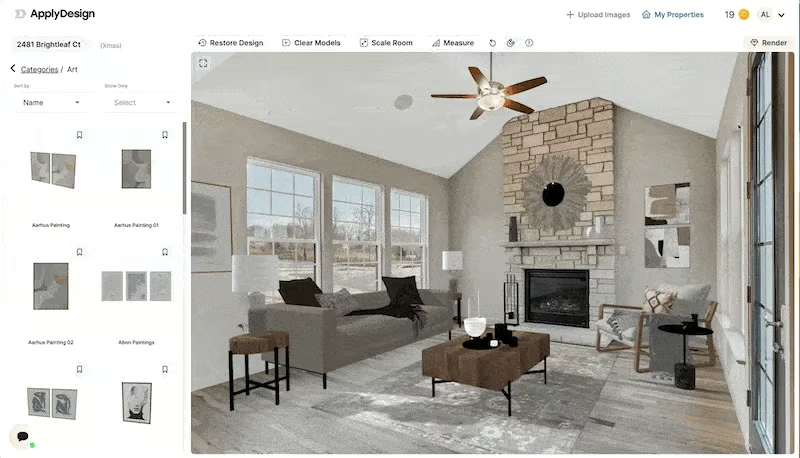
Apply Design is a strong option for agents seeking greater control over furniture selection and placement. Its drag-and-drop editor includes approximately 18,000 furniture and decor items, while its automatic staging mode can generate a design when you want a faster starting point. It also includes furniture removal, unlimited revisions, multi-angle consistency, and support for both standard and 360-degree images.
This is the platform I would use if I had a specific vision for a room and did not want to send revision notes back and forth. Using the software, you can remove clutter, select appropriately scaled furniture, and reposition pieces before rendering the image. The editors still require some design judgment, but it gives hands-on agents more control than services that only ask you to choose a general style.
Apply Design pricing
Credit pricing:
- One to nine credits: $10 per credit
- 10 to 19 credits: $8 per credit
- 20 or more credits: $7 per credit
Service pricing:
- DIY 2D staging: 1 credit
- Automatic 2D staging: 1.5 credits
- DIY 360° staging: 2 credits
- Automatic 360° staging: 2.5 credits
Additional features
- Large furniture catalog: Selected from approximately 18,000 furniture and decor items.
- Multi-angle consistency: Create more consistent furnishings across different views of the same room.
Virtual Staging AI: Best for speed and simplicity
Why I chose Virtual Staging AI
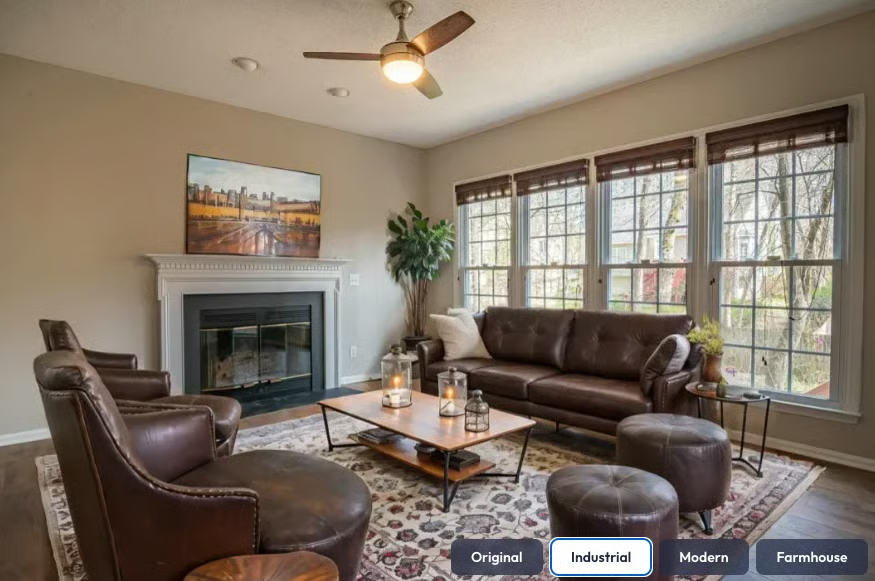
Virtual Staging AI is built for speed and volume. It can generate staged images in approximately 10 to 15 seconds, offers more than 50 room and design styles, and allows unlimited regenerations. Furniture removal is included, and finished images can be downloaded in high resolution without watermarks.
This is a great tool for an agent who needs a listing to go live quickly, or wants to test several design looks. The results should be inspected for scale and visual errors, but the fast workflow and subscription pricing make it practical for agents staging photos regularly.
Virtual Staging AI pricing
- Basic: $16 per month for six photos
- Standard: $19 per month for 20 photos
- Professional: $39 per month for 150 photos
All billed annually.
Additional features
- Unlimited regenerations: Try multiple results without using another staging credit for every version.
- Fast generations: Images are produced in approximately 10 to 15 seconds.
Ultimate virtual staging guide
Choosing the best virtual staging software is only half the job. You also need suitable listing photos, a consistent design plan, and a clear understanding of what virtual staging should and should not change.
I’ve found that the most effective virtual staging doesn’t make buyers stop to admire the furniture. Instead, it helps them understand the room’s size, purpose, and potential. If the first thing you notice is a suspiciously perfect sofa floating above the floor, the staging probably missed the mark.
When should you use virtual staging?
Virtual staging works best when a listing photo needs help communicating how the space could be used. It can be especially valuable when you’re marketing:
- A vacant property that feels cold or difficult to visualize
- A home with dated or highly personalized furniture
- New construction that is complete but unfurnished
- An investment property that needs cosmetic updates
- A room with an unusual layout or unclear purpose
- A listing when traditional staging is outside the seller’s budget
- Multiple units that could be expensive to stage physically
It is also useful for testing different looks. For example, you could show the same spare bedroom as a home office in one image and a nursery in another. Just avoid creating so many versions that buyers no longer know what the room actually looks like.
When virtual staging may not be the right choice
Virtual staging is not automatically the best solution for every listing. If buyers arrive expecting a beautifully furnished home and instead find the rooms completely empty, the in-person experience may feel disappointing.
Traditional staging may be a better option when:
- The home is likely to receive significant in-person traffic
- The property’s layout is easier to understand with physical furniture
- The listing is in a luxury market when presentation must remain consistent online and offline
- The home contains major defects that digital furnishings could accidentally conceal
- The seller is already living in the property and has suitable furniture
You can also combine the two approaches. Stage the main living areas physically, for example, and use virtual staging for a vacant guest room, office, or finished basement.
Traditional vs virtual staging
| Staging method | Pros | Cons |
|---|---|---|
| Traditional staging |
|
|
| Virtual staging |
|
|
The right choice depends on the property, budget, target buyer, and how much the home’s physical presentation will affect its sale.
How to virtually stage a room
- Start with high-quality photos: Use bright, high-resolution images taken from a natural angle. Keep the camera level, avoid extreme wide-angle settings, and leave enough visible space for accurately sized furniture.
- Clean and prepare the room: Remove clutter, cords, personal belongings, and small furniture before taking photos. Open the blinds, replace burned-out bulbs, and straighten anything that will remain visible. The less the software has to reconstruct, the more realistic the result will look.
- Choose a style that fits the property: Match the virtual furniture to the home and its likely buyers. Contemporary decor may suit a downtown condo, while a comfortable transitional style may feel more natural in a suburban family home.
- Keep the furniture properly scaled: Make sure beds, sofas, tables, and other furnishings accurately reflect the room’s dimensions. Watch for impossible clearances, blocked doorways, floating furniture, and mismatched shadows.
- Inspect every image before publishing it: Zoom in and check for warped walls, duplicate objects, distorted decor, inconsistent reflections, and furniture overlapping permanent features. Even professionally edited images can require revisions.
- Disclose the virtual staging: Clearly label altered photos so buyers understand that the furnishings or finishes are digital. Check your multiple listing service (MLS) and local advertising requirements, particularly when an image changes permanent features such as flooring, countertops, cabinetry, or landscaping. Consider showing both the original and staged photos for transparency.
Virtual staging dos and don’ts
| Do | Don’t |
| Choose furnishings that fit the property’s style | Add trendy furniture that clashed with the home |
| Preserve accurate room dimensions | Shrink furniture to make a room appear larger |
| Highlight genuine architectural features | Conceal damage or material defects |
| Use consistent designs throughout the listing | Give every room a completely different aesthetic |
| Review shadows, scale, and object placement | Publish results without inspecting it |
| Label altered images clearly | Allow buyers to assume digital renovations already exist |
| Keep the original photos | Digitally decorate every corner |
How to choose the right virtual staging software
Start by deciding whether you want the software to do the creative work for you or whether you want to control the furniture and layout yourself.
Consider these factors:
- Image quality: Look for realistic lighting, shadows, textures, and furniture proportions.
- Staging method: Decide between instant AI generation, a DIY editor, or a professional designer.
- Furniture selection: Check where you can select a general style or choose individual items.
- Editing capabilities: Determine whether the platform can remove furniture, recolor walls, update flooring, or illustrate renovations.
- Turnaround time: AI platforms may deliver images in seconds, while designer-created staging may take one or two days.
- Revisions: Confirm whether edits are free, limited, or billed as an additional image.
- Pricing structure: Compare subscriptions, credits, per-image pricing, expiration dates, and volume discounts.
- Additional services: Some companies also provide floor plans, photo enhancements, 360° images, or virtual tours.
- Ease of use: A powerful platform is not useful if staging one photo requires an afternoon of tutorials.
- Support: Look for responsive assistance if you regularly work against tight listing deadlines.
Frequently asked questions (FAQs)
Is virtual staging worth it?
Virtual staging can be worthwhile when empty or dated rooms make it difficult for buyers to understand the property. It is faster and typically less expensive than bringing physical furniture into the home, but its effectiveness depends on the original photography and the quality of the finished edit.
Is AI virtual staging better than designer-created staging?
AI Staging is faster and generally more affordable, making it useful for high-volume or time-sensitive listings. Designer-created staging offers greater human oversight and may be better suited to unusual layouts, luxury properties, or images requiring detailed corrections.
Should virtually staged photos be labeled?
Yes. Labeling virtually staged images helps buyers distinguish digital furnishings and renovations from the property’s current condition. Because MLS and advertising requirements vary, check the rules that apply in your market before publishing altered listing photos.
Your take
Virtual staging works best when it helps buyers understand the property without misrepresenting it. Start with strong photos, choose a tool that fits your workflow, review every detail, and clearly disclose digital changes. A realistic image can help buyers picture possibilities while keeping the home itself at the center of the story.
Related Articles