






































A seller can spend thousands updating a home and still lose a buyer due to an overstuffed closet, a room packed with furniture, or listing photos filled with personal belongings. Staging is not about disguising a property or turning every listing into a designer showpiece. It is about removing distractions and helping buyers understand the home’s space, function, and strongest features.
As a real estate agent, I staged my listings because I saw how much presentation influenced buyers both online and during showings. Sometimes that meant moving furniture, clearing countertops, and packing family photographs. Other times, it meant recommending professional or virtual staging. The right approach depends on the property, budget, and local market.
These home staging tips cover the changes that can make the biggest difference, from clearing closets and removing pet supplies to preparing outdoor spaces and using virtual staging responsibly.
| Home staging tip | Why it matters |
|---|---|
| Remove clutter from every room | Makes rooms feel larger and easier to understand |
| Remove overly personal items | Keeps buyers focused on the property |
| Streamline closets and cabinets | Demonstrates available storage space |
| Remove excess pet items | Reduces clutter, odors, and distractions |
| Put away holiday decorations | Keeps the presentation neutral and photographs evergreen |
| Remove excess furniture | Improves traffic flow and perceived room size |
| Neutralize specific paint and decor | Makes the home approachable to more buyers |
| Improve curb appeal | Strengthens the buyer’s first impression |
| Simplify kitchen counters | Highlights workspace and cleanliness |
| Stage patios, balconies, and yards | Demonstrates additional usable living space |
| Give bathrooms a hotel-like appearance | Helps bathrooms feel clean, calm, and maintained |
| Use mirror strategically | Reflects light and adds visual depth |
| Simply children’s rooms | Shows the room’s function without excessive distractions |
| Make the primary bedroom feel calm | Creates a spacious, comfortable presentation |
| Use virtual staging when appropriate | Helps buyers visualize vacant or dated rooms online |
- What is home staging?
- 15 home staging tips
- Virtual staging companies to consider
- Home staging options compared
- Where to purchase staging furniture and decor
- Home staging mistakes to avoid
- How much does home staging cost?
- Is staging a home worth it?
- Final home staging checklist
- Frequently asked questions (FAQs)
- Final recommendation
What is home staging?
Home staging is the process of preparing and presenting a property to appeal to prospective buyers. It can involve decluttering, cleaning, rearranging furniture, simplifying decor, completing cosmetic improvements, renting furniture, or digitally furnishing listing photographs.
The objective is not to create a home that matches every buyer’s personal taste. It is to help buyers understand how the rooms function, recognize the available space, and picture how they might live in the property. Staging should highlight the home rather than the seller’s belongings.
Staging can range from a seller rearranging existing furniture to a professional stager furnishing an entire vacant property. Virtual staging provides another option by adding furniture and decor to photographs instead of physically changing the rooms.
15 home staging tips
Remove clutter from every room
Decluttering is the foundation of staging because nearly every other improvement becomes less effective when a room is crowded. Clear floors, tables, countertops, windowsills, desks, and other visible surfaces. Remove stacks of paperwork, collections, extra appliances, unused exercise equipment, and anything that makes a room difficult to navigate.
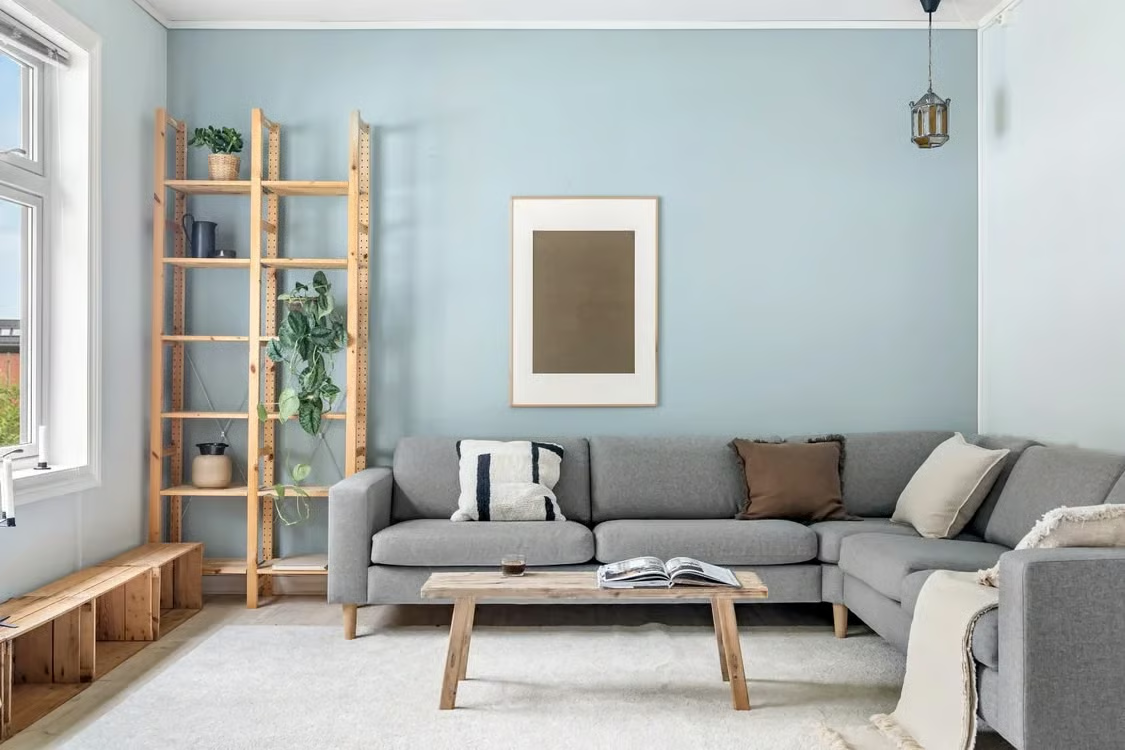
Do not simply move everything into another room or stuff it into a closet. Buyers may open closets, cabinets, pantries, and storage areas during a showing. Pack items the seller will not need before moving, donate what is no longer useful, or rent a storage unit if the property does not have enough concealed storage.
Remove overly personal items
Family photographs, children’s names, diplomas, religious displays, political items, awards, and large collections can pull attention away from the property. Buyers may spend more time looking at the seller’s life than evaluating the home. Removing these items also provides the seller with additional privacy once listing photographs are published online.

Depersonalizing does not require making the home feel empty or sterile. Leave artwork, plants, books, pillows, and simple accessories that provide warmth without revealing too much about the occupants. The goal is to create an inviting home while keeping the property as the main focus.
Streamline closets and cabinets
Expect buyers to look inside closets, cabinets, pantries, and other built-in storage. When every shelf and clothing rod is packed, buyers may assume the home lacks adequate storage. Remove out-of-season clothing, unused linens, excess hangers, duplicate kitchenware, and anything the seller will not need before moving.

Arrange what remains neatly and leave some visible open space. Keep shoes off the closet floors when possible, align hangers, group pantry items, and organize linen shelves. You are not trying to hide the seller’s belongings. You are demonstrating how comfortably the storage can function.
Remove excess pet items
Pet beds, crates, toys, food bowls, litter boxes, scratching posts, and grooming supplies can make rooms feel crowded. Store as many of these items as is reasonably possible before listing photographs and showings. Pets should also be removed during tours whenever feasible so buyers can view the home without distractions.

Pay particular attention to odors, hair, scratched surfaces, stained rugs, and damage around doors or yards. Clean soft furnishings and replace damaged items rather than attempting to cover odors with strong air fresheners. Buyers may interpret an overpowering scent as an attempt to hide a larger problem.
Put away holiday and seasonal decorations
Holiday decorations can overwhelm listing photographs, obscure architectural features, and make it harder for buyers with different traditions to picture themselves in the home. They can also date the photographs. If buyers see Christmas decorations in a listing months later, they may wonder how long the property has been on the market.

Remove large holiday displays before professional photographs whenever possible. A restrained seasonal accent may be appropriate during a short listing period, but evergreen decor is safer. Use simple greenery, neutral textiles, or a bowl of seasonal fruit without turning the room into a holiday display.
Remove excess or oversized furniture
Too much furniture can make a spacious room appear small. Remove the pieces that block windows, doorways, architectural features, or natural walking paths. Oversized sectional sofas, extra dining chairs, bulky cabinets, and multiple side tables are common candidates for temporary storage.
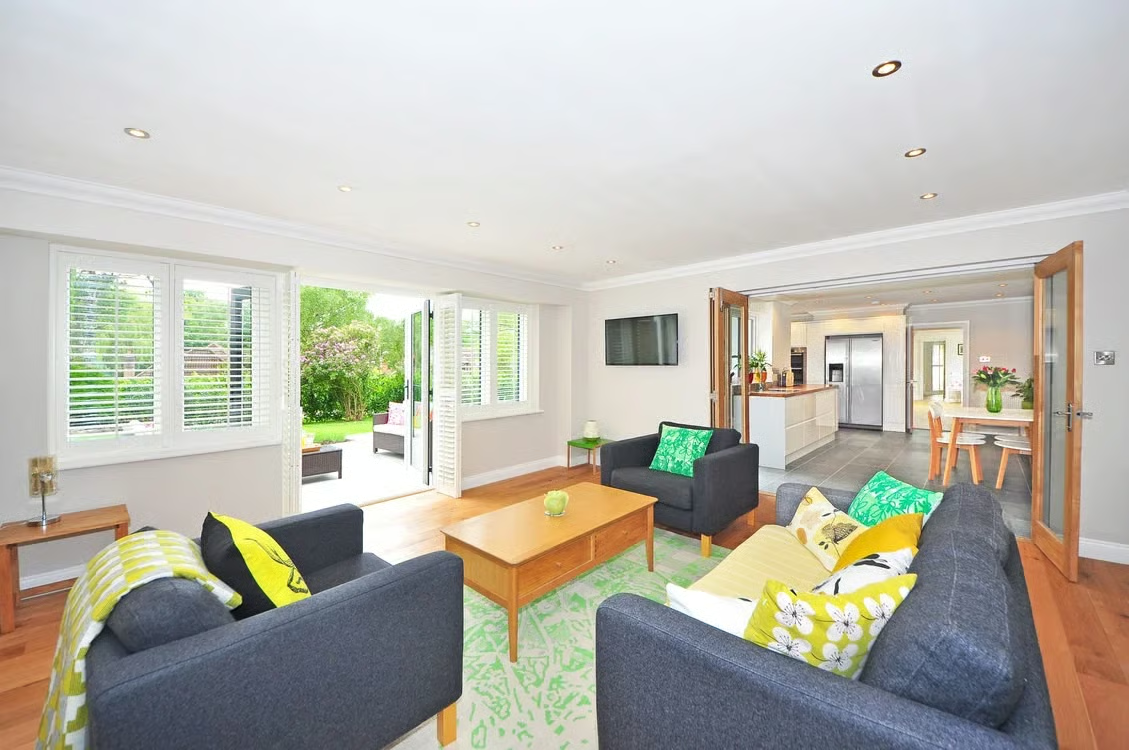
After editing the furniture, arrange the remaining pieces to show how the room functions. Buyers should be able to move through the space naturally and recognize its focal point. Avoid automatically pushing every item against a wall. A smaller conversational arrangement can sometimes define a living room more effectively.
Neutralize highly specific paint and decor
Bold paint colors, murals, themed rooms, and highly specific decor may appeal to the seller but can easily distract buyers. Repainting the most intense or worn areas in a softer color can provide a cleaner background for listing photographs and make adjoining rooms feel more cohesive.
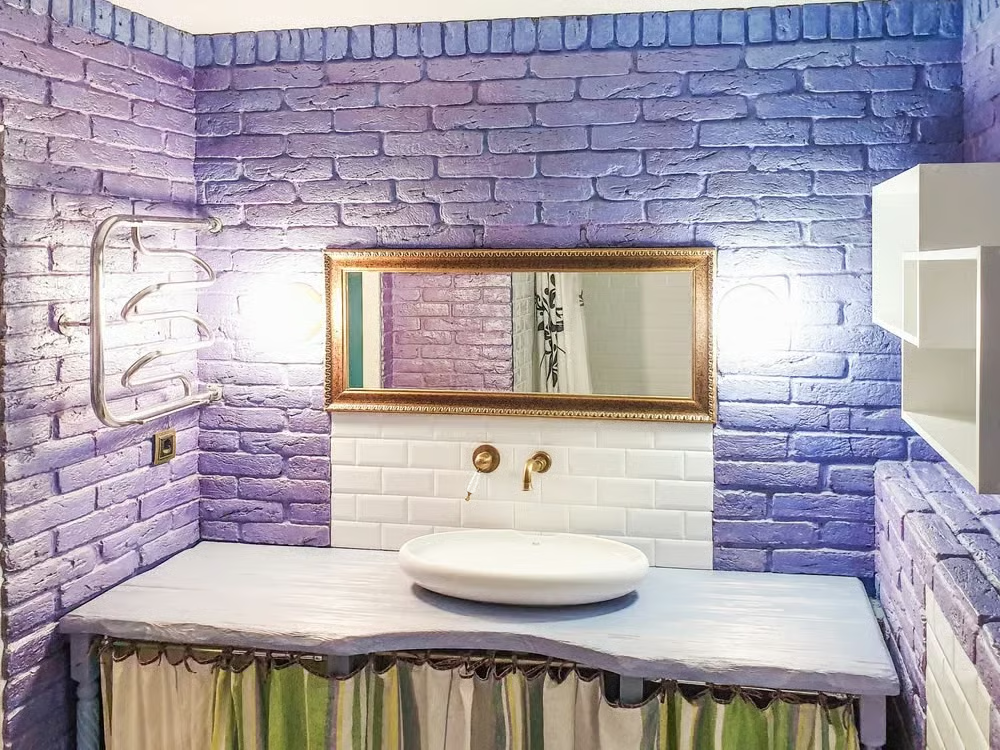
Neutral does not have to mean gray walls and a lack of personality. Choose colors that complement the home’s floors, countertops, natural light, and architectural style. A historic home, coastal property, and modern condominium do not need to look identical. The objective is broad appeal without stripping away the property’s character.
Improve curb appeal
A buyer begins forming an opinion before reaching the front door. Mow the lawn, trim overgrown landscaping, remove weeds, clean walkways, clear gutters, and repair obvious exterior damage. Move garbage cans, hoses, children’s toys, and unused planters out of sight before photographs and showings.

Pay special attention to the entrance, as buyers may be standing there while the agent unlocks the door. Clean or repaint the front door, update damaged house numbers, replace a worn doormat, and confirm the exterior lighting is working. One or two healthy plants can make the entrance feel finished without overcrowding it.
Clear and simplify kitchen counters
Buyers want to see how much workspace a kitchen provides. Store small appliances, dish racks, cleaning products, paper towels, medications, mail, and excess cooking supplies. Clean the counters, backsplash, sink, cabinet fronts, and appliances carefully because grease and fingerprints often become more noticeable in photographs.
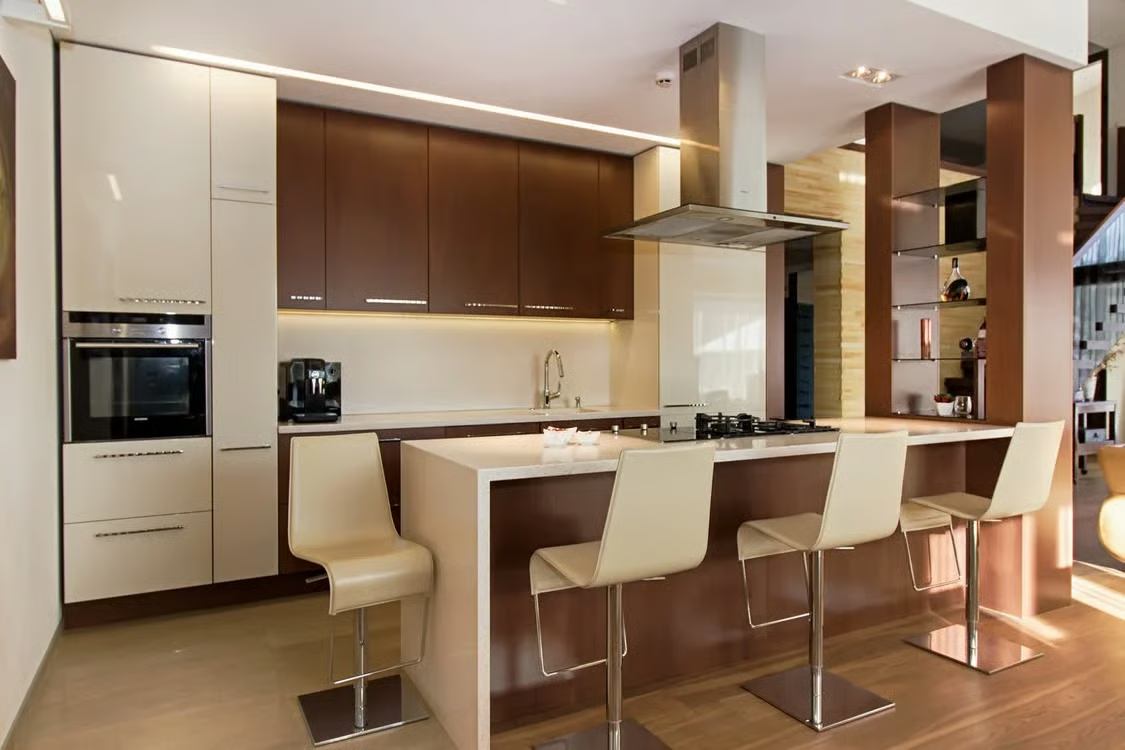
The kitchen does not need to be completely empty. Leave one of two intentional items, such as a bowl of fruit, a plant, or a simple coffee setup. Avoid covering the counters with decorative accessories. Usable workspace is generally more valuable to buyers than an elaborate kitchen display.
Stage patios, balconies, and yards
Outdoor areas can represent valuable living space, but buyers may overlook their potential when they are empty or used for storage. Remove broker furniture, gardening supplies, toys, dead plants, and other clutter. Clean desks and patios, mow the lawn, and keep pathways clear.

Use a small table, chairs, outdoor rug, or seating arrangement to demonstrate how the area could function. Keep the scale appropriate to the available space. A small balcony may need only two chairs, while a large patio can support separate dining and lounging areas.
Give bathrooms a clean, hotel-like appearance
Bathrooms should feel exceptionally clean because buyers notice mildew, stained grout, soap residue, hair, and damaged caulk quickly. Clear personal products from the vanity, shower, and tub. Close toilet lids, replace worn shower curtains, wash bathmats, and polish mirrors and fixtures.
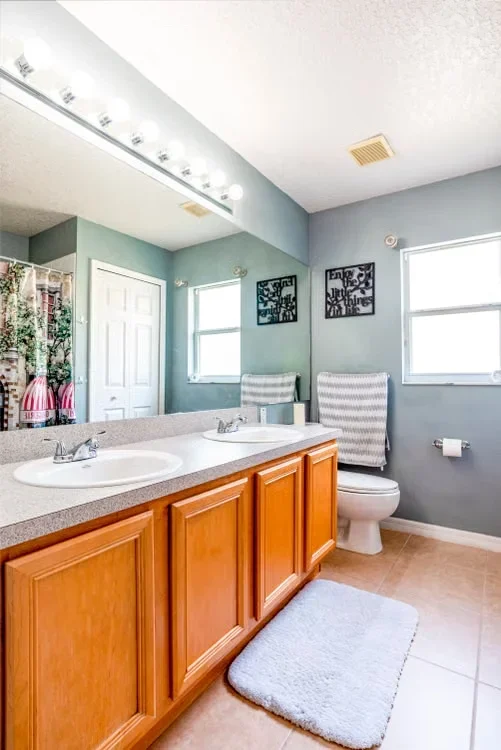
Add clean towels, a simple soap dispenser, and perhaps one restrained decorative item. Avoid filling the bathroom with candles, artificial flowers, or spa accessories. The hotel-like effect comes primarily from cleanliness, consistency, and a lack of personal clutter.
Use mirrors strategically
Mirrors can reflect natural light, add visual depth, and provide an attractive focal point. Position a mirror where it reflects a window, artwork, greenery, or another appealing portion of the room. They can be especially helpful in entrances, dining areas, and smaller rooms with limited natural light.
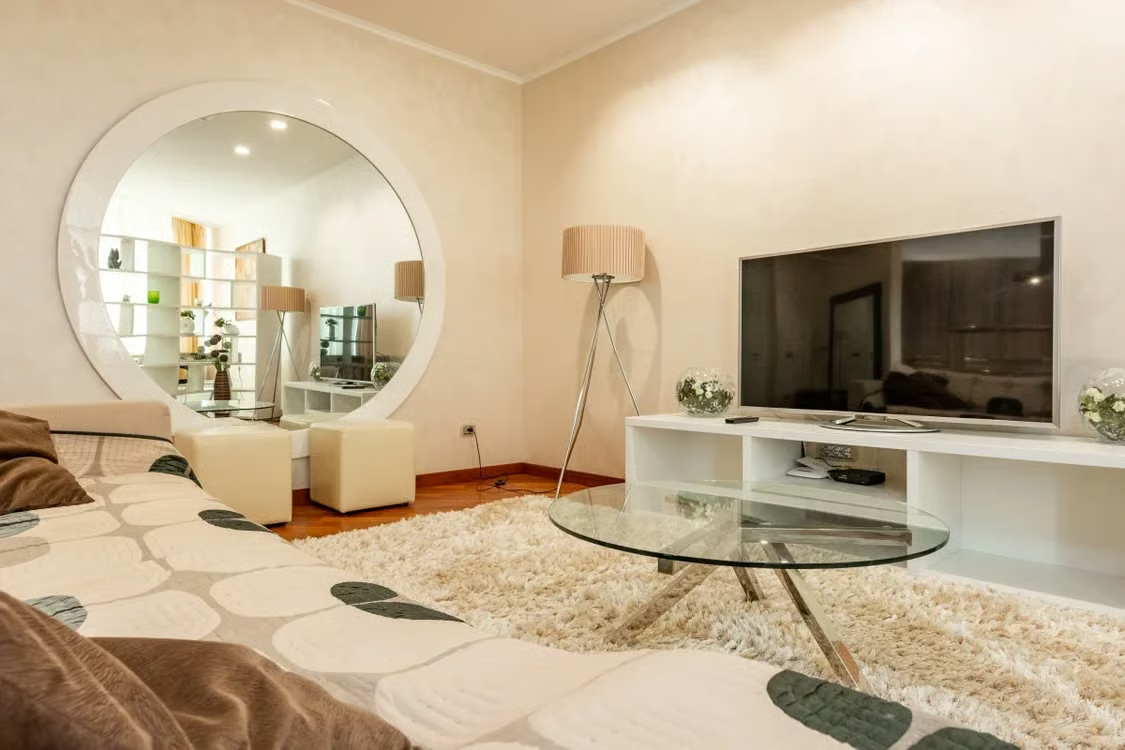
Be mindful of what appears in the reflection during listing photography. A poorly placed mirror may reflect clutter, a bathroom, the photographer, or an unattractive view. Choose a size that fits the wall and secure large or leaning mirrors properly before buyers enter the home.
Simplify children’s bedrooms and playrooms
Children’s rooms can quickly become crowded with toys, stuffed animals, furniture, artwork, and highly specific themes. Remove excess toys, pack away personalized name signs, and limit what remains on shelves and floors. This helps buyers see the room’s dimensions and storage instead of focusing on the current occupant.
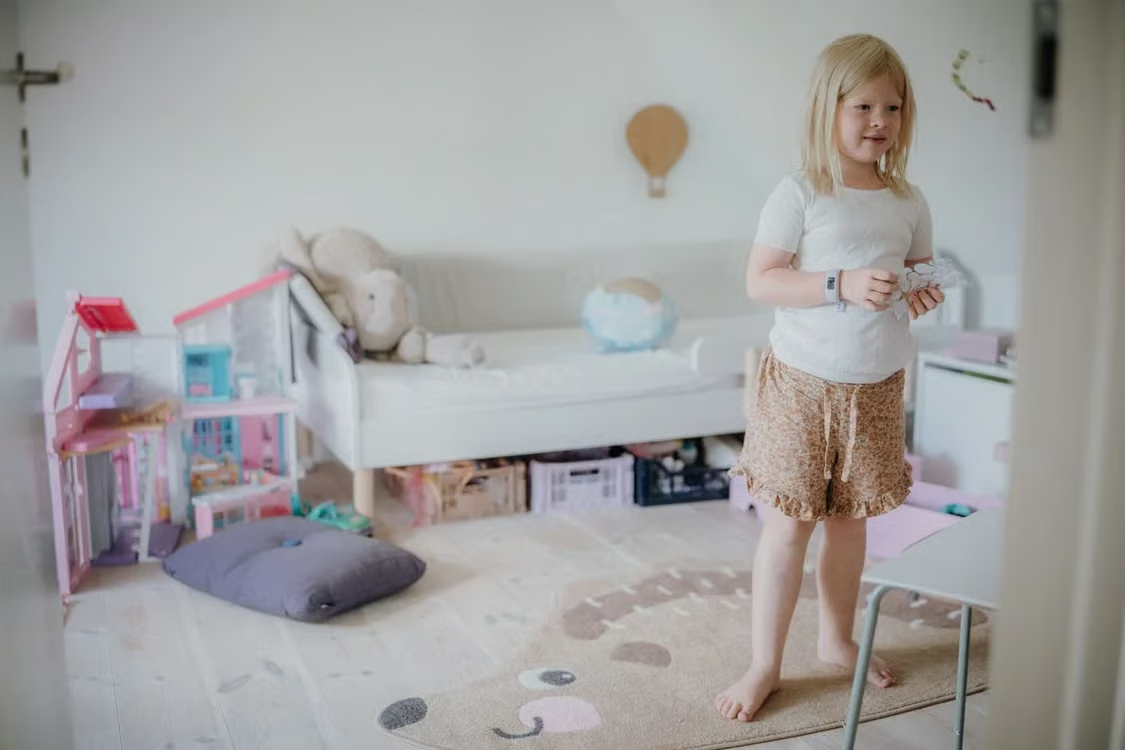
Keep enough furniture to communicate the room’s purpose. A bed, nightstand, lamp, and a few neatly arranged books or toys are usually sufficient. For a playroom, use labeled baskets or concealed storage and leave open floor space so buyers can imagine how the room might work for their household.
Make the primary bedroom feel calm and spacious
The primary bedroom should feel restful rather than packed with furniture and personal belongings. Remove exercise equipment, laundry baskets, extra dressers, work materials, and anything unrelated to the room’s main purpose. Keep nightstands mostly clear and make the bed carefully with clean, coordinated linens.
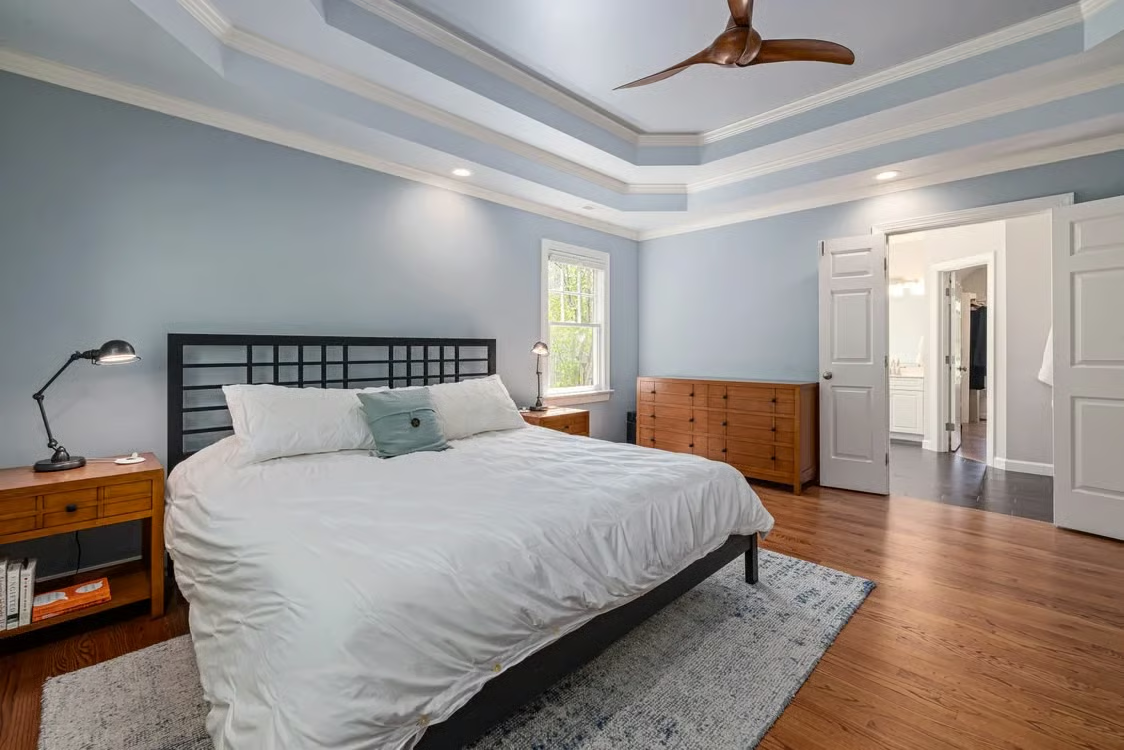
Use a restrained color palette and enough lighting to prevent the room from feeling dark. You do not need expensive bedding or matching furniture, but the room should appear cohesive. If the bed or furniture overwhelms the available space, consider temporarily removing a piece to improve the layout.
Use virtual staging when physical staging is impractical
Virtual staging digitally adds furniture and decor to listing photographs. It can help buyers understand the scale and potential use of vacant rooms without the expense and logistics of renting physical furniture. It is particularly useful for vacant homes, new construction, unusual layouts, and properties that need stronger online presentation.
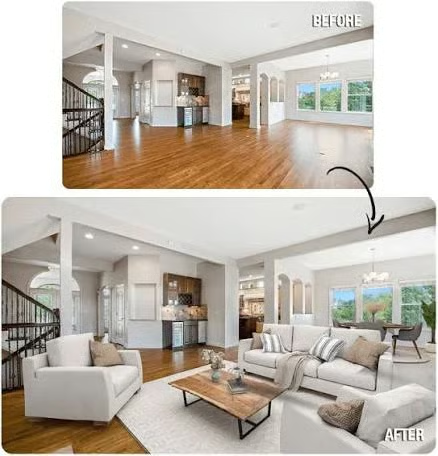
Virtual staging changes only the photographs. Buyers will still encounter an empty or differently furnished room during the showing, so the images must set realistic expectations. Choose furniture that fits the room’s actual dimensions and the property’s style rather than creating an aspirational design the physical home cannot support.
Virtual staging companies to consider
| Virtual staging company | Best for | Starting price |
|---|---|---|
| Styldod | Varied interior design styles | $23 per image |
| BoxBrownie.com | Creating a complete listing media package | $24 per image |
| PadStyler | A combination of AI and designer-created staging | $16 per month for six photos |
Virtual staging warning
Virtual staging should help buyers understand a property, not disguise its condition. Clearly label virtually staged images and include original photographs when required or useful. Never use digital editing to remove permanent defects, alter room dimensions, change views, add windows, conceal damage, or represent improvements that do not exist.
Multiple listing service (MLS) rules governing digitally altered images vary. Before publishing virtually staged or AI-edited photographs, review your MLS rules and brokerage policies. When in doubt, ask your broker or compliance team how the images should be labeled.
Home staging options compared
| Staging approach | Best for | Advantages | Limitations |
|---|---|---|---|
| DIY staging | Occupied homes and limited budget | Uses existing furniture and costs little | Requires time, objectivity, and design judgment |
| Partial physical staging | Occupied or partly vacant properties | Focuses the budget on priority rooms | Existing and rented furnishings must work together |
| Full physical staging | Vacant, luxury, and difficult-to-visualize homes | Improves both photographs and in-person showings | Furniture rental, delivery, and installation can be expensive |
| Virtual staging | Vacant homes and online marketing | Lower cost, fast turnaround, and multiple design options | Does not change the buyer’s in-person experience |
The best option depends on the property. An occupied home with attractive furniture may need only editing and rearrangement, while a vacant luxury listing may benefit from physical staging in its most important rooms. Virtual staging is often most effective when the main challenge is helping online buyers visualize an empty space.
Where to purchase staging furniture and decor
Agents don’t need to buy designer furniture to stage a home. You can find affordable accessories and smaller furnishings at IKEA, HomeGoods, Target, eBay, and thrift stores. Look for neutral linens, lamps, mirrors, artwork, baskets, small tables, and accessories that can work in multiple properties.
For larger installations, compare local staging companies and furniture rental services before making a purchase. Rental furniture may make more sense when furnishing a vacant home, especially if storage and transportation would become ongoing expenses. If you stage listings regularly, build a small reusable inventory of neutral items rather than purchasing decor specifically for each home.
Home staging mistakes to avoid
Overstaging the home
Too much furniture, artwork, greenery, and decor can make rooms feel smaller. Staging should direct attention toward the property, not make buyers study every accessory.
Ignoring cleanliness and odors
Decor cannot compensate for dirty windows, stained grout, pet odors, dusty surfaces, or an unclean kitchen. Complete the cleaning before adding decorative finishing touches.
Designing around one hypothetical buyer
Avoid making assumptions about who will purchase the property. Stage around the home’s function, architecture, price point, and market rather than a buyer’s age, gender, family status, religion, or other personal characteristics.
Spending heavily on unnecessary renovations
Staging and renovating are not the same. Fresh paint, repairs, cleaning, and improved furniture placement may be more appropriate than an expensive renovation a buyer could change after closing.
Using furniture that is the wrong scale
Furniture that is too large makes rooms appear cramped, while pieces that are unrealistically small may misrepresent how the space functions. Use furniture that reasonably fits the room.
Masking odors with strong fragrances
Candles, plug-ins, and sprays may cause buyers to wonder what the seller is hiding. Address the odor’s source and aim for a clean, neutral-smelling home.
Forgetting how the home photographs
A room may feel acceptable in person but appear cluttered or dark through a camera. Take test photographs from the same angles the listing photographer may use and remove anything that competes with the room.
Misleading buyers with virtual staging
Digital furniture should fit the room, and permanent property features should remain accurate. Images that make a room appear larger or more updated than it really is can damage buyer trust.
How much does home staging cost?
Home staging costs depend on the property, location, number of rooms, rental period, and level of service. Decluttering and rearranging existing furniture may cost nothing beyond the seller’s time. A consultation, cleaning service, cosmetic repairs, a storage unit, furniture rental, and full staging installation will increase the budget.
According to the National Association of Realtors’ 2025 Profile of Home Staging, the median amount spent was $500 when the seller’s agent personally handled staging and $1,500 when a staging service was used. These are survey medians, not guaranteed quotes. Full physical staging can cost considerably more depending on the property and rental period.
Virtual staging is normally priced per photograph or through a monthly subscription. Based on the three providers above, professional staging can start at approximately $16 to $30 per image, while some AI platforms offer lower per-image costs through subscription plans. Agents should compare image quality and accuracy instead of choosing solely by price.
Is staging a home worth it?
Staging may be worth the investment when buyers need help understanding a property’s layout, scale, condition, or potential. It can be especially valuable for vacant rooms, awkward floor plans, luxury listings, and properties competing against better-presented homes. Even basic staging can improve the photographs buyers see before deciding whether to schedule a tour.
The NAR report found that 83% of buyers’ agents said staging made it easier for buyers to visualize a property as their future home. Seventeen percent said staging increased the offered value by 1% to 5%, while 41% said it had no effect on the offered value. Among sellers’ agents, 30% reported a slight reduction in time on market and 19% reported a substantial reduction.
Those findings do not prove that staging will increase every home’s price or make it sell faster. Pricing, condition, location, inventory, and buyer demand remain more important. Staging is worthwhile when its cost is proportionate to the property and it solves a specific presentation problem.
Final home staging checklist
Before professional photographs or a showing:
- Remove visible clutter from every room
- Put away family photographs and identifying information
- Organize closets, cabinets, and the pantry
- Store pet beds, bowls, toys, crates, and litter boxes
- Remove holiday and seasonal decorations
- Take out excess furniture
- Open curtains and blinds
- Turn on every interior and exterior light
- Replace burned-out or mismatched bulbs
- Make every bed
- Clear kitchen and bathroom counters
- Clean sinks, mirrors, appliances, and fixtures
- Close toilet lids
- Empty visible trash cans
- Remove laundry, cleaning products, and medications
- Hide loose cords, remotes, and charging cables
- Straighten pillows, rugs, towels, and chairs
- Remove vehicles from the driveway when possible
- Clean the front door and entrance
- Sweep patios, decks, walkways, and balconies
- Remove pets before the showing
- Adjust the temperature for buyer comfort
- Check the home for odors
- Take test photographs of every important room
- Walk through the property as if seeing it for the first time
Frequently asked questions (FAQs)
Does staging a home help it sell faster?
Staging can improve buyer perception and help a property compete more effectively, but it does not guarantee a faster sale. In NAR’s 2025 survey, 30% of sellers’ agents reported that staging slightly reduced time on market, while 19% reported a substantial reduction. Pricing, condition, location, inventory, and demand also affect how quickly a home sells.
Is it better to sell a house empty or staged?
A staged home can make it easier for buyers to understand room scale and imagine how the space might function. However, an empty home may be preferable to one filled with oversized, damaged, or highly distracting furniture. If physical staging is too expensive, consider staging only the most important rooms or using clearly disclosed virtual staging.
Should all signs of pets be removed?
Remove pet-related clutter and anything that contributes to odors or property damage. Store bowls, beds, toys, crates, and litter boxes during photographs and showings whenever possible. Pets should also leave during showings so buyers can tour comfortably.
Does virtual staging need to be disclosed?
Many MLS organizations require virtually staged or materially altered images to be identified. Rules vary, so agents should check their specific MLS and brokerage policies. Clear disclosure is the safest approach even when it is not explicitly required.
Final recommendation
Start with the free improvements before purchasing furniture or scheduling a full staging installation. Declutter, depersonalize, organize storage, remove pet and seasonal items, improve the furniture layout, and prepare the home for photographs. These changes solve many of the presentation problems that make buyers overlook a property.
If the home is vacant, unusually configured, or competing at a higher price point, consider a professional consultation, partial physical staging, or virtual staging. The best staging strategy is not necessarily the most expensive one. It is the one that helps buyers understand the property while presenting it accurately.
Related Articles