






































When the National Association of Realtors (NAR) settlement changes took effect in August 2024, I’ll admit I was worried.
Like many agents, I wondered whether buyer agent compensation rates would fall and whether buyers would soon be expected to pay for representation out of pocket. It felt like one of the biggest changes our industry had experienced in decades, and I wasn’t sure what it would mean for agents, buyers, or sellers.
Nearly two years later, I haven’t personally seen buyer-agent compensation change dramatically in my own market, and in the majority of the transactions I’ve been involved in, the seller has paid the buyer agent’s commission. But I wanted to know whether my experience was unique.
So I asked agents who subscribe to The Close newsletter, which reaches more than 100,000 real estate professionals across the country, three simple questions: What listing compensation are you typically seeing? What buyer agent compensation are you typically seeing? And who is most commonly paying the buyer agent’s compensation?
Here are the results:
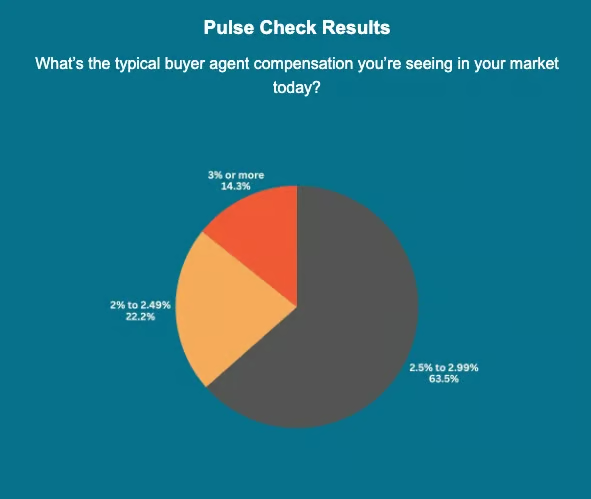
The most common buyer agent compensation reported was 2.5% to 2.99%, with 63.5% of respondents selecting that range. Another 14.3% said buyer agents in their market are typically earning 3% or more, meaning 77.8% of respondents reported buyer agent compensation of 2.5% or higher.
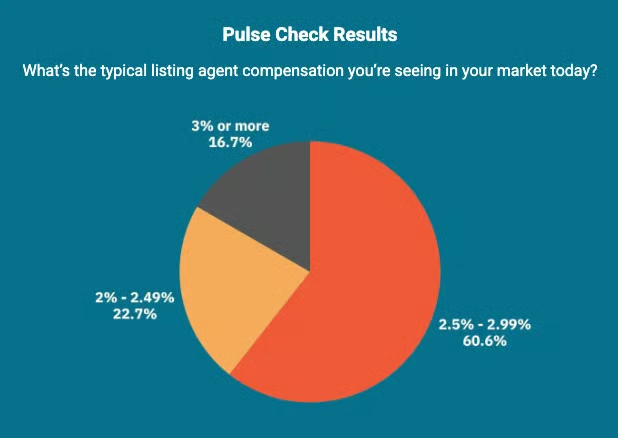
The responses for listing agents were remarkably similar. 60.6% of agents reported that 2.5% to 2.99% is the most common agent compensation. Another 16.7% said listing agent compensation is typically 3% or more, meaning 77.3% reported listing agent compensation of 2.5% or higher.
I also asked who is more commonly paying the buyer agent’s compensation.
Nearly 73% of respondents said the seller pays the buyer’s agent’s compensation in most transactions. 8.2% said the buyer pays it in most transactions, while 9.5% said it varies significantly from deal to deal, and 9.4% said the cost is typically shared between the buyer and seller.
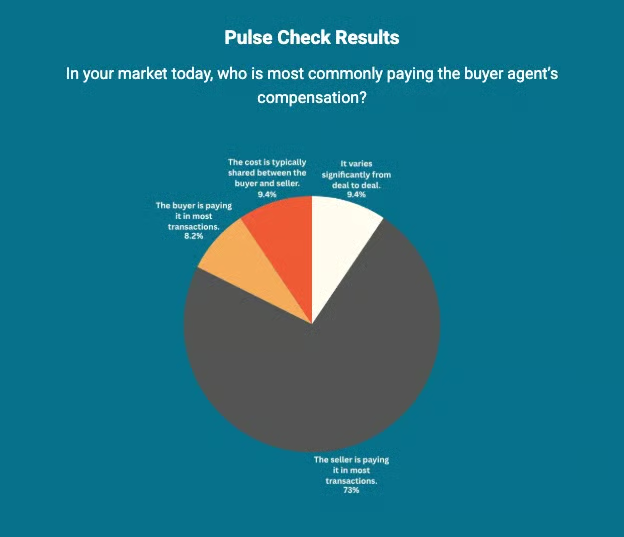
One of the things I found most interesting was how consistent the responses were. The Close newsletter is read by agents across the US. Regardless of region, the most common commission range for both buyer and listing agents remained 2.5% to 2.99%, while sellers remained the most common party paying buyer-agent compensation.
It’s important to remember that commissions remain fully negotiable, but these results suggest compensation has remained more stable than many expected, including myself, when the settlement’s practice changes first took effect.
Why this may be happening
One of the biggest misconceptions surrounding the NAR settlement was that sellers could no longer pay buyer agent compensation. But that was never the case.
The settlement removed offers of buyer agent compensation from NAR-affiliated multiple listing systems (MLS) and required written buyer representation agreements before private showings, but it did not prevent sellers from offering compensation during negotiations.
In many markets, sellers continue to offer buyer-agent compensation because it helps attract more buyers. With affordability still challenging many households, covering some or all of the buyer agent’s compensation can reduce another financial hurdle for buyers and make a listing more competitive.
At the same time, agents have adapted to the new rules. Compensation conversations are happening much earlier in the relationship, giving buyers and sellers a clearer understanding of how representation works before a transaction begins.
What I find most interesting
The biggest surprise to me wasn’t necessarily the commission percentages. It was who is still paying them.
When the NAR settlement practice changes were announced, one of my biggest concerns was that buyers would suddenly be responsible for paying their own agent’s compensation. While that was always a possibility under the new rules, it wasn’t what I was seeing in my own market.
In my experience, sellers were almost always paying the buyer agent’s compensation in full. I wasn’t sure whether my market was the exception, which is one of the biggest reasons I wanted to conduct this survey.
The results showed my experience wasn’t unique. Nearly 89% of respondents said sellers are still paying buyer agent compensation in most transactions. To me, that suggests the biggest change over the past two years hasn’t been who ultimately pays the commission. It’s that buyers, sellers, and agents are having those conversations much earlier, with clearer expectations and greater transparency than before.
What this means for buyer’s agents
The survey results should be encouraging for buyer’s agents. Nearly four out of five respondents reported buyer-agent compensation of 2.5% or higher, suggesting that professional buyer representation continues to be valued in markets across the country.
The biggest adjustment isn’t necessarily what buyer’s agents are earning. It’s becoming comfortable having compensation conversations much earlier in the relationship and confidently explaining the value they provide.
Agents who clearly communicate their services, establish expectations early, and educate buyers about how home compensation works will likely find those conversations become easier over time.
What this means for listing agents
For listing agents, these survey results suggest commission conversations haven’t disappeared. They’ve become more strategic. Nearly four in five respondents also reported listing agent compensation of 2.5% or higher, with 2.5% to 2.99% being the most common compensation range.
Listing agents should continue to discuss buyer-agent compensation as part of every listing presentation. According to the survey, sellers are still paying buyer-agent compensation in the overwhelming majority of transactions, making it an important factor to consider alongside pricing strategy, closing-cost concessions, repair credits, and mortgage-rate buydowns.
Rather than treating compensation as an automatic expense, listing agents should help sellers understand how it fits into their overall marketing and negotiation strategy. The best recommendation will always depend on local competition, buyer demand, and the property’s position in the market.
What this means for buyers
For buyers, the survey provides encouraging news, but it also highlights why early conversations matter. While 88.8% of respondents said sellers are still paying buyer agent compensation in most transactions, buyers should never assume that will always be the case.
Compensation remains negotiable and can vary from one transaction to another. In some situations, buyers may need to pay part of their agent’s compensation themselves or negotiate for the seller to cover it as part of the purchase agreement.
Understanding how your agent is compensated before making an offer is imperative and helps eliminate surprises later in the transaction. A buyer representation agreement should clearly explain what your agent’s compensation is, how it may be paid, and what happens if the seller offers less than the agreed amount.
What this means for sellers
73% of respondents reported that sellers are still paying buyer agent compensation in the majority of transactions. That doesn’t mean sellers are required to offer it, but many continue to view it as an effective way to attract qualified buyers and make their home more competitive.
For sellers, buyer agent compensation should be viewed as one piece of the overall negotiation strategy rather than simply another expense. Depending on market conditions, offering compensation may increase buyer interest, expand the pool of qualified purchasers, and reduce financial barriers for buyers who are already managing higher mortgage payments and closing costs.
The decision should ultimately be based on the advice of a local real estate professional who understands current market conditions and buyer expectations.
Takeaway
Nearly two years after the NAR settlement practice changes took effect, the dramatic commission shifts many expected haven’t become the norm. According to our survey, buyer and listing agent compensation remain remarkably consistent across markets, with sellers still paying buyer agent compensation in the overwhelming majority of transactions.
The biggest changes haven’t been the commission itself. It’s how compensation is discussed. Conversations are happening earlier, expectations are clearer, and written buyer representation agreements have become a standard part of the process. While every transaction remains negotiable, the survey suggests the industry has adapted to the new rules without fundamentally changing how most deals are structured.
Check out some of our newsletters:
Why Homeowners Are More Anxious Than Ever
Mortgage Rates Are Keeping Buyers Out
Quiet Listings Could Be Costing Sellers Money