





































If you use your customer relationship management (CRM) software only to store names, phone numbers, and email addresses, you are leaving business on the table. A real estate CRM should be more than a digital address book. It should help you remember personal details, follow up consistently, send better marketing, and turn past clients and sphere contacts into repeat business and referrals.
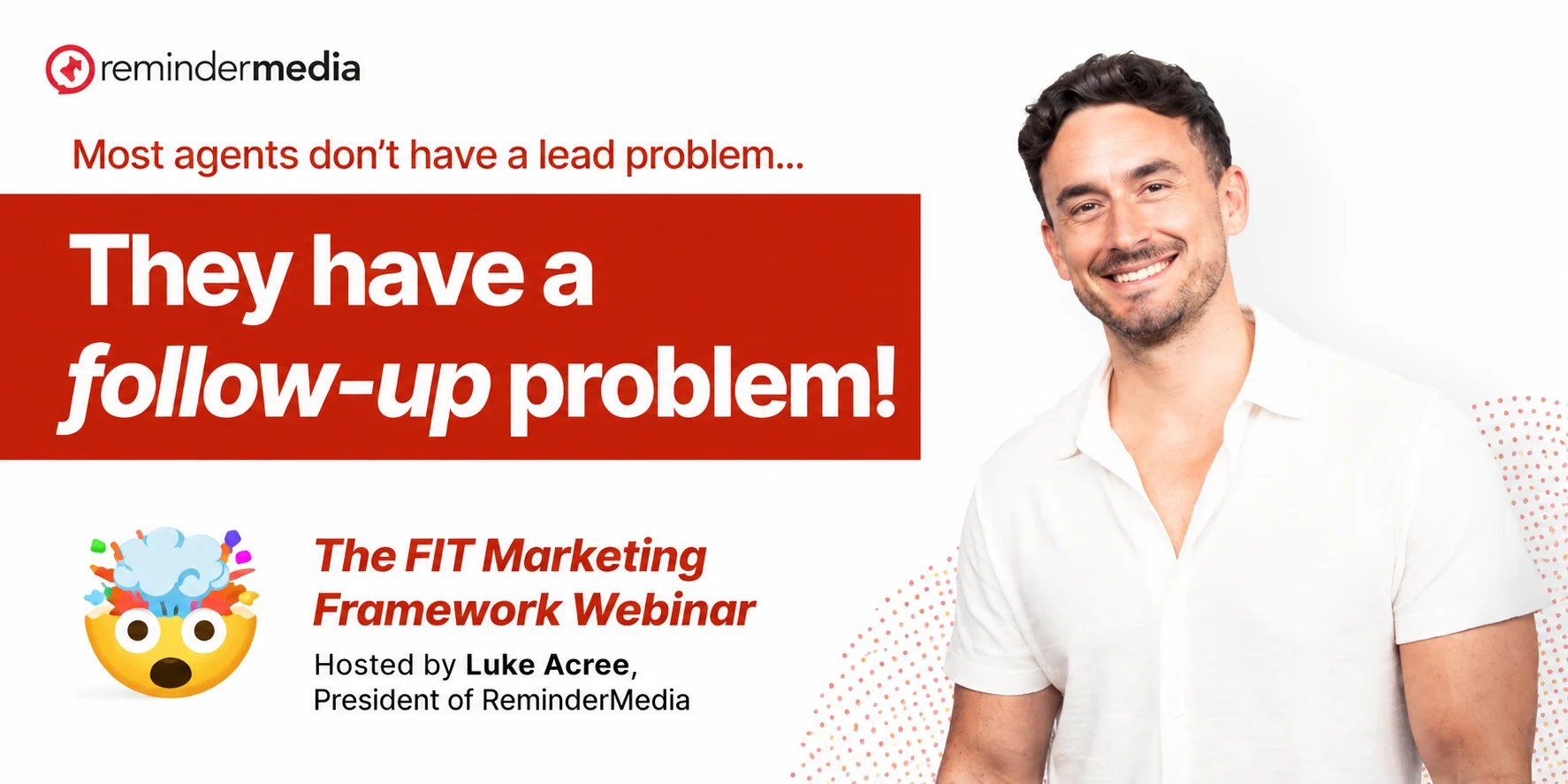
During The Close’s webinar with Reminder Media, “Stop Chasing Leads, Start Getting Referrals,” President of ReminderMedia, Luke Acree, shared a simple but powerful idea: agents do not need more random marketing. They need more relationship-driven marketing. That starts with using your CRM the right way.
The goal is not to blast your entire database with generic messages and hope someone responds. The goal is to organize your contacts, document what matters to them, create meaningful touchpoints, and stay top of mind in a way that feels personal. Here’s how to use a CRM for real estate so it actually helps you build relationships and generate referrals.
- Why your CRM matters more than you think
- What is a real estate CRM?
- Start by organizing your database
- Use the FORD method to personalize every CRM record
- Turn your CRM notes into better follow-up
- Build your CRM around the FIT Framework
- Use your CRM to create real conversations
- Set follow-up tasks for every important contact
- Use your CRM to ask for referrals without sounding desperate
- What to put in every real estate CRM record
- Real estate CRM follow-up ideas
- Common CRM mistakes agents make
- How to reconnect with old CRM contacts
- Bottom line
Why your CRM matters more than you think
Real estate is a relationship business, but relationships are hard to maintain if the details live only in your head. You may remember your favorite clients, but can you remember every past client’s kids’ names, career changes, hobbies, renovation plans, investment goals, or dream neighborhoods?
That is where a CRM becomes valuable. A real estate CRM gives you one place to organize your contacts, track conversations, schedule follow-ups, record personal details, and create a system for staying in touch. When used well, it helps agents stop relying on memory and start building a repeatable referral strategy.
In the webinar, Luke Acree emphasized that repeat and referral business often comes from the database agents already have. The problem isn't always that agents don't know enough people. The problem is that they don't consistently nurture those relationships.
Your CRM is the tool that helps you do that.
What is a real estate CRM?
Let’s first define what a CRM is. A real estate CRM is software that helps agents manage contacts, leads, clients, past clients, vendors, referral partners, and sphere relationships. Most CRMs allow agents to store contact information, track communication, schedule tasks, automate follow-up, organize leads by stage, and monitor where each contact is in the buying or selling process.
But the best real estate agents use their CRM for more than basic contact management. They use it to build stronger relationships. That means recording personal information, noting future goals, creating follow-up reminders, segmenting contacts, and sending marketing that feels relevant.
- Who needs a follow-up this week?
- Who bought a home three years ago and may be ready for a market update?
- Who has kids starting school soon?
- Who mentioned wanting an investment property?
- Who referred me business last year?
- Who should be invited to my next client event?
If your CRM cannot help you answer those questions, it may not be set up to support the way real estate relationships actually work.
Start by organizing your database
Before you can use your CRM to its fullest potential, you need a clean database. That does not mean it has to be perfect. In fact, one of Luke’s biggest points in the webinar was that agents should avoid getting stuck in “paralysis by analysis”. The goal is to take action, track results, and pivot.

- Current leads: People who may buy or sell soon.
- Active clients: People currently working with you.
- Past clients: People you have already helped buy or sell.
- Sphere contacts: Friends, family, neighbors, former coworkers, and people who know you.
- Referral partners: Lenders, attorneys, contractors, title reps, financial advisors, and other local professionals.
- Long-term nurture contacts: People who may not be ready now but could be valuable relationships over time.
Once your contacts are organized, you can start creating different follow-up plans for each group. A hot lead should not receive the same communication as a past client from five years ago. A vendor partner should not be nurtured the same way as a first-time buyer. Segmentation helps you communicate with more intention.
Use the FORD method to personalize every CRM record
- Family
- Occupation
- Recreation
- Dreams
These categories help agents move beyond generic follow-up and create more genuine conversations.
Family
Family notes can include spouse’s name, children’s names, pets, important milestones, school changes, or family plans. This gives you a natural way to reconnect without making every conversation about real estate.

Instead of saying, “Just checking in,” you can say, “How is your daughter liking her first year at college?” or “How is the new puppy adjusting to the house?”
That kind of detail makes the relationship feel real because it is real.
Occupation
Occupation details help you understand your contact’s work life, schedule, income stability, relocation potential, and stress points. If someone changes jobs, opens a business, retires, or starts working remotely, that could eventually affect their housing needs.

A client who just accepted a new role may need to relocate. A business owner may be thinking about investing. A retiree may be ready to downsize. These details help you stay aware of future opportunities without forcing a sales conversation.
Recreation
Recreation includes hobbies, interests, community involvement, sports, travel, volunteering, pets, clubs, and lifestyle preferences. These details are especially useful for building rapport and sending relevant marketing.

If a past client loves gardening, a seasonal home maintenance checklist may resonate. If they are involved in local youth sports, they may appreciate a community event guide. If they love restaurants, a local dining roundup may get their attention.
Personalization does not always require a complicated campaign. Sometimes it is as simple as remembering what someone enjoys.
Dreams
Dreams are where real estate conversations become more strategic. In the webinar, Luke framed this around dreams of homeownership, investing, moving, or building wealth through real estate.
This might include notes like:
- Wants to buy an investment property someday
- Dreams of moving closer to family
- Wants a home with more land
- Plans to downsize after the kids graduate
- Interest in a vacation home
- Wants to sell once the market improves

These notes give you a reason to follow up with value. If someone told you they want to buy an investment property, you can send a rental market update. If they are considering downsizing, you can share a guide to preparing a home for sale.
That is how your CRM becomes a referral and repeat business tool, not just a contact list.
Turn your CRM notes into better follow-up
The FORD method only works if you actually use the information. After every call, meeting, text exchange, open house conversation, client event, or closing, update the CRM record with any useful information.
Add notes like:
- What did they mention about family?
- What is happening at work like?
- What hobbies or interests came up?
- What future real estate goals did they share?
- What should you follow up next?
- What would be useful to send them?
The point is not to document every detail of someone’s life. The point is to capture the information that makes future conversations easier, more relevant, and more human.
For example, a weak CRM note might say:
“Past client. Bought in 2022.”
A stronger CRM note would say:
“Bought in 2022. Married with two kids. Works in healthcare. Loves hiking and local restaurants. Mentioned wanting a bigger yard with a pool in the next few years. Send spring market update and invite to summer client event.”
That record gives you multiple natural ways to reconnect.
Build your CRM around the FIT Framework
In the webinar, Luke shared the FIT Framework: Frequency, Impact, and Trust. This is a helpful way to think about CRM follow-up: a CRM is only valuable if it helps you stay in touch in ways people actually care about.
Frequency: Stay in touch more often
Luke’s point on frequency was simple: most agents are not reaching out enough. Many agents assume they are bothering people, but the bigger problem is usually that their database barely hears from them.
Your CRM should help you create a touchpoint plan. That might include:
- Weekly email newsletters
- Quarterly phone calls
- Client event invitations
- Home anniversary messages
- Birthday texts
- Market updates
- Property value check-ins
- Direct mail
- Social media engagement
- Personal video messages
- Referral partner check-ins
Luke suggested agents aim for at least 26 touchpoints per year and at least two communication channels. That could be as simple as one email every other week plus quarterly phone calls. As your system grows, you can add social media, client events, direct mail, text messages, and pop-bys.
The CRM keeps this from becoming random. It tells you who to contact, when to contact them, what to say, and what happened last time.
Impact: Make your touchpoints valuable
Frequency without value becomes noise. If every message is generic: “Call me if you want to buy or sell,” your database will turn you out.
Impact comes from making your communication useful, relevant, or personal. In the webinar, Luke broke content into three categories: education, entertainment, and endearment.
- Educational content helps people understand the market. Examples include home value updates, interest rate explainers, neighborhood market reports, buyer tips, seller prep checklists, and investment property insights.
- Entertaining content keeps people engaged. Examples include local events, seasonal guides, community roundups, homeowner tips, and lifestyle content that your audience actually wants to read.
- Endearing content shows who you are. Examples include client appreciation events, community involvement, charity drives, family moments, behind-the-scenes content, and stories that reveal your values.
Your CRM helps you decide who should receive which type of content. A first-time buyer lead may need education. A past client may respond to a local event invite. A referral partner may appreciate a spotlight in your newsletter.
Trust: Prove you are the right agent to remember
Trust is what turns visibility into business. Your CRM can help you build trust by reminding you to collect reviews, follow up after closings, ask for referrals, and stay connected with past clients and referral partners.
In the webinar, Luke emphasized several ways agents can build trust through marketing:
- Showcase testimonials
- Share client reviews
- Highlight awards and experience
- Feature referral partners
- Create educational content
- Stay visible in the community
- Ask for referrals in a relationship-first way
Your CRM can track all of this. You can note who has left a review, who has referred you, who attended an event, who needs a thank-you note, and how you should be invited to your next client appreciation campaign.
Use your CRM to create real conversations
A CRM should not just automate messages. It should help you create conversations. One of the strongest ideas from the webinar was using marketing as a reason to call. Luke gave the example of sending a client a magazine, then calling to say it reminded you to check in. The same principle applies to any useful piece of content.

You could call or text and say:
- “I just sent over a quick market update for your neighborhood, and it made me think of you. How have things been?”
- “I saw this local event and remembered you mentioned your kids love outdoor activities.”
- I was reviewing home values in your area and thought you might want to see what has changed since you bought.”
- “I know you mentioned possible investing one day, so I wanted to send you a quick rental market update.”
The CRM makes those conversations easier because you are not starting from scratch. You have context.
Set follow-up tasks for every important contact
Every important contact in your CRM should have a next step. That does not mean every person needs a sales call. It means every relationship should have some kind of intentional follow-up.
Examples include:
- Call in 90 Days
- Send home anniversary message
- Invite to client event
- Send CMA update
- Check in after school year starts
- Ask for review
- Send vendor recommendations
- Follow up on investment interest
- Send birthday text
- Add to monthly newsletter
Without a next step, contacts disappear into the database. With a next step, your CRM becomes a daily action plan.
Use your CRM to ask for referrals without sounding desperate
Many agents avoid asking for referrals because it feels awkward. But the webinar reframed it thus: asking for help gives your best clients a chance to support you. The key is to make the ask personal and specific. Instead of saying, “Send me referrals,” try framing it around your goals and your relationship.
For example:
“I have a goal to help 25 families this year, and I’m trying to grow my business through people I already know and trust. Is there anyone in your world who has mentioned buying, selling, or investing in real estate?”
Or:
“You were such a great client to work with, and I’d love to help more people like you. If anyone comes to mind who needs real estate advice, I’d be grateful for an introduction.”
Then, record the conversation in your CRM. Note who you asked, how they responded, and when to follow up again. Even if they do not have a name right away, you planted a seed.
Pay attention to:
- Which emails get replies.
- Which events generate conversations.
- Which scripts lead to referrals.
- Which contacts refer business.
- Which market updates get engagement.
- Which lead sources convert.
- Which follow-up tasks are being completed.
- Which contacts are going cold.
Your CRM should help you see patterns. If quarterly calls are generating referrals, do more of them. If generic emails are not working, make them more personal. If client events generate reviews and conversations, build them into your annual plan.
What to put in every real estate CRM record
At a minimum, each contact record should include:
- Full name
- Phone number
- Emailed address
- Mailing address
- Lead source
- Relationship type
- Buyer, seller, investor, or vendor status
- Pipeline stage
- Important dates
- Last contact date
- Next follow-up date
- Preferred communication method
- Family notes
- Occupation notes
- Recreation notes
- Dreams or real estate goals
- Past transactions
- Referral history
- Review status
- Marketing list or segment
The more useful your records are, the easier it becomes to follow up naturally.
Real estate CRM follow-up ideas
Here are a few ways to use your CRM to create better touchpoints:
Past clients
Send home anniversary messages, annual home value updates, seasonal maintenance checklists, local event invites, and review requests.
Seller leads
Send market updates, home prep guides, valuation reports, listing timelines, and neighborhood sales data.
Buyer leads
Send listing alerts, financial reminders, neighborhood guides, open-house invites, and buying-timeline resources.
Investors
Send rent market updates, cash flow tips, property performance check-ins, and local investment opportunities.
Referral partners
Send thank-you notes, co-marketing ideas, event invites, client referrals, and partner spotlights.
Sphere contacts
Send personal check-ins, local content, event invites, birthday messages, and casual real estate updates.
Common CRM mistakes agents make
- Treating the CRM like a storage system: If you only add contacts and never use the data, your CRM is not helping you. It should drive daily action.
- Sending the same message to everyone: Your past clients, new leads, vendors, and referral partners do not all need the same content. Segment your database.
- Not documenting personal details: If you do not record what you learn, you lose the opportunity to make future follow-up feel personal.
- Waiting too long to follow up: A CRM should help you stay consistent, not remind you about people after the relationship has gone cold.
- Over-automating the relationship: Automation is helpful, but real estate is still personal. Use automation to support relationships, not replace them.
How to reconnect with old CRM contacts
If you have not spoken to someone in a year or more, do not overcomplicate the re-entry. In the webinar Q&A, Luke recommended being honest.
You might say:
“Hey, I was going through my contacts and realized I haven’t checked in with you in way too long. I can’t believe how fast time has gone by. How have you been?”
That approach works because it is human. You are not pretending you have been in touch. You are simply restarting the conversation.
After the call, update the CRM with anything you learn and set the next follow-up task so the relationship does not go cold again.
Bottom line
Your CRM is only as powerful as the relationships you build with it. The agents who get the most out of their CRM are not just logging names and automating emails. They document personal details, create consistent touchpoints, send relevant content, ask for referrals, and track what works.
The FORD method gives you a simple way to personalize every contact record. The FIT Framework gives you a strategy for staying top of mind with frequency, impact, and trust. Together, they turn your CRM from a passive database into an active referral engine.
If your CRM feels underused, start small. Clean up your contacts, add FORD notes, schedule your next round of follow-ups, and commit to more consistent communication. You do not need a perfect system to get started. You just need to take action, track the results, and keep improving.
Frequently asked questions (FAQs)
How do real estate agents use a CRM?
Real estate agents use a CRM to organize contacts, track leads, schedule follow-ups, manage client communication, automate marketing, and keep notes on past clients, prospects, vendors, and referral partners. A CRM can also help agents track where each lead is in the buying or selling process.
Is a real estate CRM worth it for a solo agent?
Yes. A CRM can be especially useful for solo agents because it creates a system for managing follow-up without relying on memory. Even with a relatively small database, agents can use a CRM to schedule reminders, track conversations, organize leads, and maintain relationships with past clients.
Should I delete old leads from my real estate CRM?
Not necessarily. Someone who was not ready to move six months or even two years ago could become a future client. Instead of automatically deleting older leads, update their status and move appropriate contacts into a long-term nurture campaign. However, you should clean out outdated, duplicate, invalid, or legally restricted contacts.
You may also like…