





































The right mortgage lender can do more than approve a loan. It can help a buyer find an affordable program, strengthen their offer, communicate clearly during underwriting, and get to the closing table on schedule. As an agent, I’ve seen how quickly a great transaction can become stressful when financing questions go unanswered, or a lender misses an important deadline.
Buyers naturally focus on finding the lowest mortgage rate, but that is only one part of the decision. You should also compare annual percentage rates (APRs), lender fees, down payment requirements, loan programs, closing timelines, and the experience of working with the lender. I research national lenders across these categories to identify the best options for different types of homebuyers.
| Provider | Best for |
| Rocket Mortgage | Digital-first borrowers |
| Guild Mortgage | Low-down-payment programs |
| Chase | Homebuyer grants and closing protection |
| Better Mortgage | Comparing mortgage rates online |
| Veterans United | Specialized VA loan guidance |
| New American Funding | Nontraditional income |
Why you can trust The Close
As a real estate agent, I know that financing affects nearly every part of a transaction. A lender’s ability to explain a buyer’s options, provide a strong preapproval, communicate with the agent, and meet contract deadlines can be just as important as the initial rate quote.
For this guide, I researched each lender’s current loan programs, assistance options, application tools, and borrower support. I also focused on what agents and buyers need during an actual transaction, not simply on which lender has the most recognizable name.
Sophia Doyle
Staff Writer-The Close
- Best home mortgage lenders of 2026 compared
- Rocket Mortgage: Best for digital-first borrowers
- Guild Mortgage: Best for low-down-payment programs
- Chase: Best for homebuyer grants and closing protection
- Better Mortgage: Best for comparing mortgage rates online
- Veterans United: Best for specialized VA loan guidance
- New American Funding: Best for nontraditional income
- How to choose the right mortgage lender
- Questions to ask a mortgage lender
- Frequently asked questions (FAQs)
- Your take
Best home mortgage lenders of 2026 compared
| Provider | Main loan options | Application and support | Learn more |
| Rocket Mortgage | • Conventional • FHA • VA • Jumbo • Adjustable-rate • Bridge • DSCR • Non-qualified mortgages | Online application with phone and chat support | Visit Rocket Mortgage |
| Guild Mortgage | • Conventional • FHA • VA • Jumbo • Construction • Renovation • Manufactured-home • Speciality loans | Online application and local loan officers | Visit Guild Mortgage |
| Chase | • Conventional • CreaMaker • FHA • VA • Jumbo • Investment-property loans | Online application, home lending advisors, and branch support | Visit Chase |
| Better Mortgage | • Conventional • FHA • VA • Jumbo • Investment-property loans | Primarily digital application with phone and email support | Visit Better Mortgage |
| Veterans United | • VAVA • jumbo • VA IRRRL • VA cash-out refinance | Online application, mobile account management, and 24/7 phone support | Visit Veterans United |
| New American Funding | • Conventional • FHA • VA • USDA • Jumbo • Bank statement • DSC • non-QM • Construction loans | Online application and direct loan officer support | Visit New American Funding |
Rocket Mortgage: Best for digital-first borrowers
 | |
|---|---|
Pros:
| Cons:
|
30-year fixed conventional mortgage
| |
| Visit Rocket Mortgage | |
Why I chose Rocket Mortgage
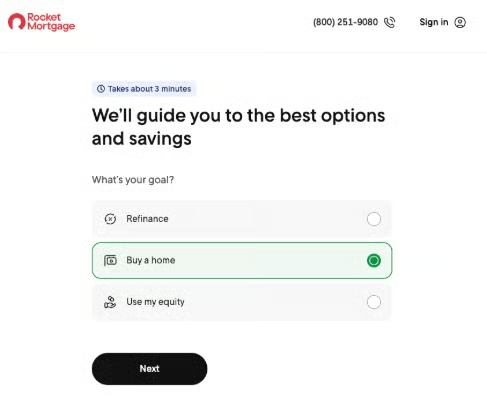
Rocket Mortgage is my top choice for buyers who want to handle most of the process online. Borrowers can explore loan programs, review sample rates, use affordability calculators, submit documents, and communicate with the lending team without visiting a branch. Its digital experience makes it easy to stay organized, which is helpful when buyers are already juggling listings, showings, inspections, and more emails than anyone should reasonably receive in one week.
I also like that Rocket’s loan selection has expanded beyond basic conventional and government-backed mortgages. It now offers bridge loans for buyers purchasing before selling, DSCR loans for investors, and non-QM options for borrowers with less traditional income. Its ONE+ program is another standout, allowing qualified borrowers to contribute 1% while Rocket provides an additional 2%, up to program limits. However, the program is limited to eligible primary-residence purchases and includes income and loan amount restrictions.
Standout programs:
- ONE+: Buyers contribute as little as 1%, while Rocket provides another 2% toward the down payment up to $7,000. Income, loan amount, and property restrictions apply.
- HomeReady and Home Possible: Conventional mortgages with down payments as low as 3%, reduced mortgage insurance costs, and more flexible income requirements.
- Jumbo Smart: Financing for homes above conforming loan limits, with options designed for borrowers purchasing higher-priced properties.
- Rocket Mortgage Bridge Loan: Helps qualified homeowners access funds for a new home before selling their current property.
- Non-QM and DSCR loans: Alternative qualification options for self-employed borrowers and real estate investors.
Guild Mortgage: Best for low-down-payment programs
 | |
|---|---|
Pros:
| Cons:
|
Guild 1% down mortgage
| |
| Visit Guild Mortgage | |
Why I chose Guild Mortgage
Guild Mortgage stands out for buyers whose biggest obstacle is the upfront cost of purchasing a home. Its assistance lineup includes a 1% down mortgage, a zero-down program, traditional down payment assistance, and MyPath2Own for first-time buyers who need help becoming mortgage-ready. That variety gives borrowers several avenues to explore, rather than assuming they must wait years to save a 20% down payment.
From an agent’s perspective, I also appreciate that Guild combines assistance programs with local loan officer support. Low-down-payment financing often comes with additional eligibility requirements, so having someone available to explain the details is helpful. Guild also offers a broad selection of specialty loans, including construction, renovation, manufactured-home, medical professional, and ITIN programs.
Standout programs
- 1% Down: The borrower contributes 1%, and Guild provides 2% in down payment assistance through a nonrepayable grant. The maximum grant is currently listed as $5,000.
- Zero Down: Allows eligible buyers to purchase a home without making a traditional down payment.
- MyPath2Own: Combines homebuyer education, a personalized mortgage-readiness plan, and up to $4,000 in assistance for qualifying first-time buyers.
- Homebuyer Protection: Includes protections for earnest money and certain upfront expenses, a 17-day closing guarantee, and an extended rate-lock option. Terms and eligibility restrictions apply.
- Lock & Shop: Lets qualified buyers lock their mortgage rate for up to 120 days while they search for a home.
- Doctor and medical professional loans: Specialized financing for medical professionals who may have high earning potential but significant student loan debt.
Chase: Best for homebuyer grants and closing protection
 | |
|---|---|
Pros:
| Cons:
|
30-year fixed conventional mortgage
| |
| Visit Chase | |
Why I chose Chase
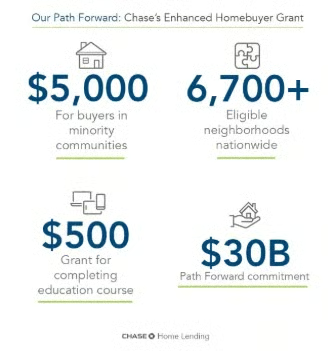
Chase combines the familiarity of a major bank with programs that can reduce a qualified buyer’s upfront expenses. Its Homebuyer Grant provides either $2,500 or $5,000 for eligible primary-residence purchases in selected census tracts. Depending on the loans and remaining funds, the grant may be applied toward discount points, lender or third-party fees, and the down payment.
I also like Chase’s closing protection, especially from an agent’s perspective. Few things create more stress than watching a financing deadline approach without a clear answer from the lender. For eligible products, Chase promises an on-time closing in as little as three weeks or a $5,000 payment if the lender causes the delay. Not every loan or transaction qualifies, but it gives buyers and agents another layer of accountability.
Standout programs
- Chase Homebuyer Grant: Provides $2,500 or $5,000 for qualifying primary residences in eligible census tracts. Funds can help reduce the interest rate, closing costs, fees, or down payment, depending on the loan.
- DreaMaker mortgage: Offers down payments as low as 3% and reduced mortgage insurance for eligible borrowers.
- Standard Agency mortgage: A low-down-payment conventional option that may be combined with the Chase Homebuyer Grant.
- Chase Closing Guarantee: Eligible borrowers who do not close on time because of a Chase-caused delay may receive $5,000.
- FHA and VA financing: Government-backed options that can be combined with the Homebuyer Grant when the borrower and property qualify.
Better Mortgage: Best for comparing mortgage rates online
 | |
|---|---|
Pros:
| Cons:
|
30-year conventional mortgage
| |
| Visit Better Mortgage | |
Why I chose Better Mortgage
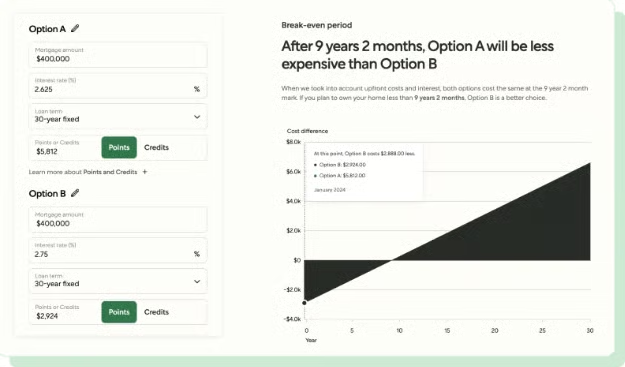
Better Mortgage makes it easier to begin researching rates before handing over a long list of personal information. Its rate page displays sample mortgage rates and lets buyers request personalized rates in about 3 minutes without affecting their credit. Buyers can also review APRs and learn how points, credits, and loan terms change the cost of a mortgage.
As an agent, I like any tool that helps buyers move beyond asking, “What is today’s rate?” A rate without the APR, points, lender fees, down payment, and loan assumptions does not tell the whole story. Better gives buyers a useful starting point for those conversations, but its advertised examples should still be compared with formal Loan Estimates from other lenders.
Standout programs
- Online personalized rate comparison: Buyers can compare customized rates, APRs, points, and lender credits in approximately three minutes without affecting their credit score.
- Rate-match option: Better invites borrowers with a competing mortgage offer to request a rate match. Eligibility and terms apply.
- Low-down-payment conventional loans: Eligible borrowers may qualify with as little as 3% down.
- FHA loans: Provide more flexible credit requirements and down payments as low as 3.5% for eligible borrowers.
- VA loans: Offer qualifying military borrowers no-down-payment financing without private mortgage insurance.
- Jumbo loans: Available for buyers financing homes above conventional conforming loan limits.
- Investment property mortgages: Financing options for qualified borrowers purchasing rental or investment properties.
Veterans United: Best for specialized VA loan guidance
 | |
|---|---|
Pros:
| Cons:
|
30-year fixed VA purchase loan
| |
| Visit Veterans United | |
Why I chose Veterans United
VA loans come with significant benefits, but they also have requirements that can be unfamiliar to buyers, sellers, and even agents who do not handle them regularly. Veterans United specializes in helping eligible veterans, active-duty service members, and surviving spouses navigate the process. Its team can help buyers confirm eligibility, obtain a Certificate of Eligibility, understand the funding fee, and prepare for the VA appraisal.
That specialized experience is why I would recommend Veterans United over simply choosing a lender that happens to offer VA loans. A VA buyer should not have to spend the transaction explaining their financing to the person handling it. Veterans also provides 24/7 phone assistance, a mobile account platform, calculators, education resources, and credit-building guidance.

Standout programs
- VA purchase loans: Eligible borrowers may finance a primary residence with no down payment and no private mortgage insurance.
- VA jumbo loans: VA-backed financing for higher-priced homes that exceeds the conforming loan limit.
- VA Interest Rate Reduction Refinance Loan: Also known as an IRRRL or VA Streamline refinance, this program helps eligible VA borrowers refinance with less documentation than a traditional refinance.
- VA cash-out refinance: Allows eligible homeowners to replace their current mortgage and access a portion of their home equity.
- Free credit consulting: Veterans United provides complimentary credit assistance to help military borrowers improve or establish their credit before applying.
- VA homebuying education: Include courses, calculators, eligibility resources, and assistance obtaining a Certificate of Eligibility.
New American Funding: Best for nontraditional income
 | |
|---|---|
Pros:
| Cons:
|
Bank statement mortgage:
| |
| Visit New American Funding | |
Why I chose New American Funding
New American Funding is my pick for buyers whose income does not fit neatly into a traditional mortgage application. Its bank statement loans may allow eligible self-employed borrowers, freelancers, gig workers, and investors to document income through business or personal bank statements rather than relying exclusively on pay stubs and W-2s. That makes it especially relevant to real estate agents and other independent contractors.
I also like that New American Funding does not limit nontraditional borrowers to one product. It offers non-QM, DSCR, construction, government-backed, conventional, and jumbo financing. These loans are not a shortcut around underwriting, and alternative programs may require higher rates, additional reserves, or larger down payments. However, having more ways to evaluate income can help a financially capable borrower who looks complicated on paper.

Standout programs
- Bank statement loans: Allow eligible self-employed borrowers to document income with bank statements rather than relying exclusively on tax returns.
- DSCR loans: Help real estate investors qualify primarily based on a property’s rental income and debt service coverage rather than personal employment income.
- Non-QM loans: Provide alternative qualification options for borrowers whose income, credit profile, or financial documentation does not fit conventional guidelines.
- One-Time Close construction loans: Combine construction financing and the permanent mortgage into a single loan with a single closing.
- NAF Cash: An affiliated service that can help buyers submit a cash-backed offer and purchase the property before reselling it to the buyer. Transaction fees and state restrictions apply.
- ITIN loans: Financing options for eligible borrowers who use an Individual Taxpayer Identification Number rather than a Social Security number.
- Pathway to Homeownership: Offers qualifying first-time buyers assistance that can be applied toward down payment or closing costs, subject to location and eligibility requirements.
How to choose the right mortgage lender
The best lender on paper is not automatically the best lender for your transaction. Here is how I recommend comparing your options:
Identify the right loan type
Before comparing rates, determine which loan programs may fit your finances, property, and eligibility. A conventional mortgage may offer the best terms for one buyer, while another may benefit from FHA, VA, USDA, assistance, or non-QM financing.
Request quotes from multiple lenders
Contact at least three lenders and provide the same information to each one. Request the same loan type, down payment, term, rate-lock period, and point structure to make a fair comparison. Mortgage shopping should happen within a relatively short period, as mortgage credit checks completed within a 45-day window are generally treated as a single inquiry.
Compare loan estimates
An online rate quote is a starting point, not the final offer. Request a standardized Loan Estimate after you have a property address and are ready to compare specific terms. Once you provide the required information, lenders must generally send the Loan Estimate within 3 business days. The form lets you compare the interest rate, APR, monthly payment, origination fees, lender credits, cash-to-close, and five-year borrowing cost.
Look beyond the interest rate
Compare the APR, points, lender fees, mortgage insurance, and total cash required at closing. The APR incorporates the interest rate and certain loan costs, making it a helpful comparison tool when the loan terms are otherwise similar.
Also consider how long you expect to keep the mortgage. Paying points for a lower rate may make sense if you stay in the home long enough to recover the upfront expense, but it may be less valuable if you expect to sell or refinance soon.
Ask whether the lender can meet the contract timeline
The lowest rate will not help if the lender cannot close before the financing deadline. Ask how quickly the lender can complete underwriting, order the appraisal, issue final approval, and prepare closing documents. As an agent, I also want to know how the lender handles problems. A confident promise is nice. A clear escalation plan, responsive loan officer, and experienced processing team are better.
Evaluate communication and support
Ask who your primary contact will be after you apply. Some lenders assign a dedicated loan officer, while others divide the process among several specialists. Neither model is automatically better, but you should know whom to contact when a question arises.
Pay attention to responsiveness during the preapproval process. If it takes several days to receive a basic answer before you are under contract, communication may not improve once the countdown to closing begins.
Questions to ask a mortgage lender
Before choosing a lender, ask:
- Which loan programs do I qualify for?
- Is this a prequalification, preapproval, or underwritten approval?
- What interest rate and APR are you offering?
- Does the quoted rate require discount points?
- What lender, underwriting, processing, or origination fees will I pay?
- How much cash will I need at closing?
- Will I pay mortgage insurance?
- Is my rate locked, and when does the lock expire?
- What happens if closing is delayed?
- Are down payment assistance or grant programs available?
- How long does underwriting usually take?
- Who will communicate with my agent and me?
- Will you service my mortgage after closing or transfer it?
- Are there prepayment penalties or risky loan features?
- Can you provide a Loan Estimate for another loan option?
Frequently asked questions (FAQs)
How many mortgage lenders should I compare?
Compare at least three lenders. Request the same loan type and terms from each lender within a short window so the quotes reflect similar market conditions.
Is the lender with the lowest mortgage rate always best?
No. A lower rate may require discount points, higher origination charges, or a larger down payment. Compare the APR, cash-to-close, lender-controlled fees, monthly payment, and five-year borrowing cost with the interest rate.
Should I choose a bank, direct lender, or mortgage broker?
Banks and direct lenders offer their own mortgage products, while brokers compare programs from multiple lenders. Any of the three can be a good option. Compare the available loans, total costs, support, and ability to meet your closing deadline.
Your take
The best home mortgage lender is the one that offers the right loan at a competitive total cost and can reliably get the buyer to closing. Compare multiple Loan Estimates, ask about assistance programs, and pay attention to communication from the beginning. A responsive, experienced lender can make the financing process much easier for the buyer, agent, and everyone waiting at the closing table.
You may also like….