





































A basic real estate website can introduce you, display your listings, and give prospects a way to get in touch. But if you want buyers to search the local market without leaving your site, you’ll need Internet Data Exchange (IDX).
The best IDX websites for realtors combine reliable listing data with saved searches, property alerts, lead capture, and either a built-in CRM or integrations with the tools you already use. The goal is not simply to recreate Zillow with your headshot at the top. Your website should give buyers a reason to stay and give you enough information to start a useful conversation.
As an agent, I know a beautiful homepage means very little if buyer inquiries disappear into an inbox or the property search is frustrating to use. I compared these platforms based on what happens after the website launch, including how they capture leads, support follow-up, fit into an agent’s workflow, and justify their total cost.
Here are my five picks for 2026:
| Platform | Best for | Starting price |
|---|---|---|
| Placester | Budget-friendly IDX sites for new agents | $59 per month |
| AgentFire | Stylish, brand-heavy sites with automation | $149 per month + $700 setup |
| Agent Image | Custom branding and high-end design | $99.99 per month + $599.99 setup |
| Real Geeks | End-to-end IDX platform for capturing and nurturing leads | $399 per month |
| CINC | Brokerages/teams needing full-stack CRM + IDX | $899 including leads |
- How I chose the best IDX websites for realtors
- The Close’s top picks for the best IDX websites for realtors
- Placester: Best for budget-friendly IDX sites for new agents
- AgentFire: Best for stylish, brand-heavy sites with automation
- Agent Image: Best for custom-branding and high-end design
- Real Geeks: Best end-to-end IDX platform for capturing and nurturing leads
- CINC: Best for brokerages/teams needing full-stack CRM + IDX
- How to choose the right IDX website for your real estate business
- What to test during an IDX website demo
- Methodology
- Frequently asked questions (FAQs)
- Your take
How I chose the best IDX websites for realtors
I evaluated a variety of IDX platforms and compared their pricing, reliability, coverage, usability, features, and customer support. Using my personal experience as a real estate agent, I focused on tools that will drive real business results.
Why you can trust The Close
As a real estate agent, I understand how powerful the right IDX platform can be in keeping buyers engaged and turning searches into opportunities. I’ve seen firsthand how some IDX websites simply display listings, while others actually help agents capture leads, stay top of mind, and convert traffic into clients.
This guide focuses on platforms that deliver where it matters most in real-world use, not just on paper. Every recommendation is built around what helps agents generate business and grow with confidence.
Sophia Doyle
Staff Writer–The Close
The Close’s top picks for the best IDX websites for realtors
| Platform | Key features | Visit |
|---|---|---|
| Placester |
| |
| AgentFire |
| |
| Agent Image |
| |
| Real Geeks |
| |
| CINC |
|
Placester: Best for budget-friendly IDX sites for new agents
 | |
|---|---|
Pros
| Cons
|
Placester pricing
| |
Why I chose Placester
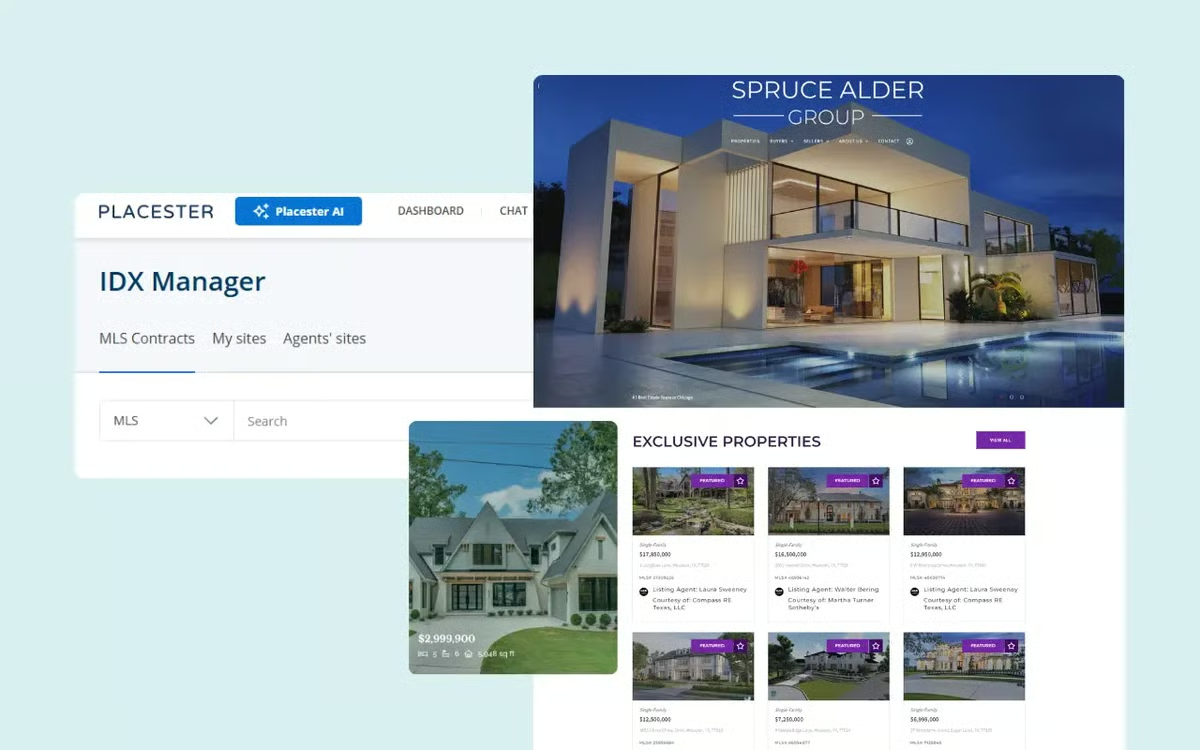
Placester is the simplest on-ramp for those who just want a clean realtor website with IDX to go live fast. Pick a design, tweak it in a visual editor, and you’re off, with IDX search, saved alerts, and SEO tools built in.
If you later need a deeper CRM and nurture stack, Real Geeks or CINC offer more comprehensive solutions. But for a straightforward, budget-friendly site that still captures leads, Placester nails the brief. It’s a solid beginner option, especially if you’re graduating from a basic non-IDX site.
AgentFire: Best for stylish, brand-heavy sites with automation
 | |
|---|---|
Pros
| Cons
|
AgentFire pricing
| |
Why I chose AgentFire
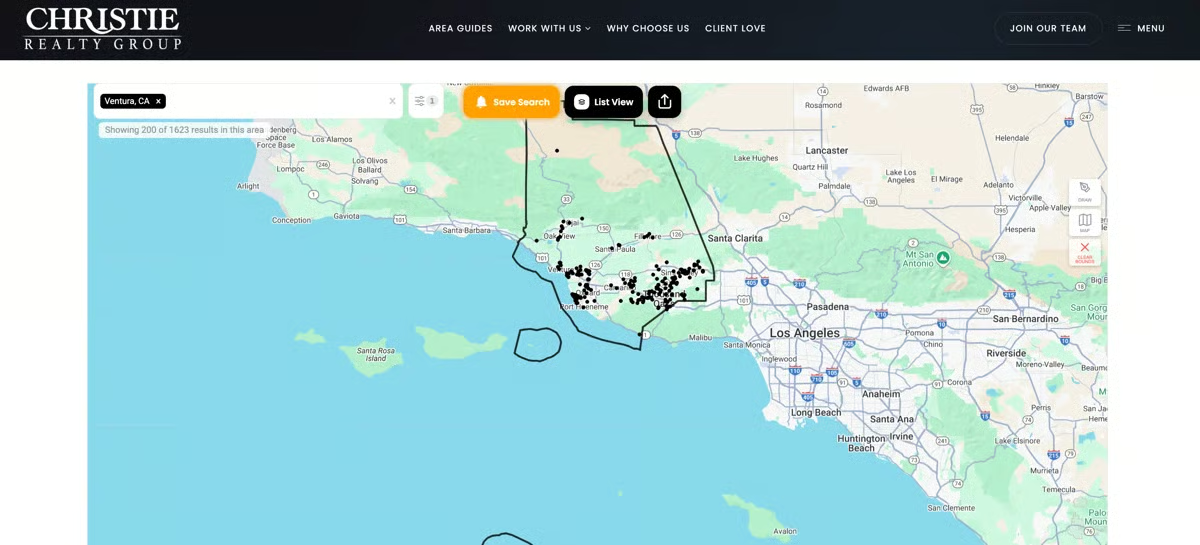
AgentFire shines when you want your site to scream “local expert.” Its hyperlocal toolkit (Area Guides, ClickMaps) makes it easy to build neighborhood pages that feel alive, then layer on add-ons (SEO, PPC, content) as you grow. Compared with Agent Image’s high-touch custom design, AgentFire gives you a faster path to a branded, authority-building site that you can keep iterating.
Agent Image: Best for custom-branding and high-end design
 | |
|---|---|
Pros
| Cons
|
Agent Image pricing
| |
Why I chose Agent Image
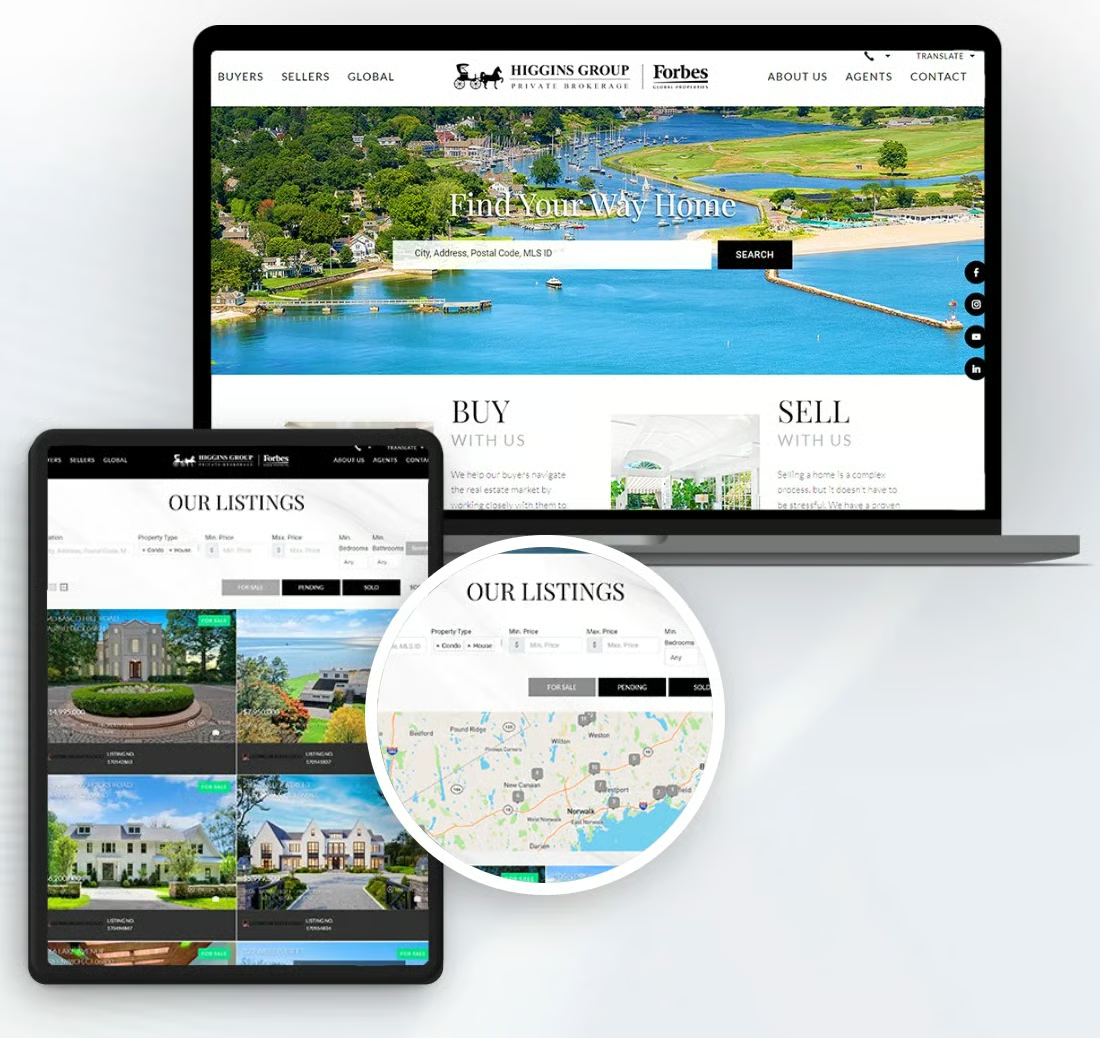
When the brief is “premium, custom, magazine-level design,” Agent Image is the pick. You can choose from semi-custom up to Imagine Studio bespoke builds, and it’ll pair it with IDX options plus in-house marketing services if you want a single partner. Compared with AgentFire’s modular approach or Placester’s starter focus, Agent Image is for agents who treat their site as a flagship brand asset.
Real Geeks: Best end-to-end IDX platform for capturing and nurturing leads
 | |
|---|---|
Pros
| Cons
|
Real Geeks pricing
| |
Why I chose Real Geeks
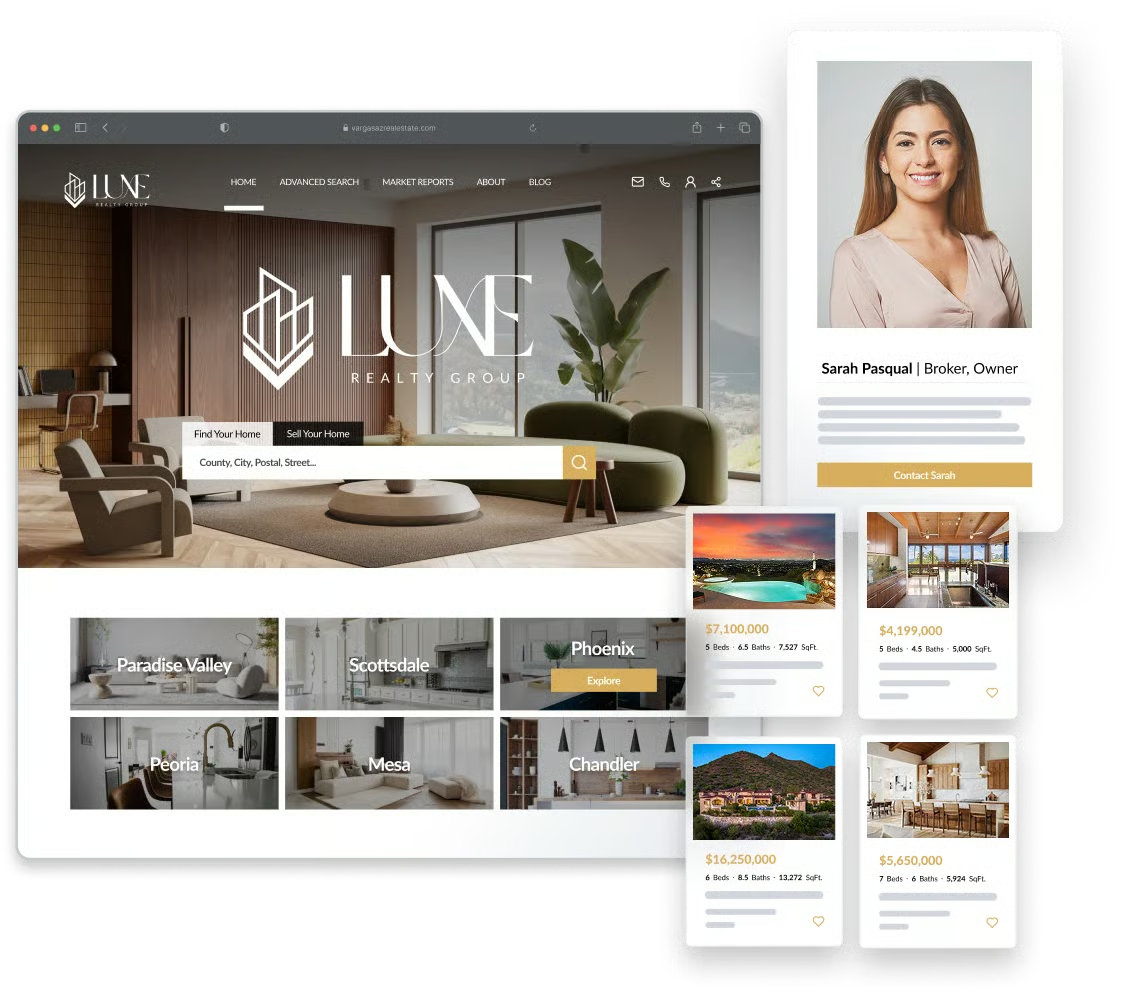
Real Geeks is the workhorse combo: IDX websites, plus a built-in CRM, automated follow-ups, and extras, like property alerts, market reports, and a branded MoveTo search app. It also offers SEO Fast Track pages and simple Google/Facebook ad tools, so you’re not juggling five vendors to get leads flowing. If CINC is the heavy-duty enterprise stack, Real Geeks hits a great “do-most-things-well” middle ground for growth-minded solo agents and small teams.
CINC: Best for brokerages/teams needing full-stack CRM + IDX
 | |
|---|---|
Pros
| Cons
|
| CINC pricing Note: CINC requires a custom quote on its website.
| |
Why I chose CINC
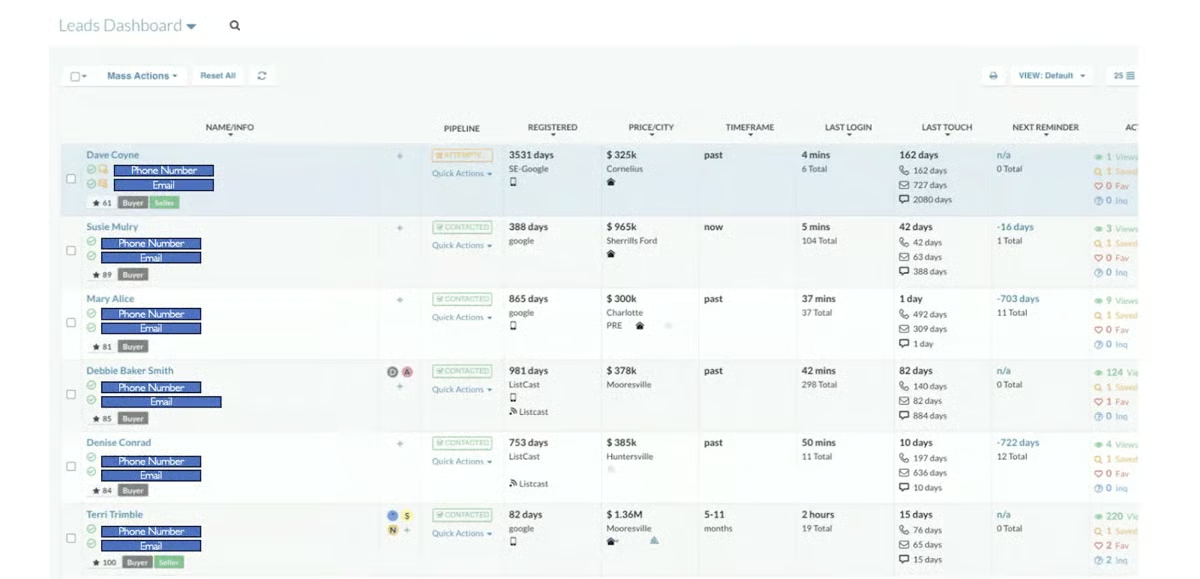
CINC is built for teams that live and die by speed-to-lead, featuring a robust CRM, team routing, and an optional 24/7 AI texting assistant that keeps conversations moving even when your ISA (inside sales agent) is off the clock.
It pairs those tools with IDX sites and managed ad programs, which is why larger teams often choose it over Real Geeks when they need more scale. If Agent Image is the design showpiece, CINC is the conversion engine for high-volume teams.
How to choose the right IDX website for your real estate business
Picking among IDX websites for realtors comes down to what drives leads, not just pretty templates. Keep it simple: choose the platform that updates listings fast, captures contacts reliably, and fits how you work day to day.
 MLS coverage and refresh rate: For real estate agent websites with IDX, verify your MLS is supported, updates are frequent (hourly or better), and compliance tools are built in.
- SEO: Realtor websites with IDX should load quickly, use clean URLs and schema, and let you index listing/neighborhood pages.
- Branding and customization: Some platforms lock you into templates, while others let you brand your site to match your business.
- CRM integrations: The best systems route leads straight into your follow-up tools, whether that’s a built-in CRM or your favorite third-party platform.
- Total cost and scalability: Look at setup fees, monthly plans, add-ons (IDX, SEO, content), and whether it scales from solo agent to team.
How to Build a Real Estate IDX Website in an Afternoon
What to test during an IDX website demo
A sales demonstration can make any platform look easy. Ask the representative to show you how the system handles a real buyer journey from the first property search through agent follow-up.
During the demonstration, test the following:
- Search for a property using the filters your clients request most often.
- Open the website on your phone and check the map, photos, and registration forms.
- Save a search and see what the resulting alert looks like.
- Submit a test lead and confirm where it appears.
- Assign the lead to another agent if you work on a team.
- Ask how quickly listings update from your MLS.
- Review which pages search engines can index.
- Create or edit a neighborhood page without the vendor’s help.
- Ask which features in the demonstration cost extra.
- Confirm who owns the domain, content, and contact data if you leave.
Methodology
I evaluated dozens of platforms to find the best IDX website for realtors. We looked at each option’s features, real agent reviews, and overall ease of use, then compared them against what agents need in the field. Here are the main factors we considered:
- Pricing: I looked at each platform’s monthly and annual costs, plus any additional costs (IDX feeds, add-ons, services).
- MLS coverage and reliability: The best real estate agent websites with IDX update listings quickly and work across multiple MLSs without compliance headaches.
- Ease of use: Platforms were evaluated for whether they were simple to set up, intuitive to navigate, and easy to manage without constant tech help.
- CRM and follow-up: The best IDX websites for realtors either come with a built-in CRM or integrate easily with the tools agents already use.
- Customer support: Hands-on onboarding and ongoing help matter when you’re juggling clients and don’t have time to troubleshoot tech.
Read more about our methodology here.
Frequently asked questions (FAQs)
How much does an IDX website cost?
IDX website pricing can range from a relatively affordable monthly subscription to several hundred dollars per month for platforms that include CRM, automation, team routing, and lead generation. Setup fees, MLS charges, additional users, advertising, and optional services can increase the total. Compare first-year cost rather than the advertised monthly price.
Can I add IDX to my existing real estate website?
Usually, but it depends on your website platform, MLS, and IDX provider. WordPress websites often support IDX plugins, while proprietary website builders may limit outside integrations. Confirm compatibility before purchasing a separate IDX package.
Do I need an IDX website if my brokerage already provides one?
Not necessarily. Start by testing your brokerage’s website, lead routing, customization, and CRM connections. A separate IDX platform becomes more valuable when you want control over your brand, domain, content, lead data, and follow-up process.
Your take
The right IDX website should do more than look good. It should make property searches easy, reliably capture leads, and fit naturally into your follow-up process. Before committing, test the mobile experience, confirm MLS coverage, and calculate the full cost. After all, even the best website cannot convert a lead nobody follows up with.
Related Articles